
AEO, Answer Engine Optimization, means structuring content so AI platforms like ChatGPT, Perplexity, and Google AI Overview can extract and cite it directly, not just rank it. The goal shifts from earning a click to becoming the actual answer. It builds on traditional SEO rather than replacing it, adding answer-first structure, question-based headers, and clear entity signals.
Type a question into ChatGPT or Perplexity and you get a direct answer, often with a source cited in a small footnote nobody clicks. That footnote is the entire game now. Ranking first on a results page used to be the finish line. In 2026, being the sentence an AI actually quotes is the new one, and most sites still aren't structured to win it.
Answer Engine Optimization, AEO, is the practice built around that shift. This guide covers what it actually means, how it grew out of tools you already know, and the concrete techniques that separate content AI systems cite from content they scroll straight past.
What Exactly Is Answer Engine Optimization?
AEO is the practice of structuring content so AI-powered platforms, ChatGPT, Perplexity, Google AI Overview, Gemini, can find it, understand it, and use it as a direct answer to someone's question. The target moved from a ranking position to a mention inside a generated response.
The distinction matters practically. A page can rank well in traditional search and still never get pulled into an AI answer, because ranking and extraction are different problems. AEO exists specifically to solve the second one.
Where Did AEO Actually Come From?
This isn't a brand-new discipline invented alongside ChatGPT. Its roots go back to Google's Featured Snippets and the rise of voice assistants, Siri, Alexa, Google Assistant, all of which needed a single, extractable, spoken-friendly answer rather than a page full of links.
Generative AI just expanded the number of surfaces asking for that same thing, and raised the stakes, because now an entire answer can get built and delivered without a single click back to the source at all.
How Is AEO Different From Traditional SEO?
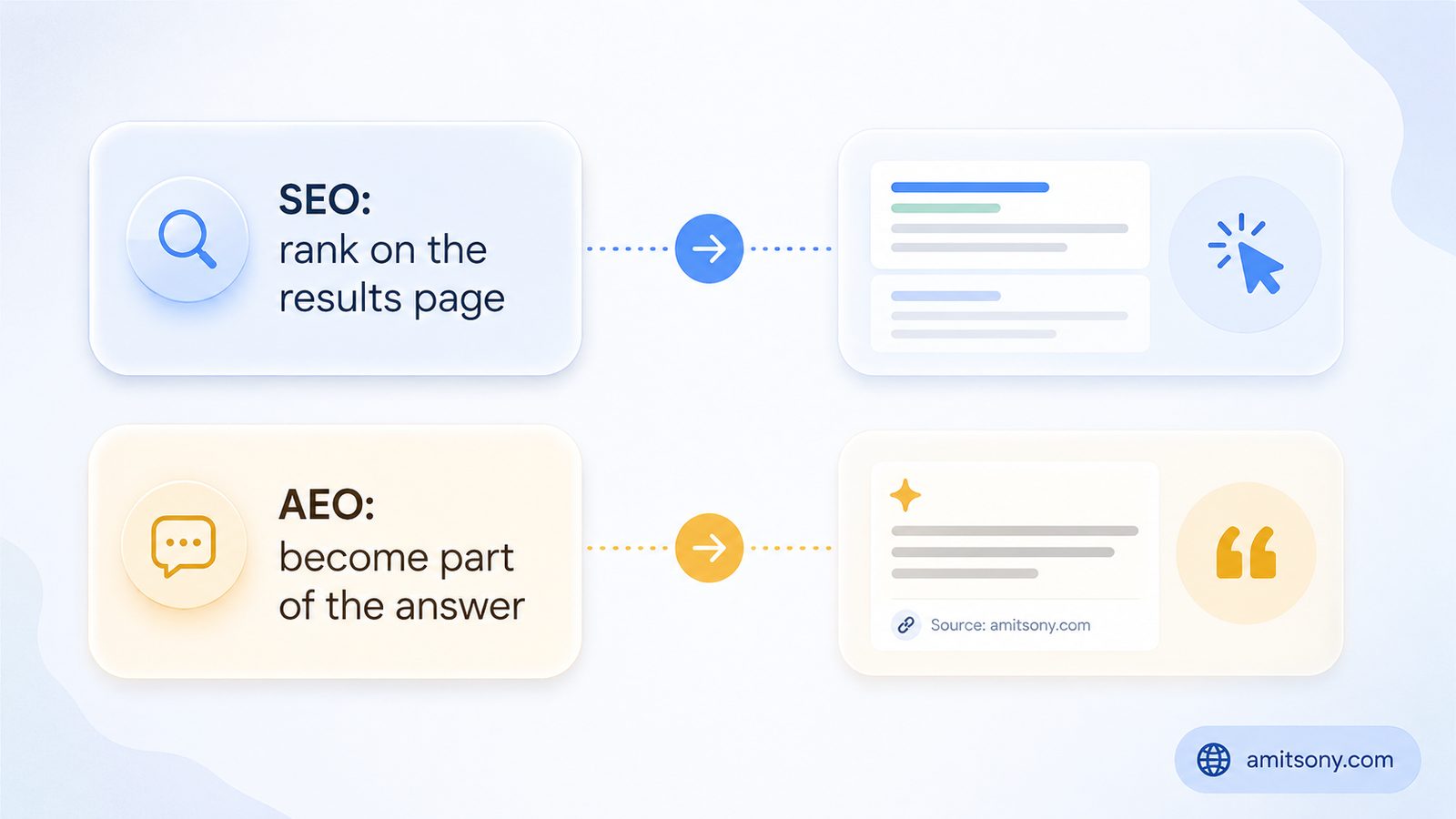
SEO aims to earn a strong position on a results page. AEO aims to become part of the answer itself, a definition, a comparison, a statistic, a recommendation, pulled directly into a generated response, sometimes from deep inside a page rather than the title or meta description.
They're complementary, not competing disciplines. Strong technical SEO, real authority, and genuinely useful content remain the foundation. AEO adds a layer on top: structure that makes extraction and citation easy once an AI system has decided your content is worth trusting.
Success also gets measured differently. Traditional SEO watches rankings and clicks. AEO tracks whether a brand shows up as absent, mentioned, cited, or actively recommended inside AI answers, plus whatever assisted conversions follow from that visibility, since a citation with no click can still build the trust that leads to a sale later.
What Actually Makes AI Answer Engines Choose Your Content?
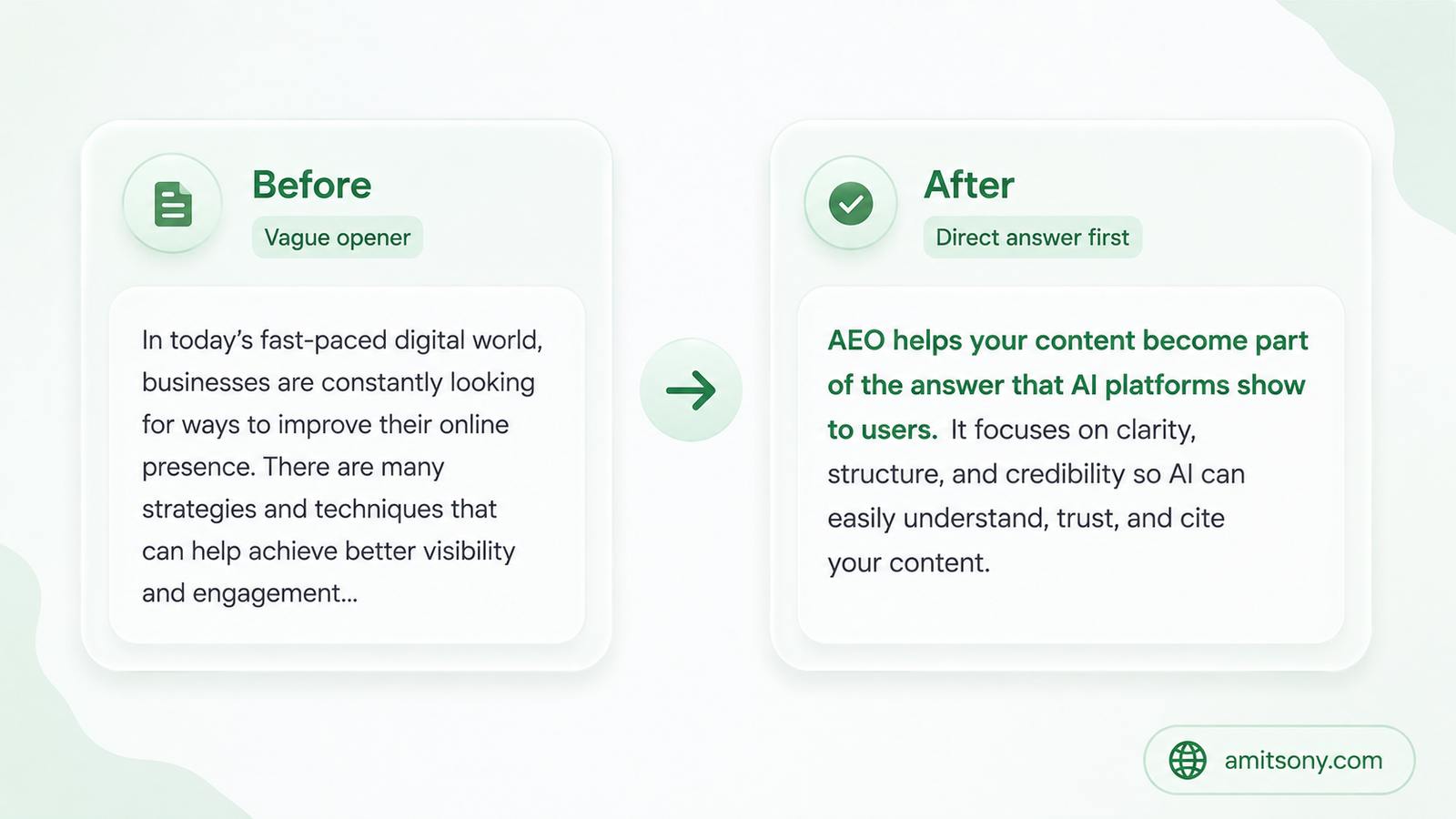
Lead with the answer, not the setup. Before: a paragraph of throat-clearing before the actual point. After: the direct answer in the first sentence, with supporting detail following it. AI systems extract that opening statement far more reliably than a conclusion buried three paragraphs down.
Turn headers into the actual questions people ask. A generic header like "Implementation Tips" extracts poorly. "How Do You Implement AEO Effectively?" matches the shape of a real query and gives the AI system a clean question-to-answer pairing to lift directly.
Structure content around entities, not just keyword strings. AI models identify a brand, product, or concept as a distinct entity before they weigh keyword relevance at all, so organizing content around clearly named things, not vague phrasing, helps a system recognize what you're actually the authority on.
Schema markup still matters, but only when it reflects what's genuinely visible on the page. Structured data that reinforces real authorship, real entities, and real content, rather than data bolted on to game a system, is what actually reinforces trust.
Does Content Length Actually Matter for AEO?
Not in the way most people assume. One documented analysis of AI Overview citations found that 55% of cited passages came from the first 30% of the page, a strong argument for putting the real answer early rather than making a reader, or a crawler, dig for it.
Length itself isn't the variable. A long, comprehensive guide works fine if the specific answer is easy to locate within it. A short page can still fail to get cited if it dodges the actual question being asked, hedges, or never states a clear position.
How Do Different Answer Engines Vary in What They Want?
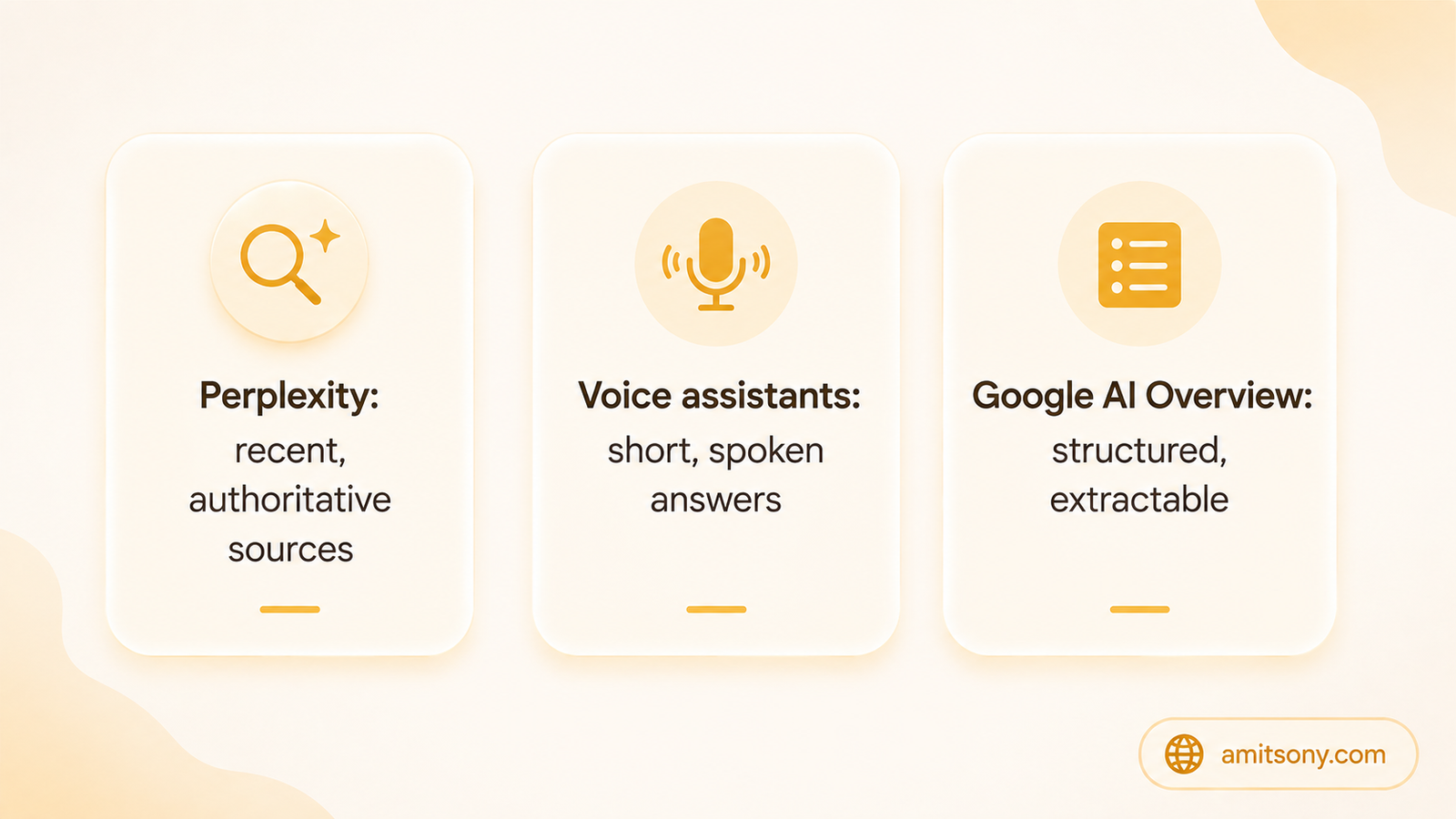
Perplexity leans toward recent, well-structured content from sources it judges authoritative, and reportedly converts unusually well for SaaS products specifically among the major AI platforms.
Voice assistants, Siri, Alexa, Google Assistant, need something different again: short, definitive, conversational answers, since there's no screen to scan, just a spoken response. Speakable schema markup exists specifically to flag which sections are appropriate for that use. Voice commerce is projected to pass $80 billion in annual value, and voice queries tend to run 3 to 5 times longer than typed ones, almost always phrased as full natural questions.
Search crawlers now include AI-specific bots worth knowing by name if you check server logs, OAI-SearchBot, Claude-SearchBot, and PerplexityBot among them, each representing a different platform deciding whether your content is worth pulling into an answer.
How Do You Actually Measure Whether AEO Is Working?
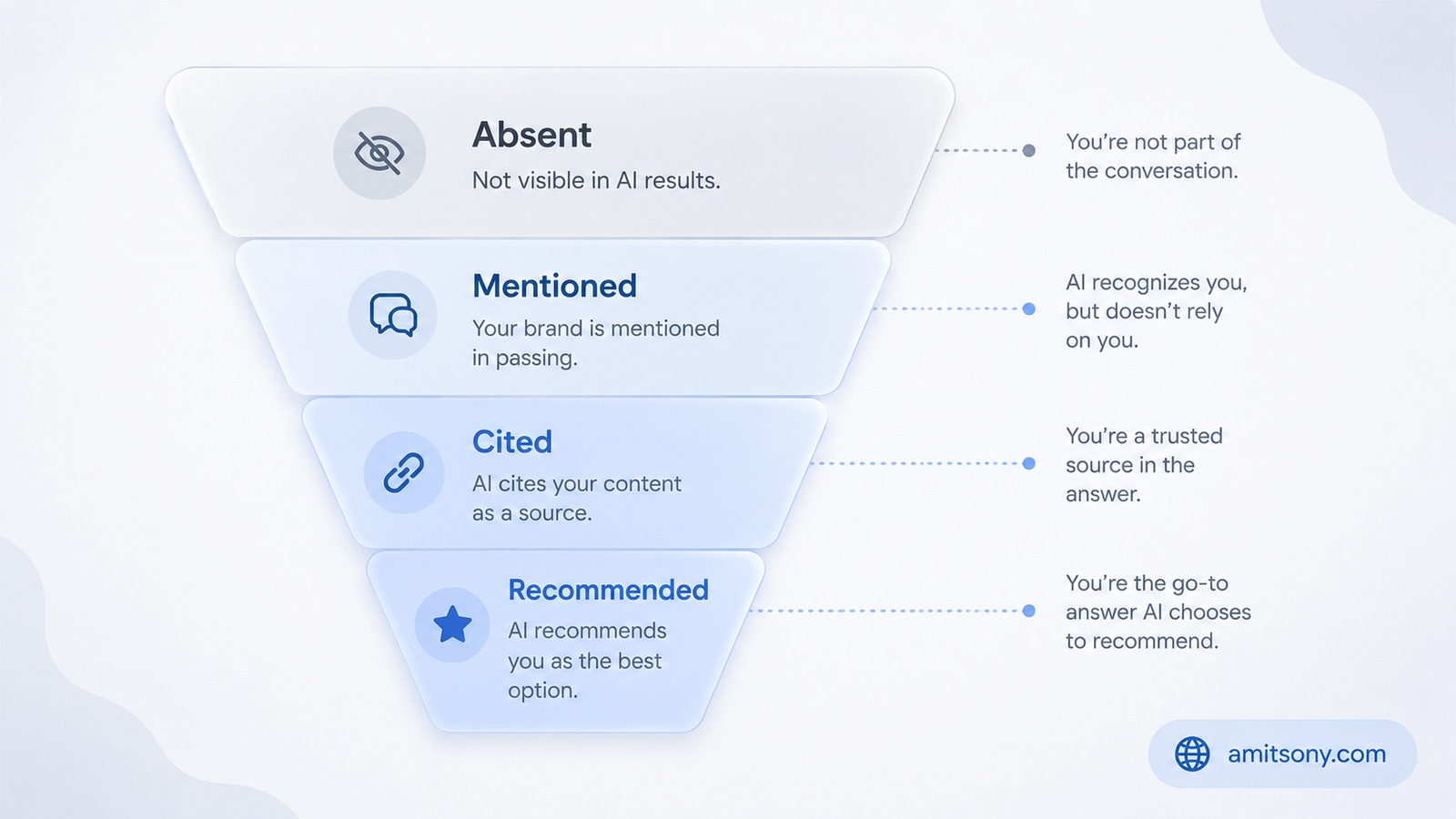
Traditional rank trackers don't capture this. What matters instead is whether your brand appears as absent, mentioned, cited, or actively recommended across the AI platforms your audience actually uses, tracked platform by platform since each one cites differently.
Tools built for AI-mention tracking, including newer features inside established platforms like Semrush, are starting to fill this gap, alongside a wave of AEO-specific startups. None of this fully replaces watching your own referral traffic and branded search volume for the indirect signal that citations are building awareness even without a click.
What's a Practical AEO Checklist to Start With?
Rewrite your most important pages to answer the core question in the first sentence, then support it, instead of building up to it.
Convert generic subheadings into the actual questions your audience types into ChatGPT or asks Google AI Overview.
Audit your schema markup and confirm every field actually matches what's visibly on the page, remove anything added purely to game a system.
Pick five questions where AI answer engines already show up for your topic, check who's currently getting cited, and study exactly why before you rewrite anything.
Frequently Asked Questions
What does AEO stand for?
Answer Engine Optimization, the practice of structuring content so AI platforms like ChatGPT, Perplexity, and Google AI Overview can extract and cite it as a direct answer.
Is AEO the same thing as SEO?
No, though they're closely related. SEO aims to rank well on a results page. AEO aims to become part of the actual AI-generated answer, and builds on strong SEO fundamentals rather than replacing them.
Does a longer article rank better for AEO?
Not necessarily. One analysis found 55% of AI Overview citations came from the first 30% of a page, meaning where the answer sits matters more than overall length.
What's the difference between AEO and GEO?
The terms overlap heavily and are often used interchangeably. Some practitioners treat GEO, Generative Engine Optimization, as the broader category and AEO as the specific focus on direct question-and-answer extraction.
How do you measure if AEO is actually working?
Track whether your brand is absent, mentioned, cited, or recommended across AI platforms, rather than relying on traditional keyword rank tracking, since a citation often generates no click at all.