
Generative Engine Optimization, or GEO, is the practice of structuring content so AI answer engines like ChatGPT, Perplexity, Gemini, and Claude cite and recommend it directly in their responses. Unlike SEO, which chases a ranking position, GEO chases a mention inside the answer itself, using clear structure, citable statistics, and content AI models can quote without editing.
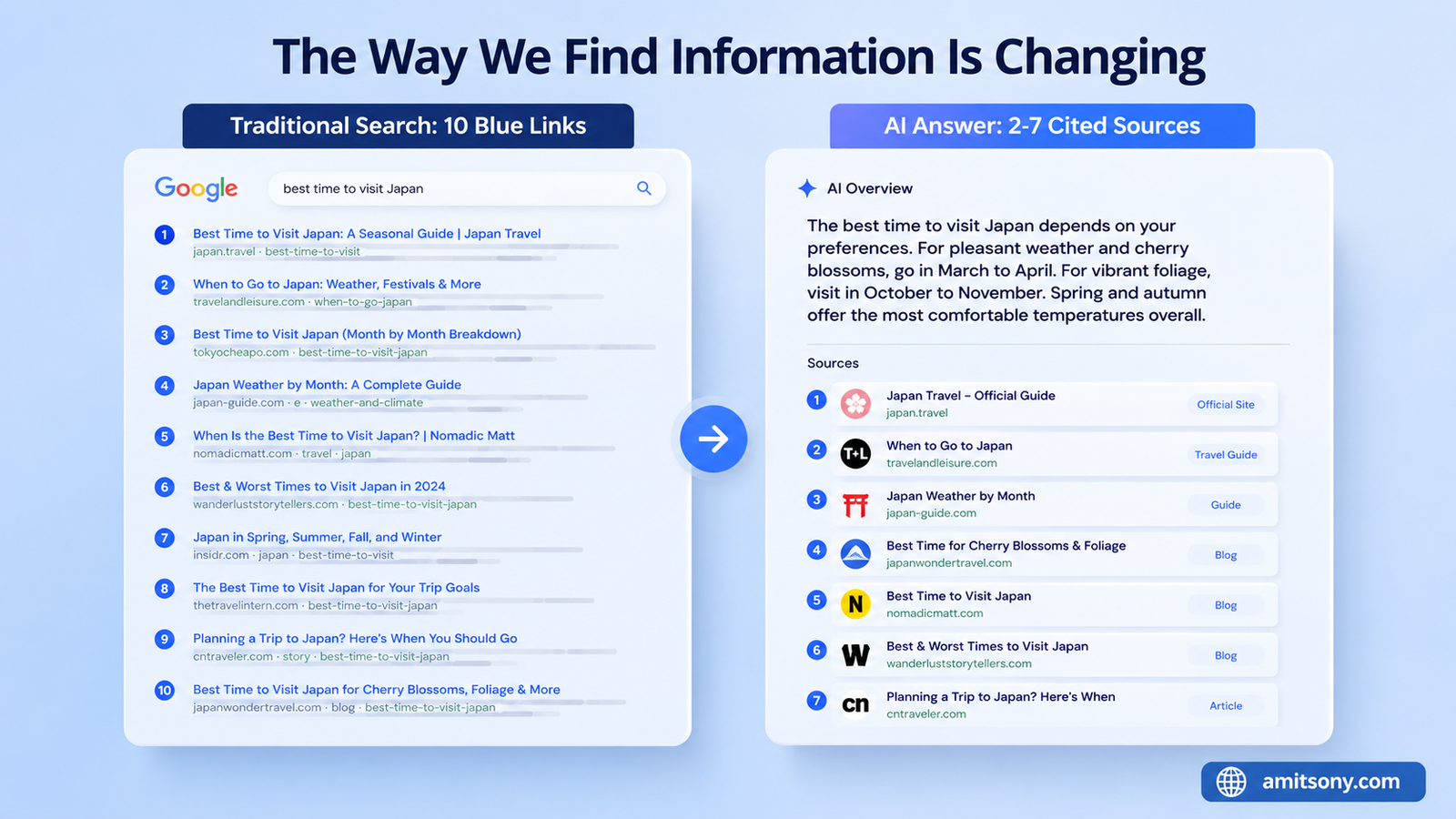
Ask ChatGPT a question today and you won't get ten blue links back. You'll get one written answer, usually pulling from somewhere between two and seven sources, and if your page isn't one of them, you effectively don't exist for that question.
That's the entire premise behind GEO. It's not a replacement for SEO, it's what happens after SEO gets your page indexed and an AI model still has to decide whether your specific paragraph is worth quoting. This guide covers what actually influences that decision, based on the research and platform behavior documented so far in 2026.
What Does Generative Engine Optimization Actually Mean?
The term originated from a 2023 Princeton research paper, later published at KDD 2024, that studied what made content more likely to get pulled into AI-generated answers. It's the first academic framework for a behavior marketers were already scrambling to understand.
In practice, GEO means writing and structuring content so a generative engine can retrieve it, understand it, and quote it accurately when answering a related question. That's a meaningfully different job than ranking a page, since an AI model isn't sending a visitor to your page, it's extracting a piece of your page and presenting it as part of its own answer.
You'll also see this called AEO, answer engine optimization, or occasionally LLMO. The industry hasn't settled on one name yet, but they're all describing the same underlying goal, showing up inside the answer rather than next to it.
How Is GEO Different From Traditional SEO?
SEO optimizes for a ranking position among a list of links. GEO optimizes for inclusion inside a single synthesized answer, competing against a much smaller set of sources an AI model actually decides to cite.
The overlap between the two is smaller than most people assume. Research from GEO analytics firm Brandlight found that the overlap between top Google results and AI-cited sources has dropped from around 70% to below 20% as AI systems developed their own citation preferences separate from traditional ranking signals.
That gap matters practically. Ranking on page one of Google no longer guarantees you show up when someone asks ChatGPT or Perplexity the same question conversationally. A separate, structural layer of optimization is now genuinely required on top of standard SEO work, not instead of it.
Why Does GEO Matter So Much Right Now?
The scale of the shift is what's forcing this conversation. Analyst projections cited across the industry suggest organic search traffic to commercial sites could decline by roughly 25% by 2026 and as much as 50% by 2028, as more discovery moves into conversational AI tools instead of a traditional search bar.
Some individual platform numbers back that trend up. ChatGPT alone reportedly crossed 800 million weekly users by late 2025, and B2B research consistently cites a majority of buyers now using generative AI tools somewhere in their purchase research process.
Take these figures as directional rather than precise, they're largely sourced from marketing analytics firms and industry surveys with an obvious interest in the space growing. But the underlying pattern, fewer clicks to open websites and more direct AI-generated answers, shows up consistently enough across independent sources to treat seriously.
The uncomfortable part for most brands: one industry tracker found fewer than 12% of marketing teams have any documented strategy for appearing inside AI-generated answers, despite the shift already being underway.
What Actually Makes AI Engines Cite a Page?
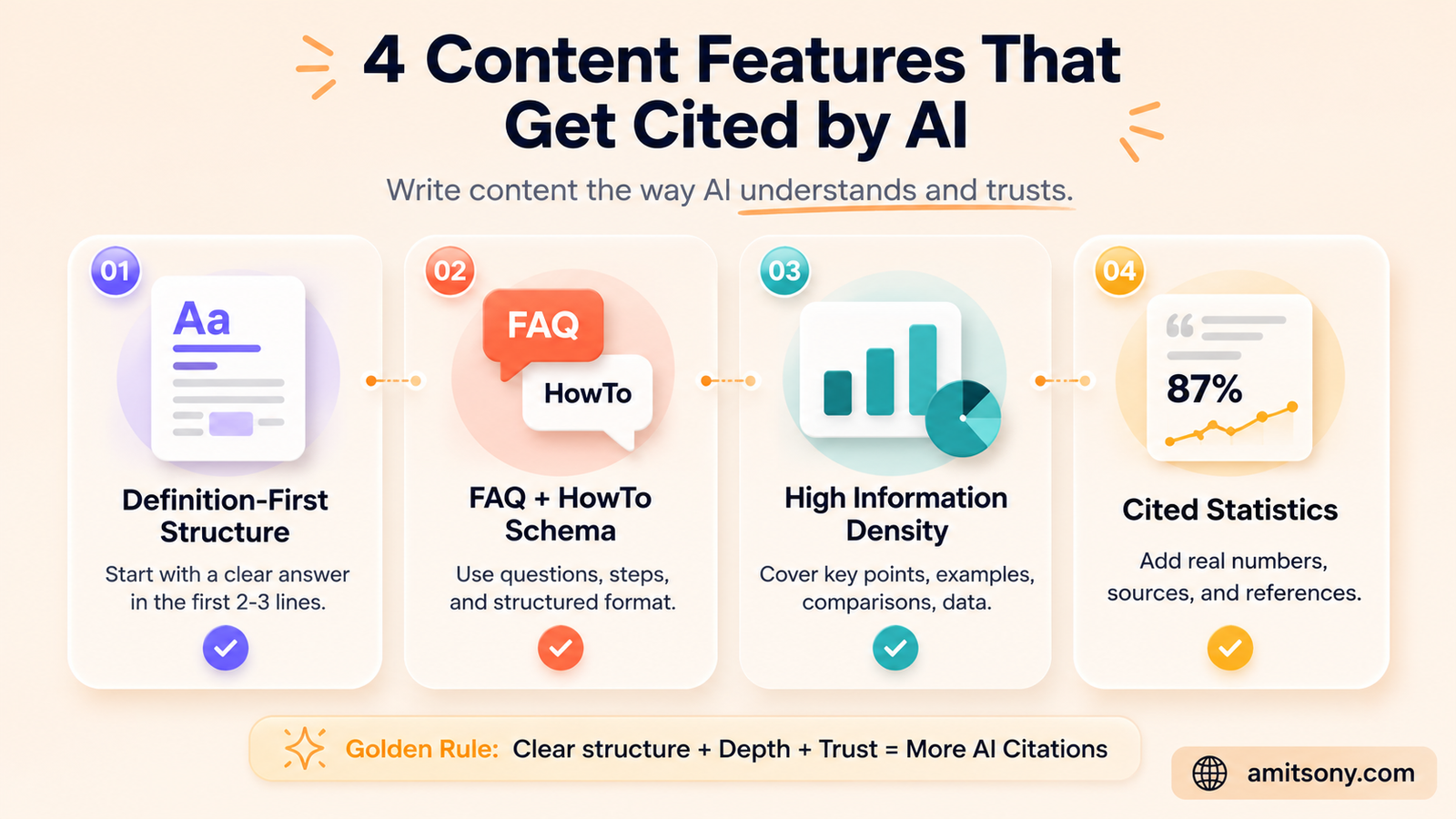
Academic research from Carnegie Mellon, building on the original GEO framework, identified specific content features that correlate with higher citation rates across LLM-based search systems, and a few of these are worth building your entire content process around.
Definition-first sentences score higher. Pages that open a section with a direct, clear definition before adding context perform better in retrieval pipelines than pages that build up to the point slowly.
Structured markup matters more than most teams expect. FAQ schema and HowTo schema were both identified among the top predictive features for citation likelihood, giving AI crawlers an explicit, machine-readable signal about what a section actually answers.
Information density beats keyword density. The research measured this as named entities and statistics packed into each paragraph, and found it a stronger predictor of citation than how often a target keyword appeared. A paragraph with three specific numbers and a named source will outperform one that repeats a keyword five times.
The original Princeton study found something else worth internalizing. Citing sources, adding statistics, and including direct quotations improved AI visibility by an estimated 30 to 40% compared to unoptimized content covering the same topic.
How Do You Structure Content So AI Can Quote It?
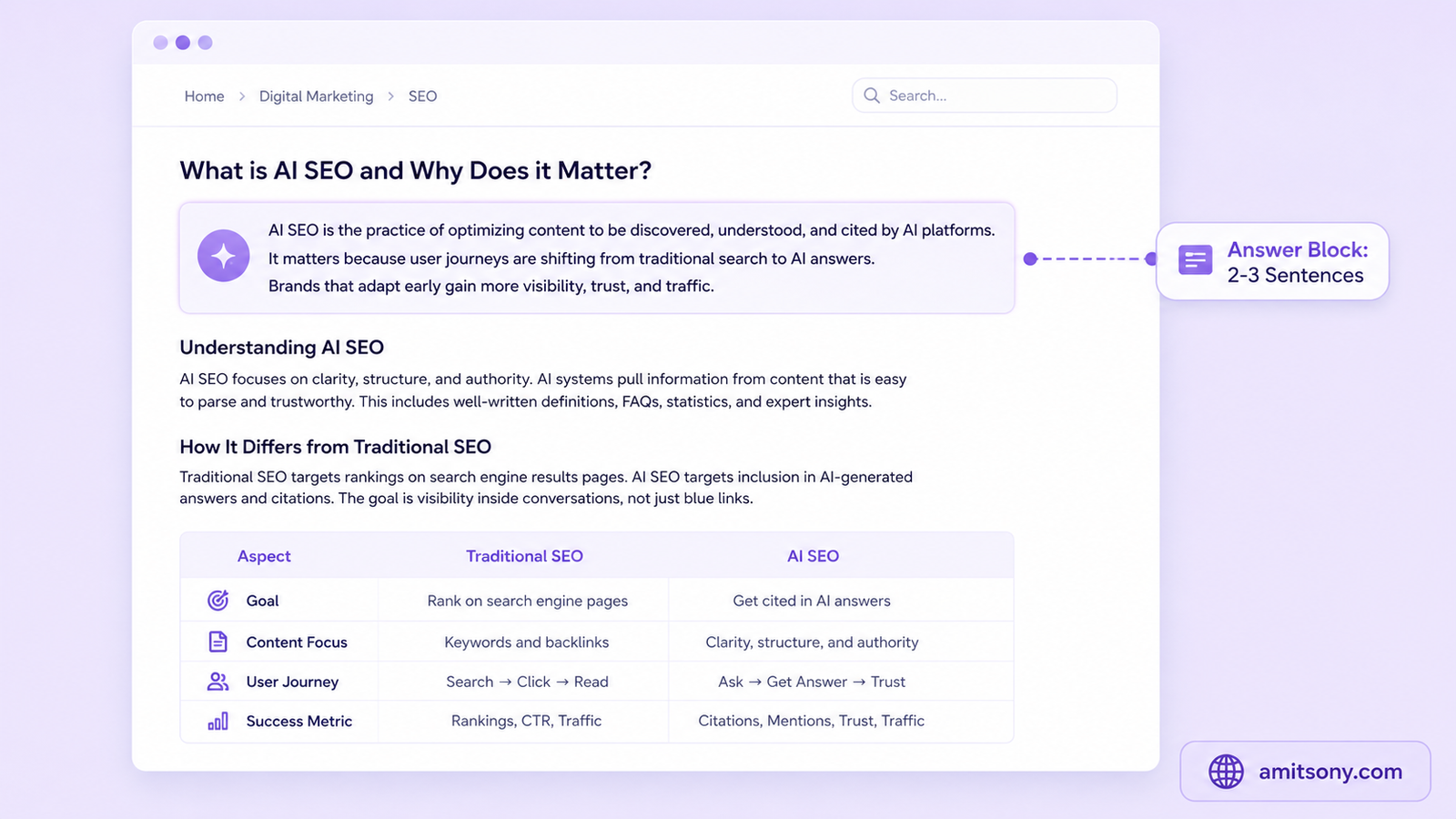
Start every important section with an answer block. Two or three plain sentences that state the definition, the key steps, or the direct verdict, written in a neutral tone with no promotional language. This is exactly the kind of block AI models lift cleanly without needing to rewrite it.
Keep paragraphs short and single-purpose. One idea per paragraph, broken up with white space, makes it far easier for a retrieval system to extract a clean, self-contained passage instead of a chunk tangled up with three other points.
Match your headings to real questions. AI query systems increasingly work through what's called query fan-out, breaking one user question into several smaller searches behind the scenes. A heading phrased as an actual question, the way someone would type it into ChatGPT, has a much better chance of matching one of those sub-queries directly.
Build comparison tables and ranked lists where the topic calls for them. One agency's internal citation tracking found a striking concentration in AI answers pulling from structured "Top N" style content specifically, likely because a ranked list with a clear structure is simply easier for a model to extract and reformat than a long narrative paragraph making the same point.
Does Technical SEO Still Matter for GEO?
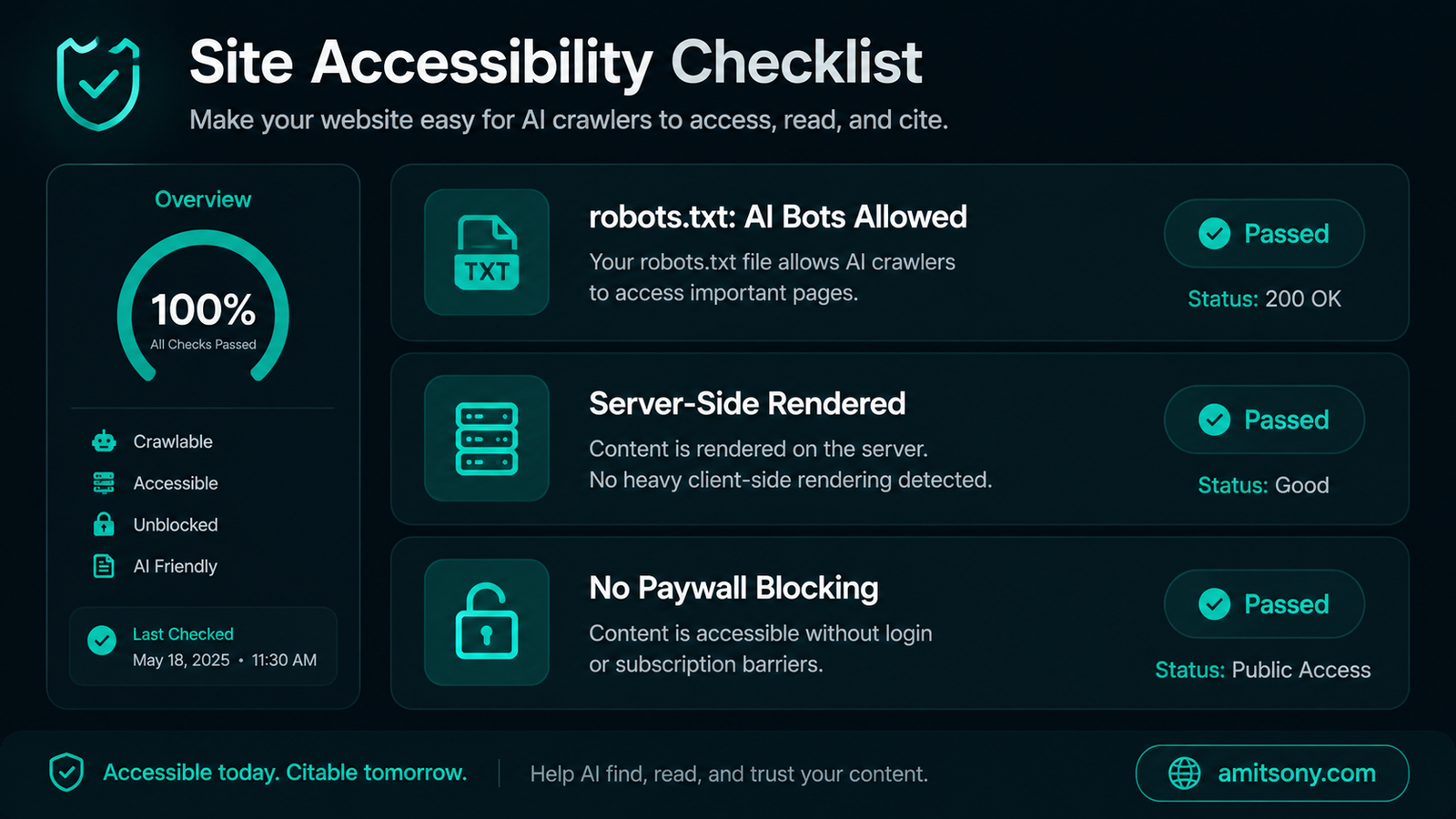
Yes, and it's the part teams skip because it isn't glamorous. None of the content structuring above matters if an AI crawler can't actually reach your page in the first place.
Check your robots.txt file specifically for AI crawler blocks. This sounds obvious, but it's reportedly one of the most common issues discovered during GEO audits, sites unknowingly blocking bots like ChatGPT-User or ClaudeBot through a default configuration nobody reviewed. Cloudflare in particular changed its default settings at one point to block AI bots automatically, which silently cut off visibility for sites that never opted into that change.
Server-side rendering matters more here than it does for standard SEO. Content hidden behind heavy client-side JavaScript, paywalls, or login walls is effectively invisible to a retrieval pipeline that needs to read your actual text, not render a full interactive page.
A newer, still-emerging practice is publishing an llms.txt file, a simple text file that helps AI systems understand your site's structure, similar in spirit to how robots.txt works for traditional crawlers. Adoption is early, but it costs almost nothing to add.
Which Tools Actually Track Your AI Citations?
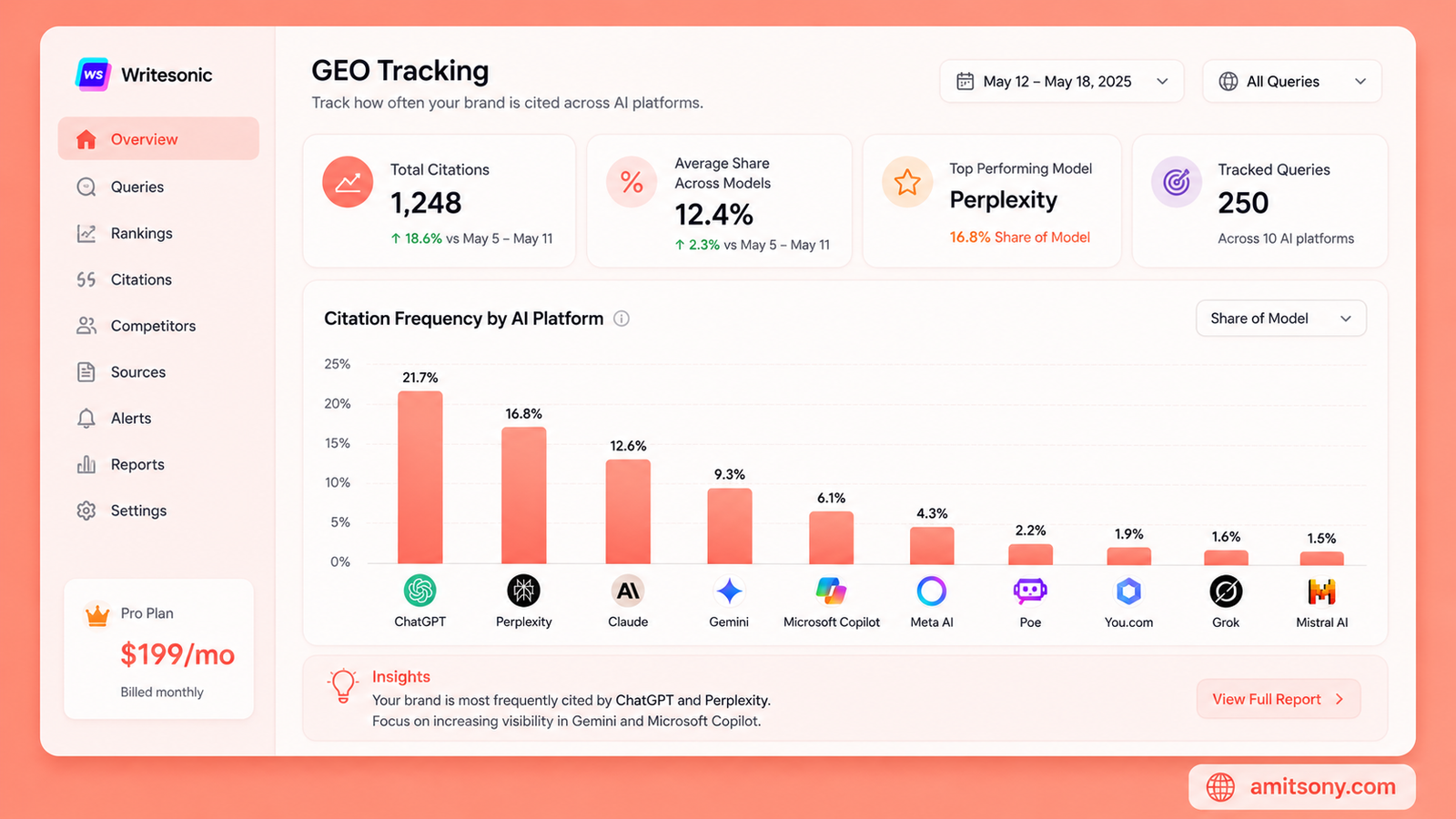
Manual tracking works at a small scale, but it doesn't hold up once you're monitoring more than a handful of queries. Testing the same prompts across ChatGPT, Perplexity, and Gemini every month in incognito sessions, logging results in a spreadsheet, is a legitimate starting point but genuinely tedious past a dozen tracked queries.
Writesonic combines AI visibility tracking with the content creation side, letting you research, write, and monitor citation performance without switching between separate tools. Paid plans start at $199 per month, with a free trial available to test the tracking functionality first.
Purpose-built GEO monitoring platforms have also emerged specifically for this, tracking brand mentions across ChatGPT, Gemini, Perplexity, and Copilot simultaneously, then reporting a metric commonly called share of model, essentially your citation frequency measured against named competitors. Several offer a limited free rank-tracking tool as an entry point before committing to a paid monitoring plan.
Don't assume your existing SEO platform already covers this. Traditional rank trackers measure position in a list of links, a fundamentally different signal from whether an AI model chose to name your brand in a generated paragraph. If your current toolkit only reports Google rankings, you have zero actual visibility into AI citation performance right now.
How Do You Measure If GEO Is Actually Working?
Citation frequency is the core metric, simply how often your brand or page gets named across tracked prompts over time. Track it the same way you'd track keyword rankings, with the same query tested repeatedly on a fixed schedule so you can actually see movement.
Share of voice against competitors matters just as much as your raw number. Being cited three times a month means very little if a competitor is being cited fifteen times for the exact same query set.
Watch citation sentiment too, not just whether you're mentioned but how accurately and favorably. An AI model can technically cite your brand while describing it in a way that's outdated, incomplete, or just wrong, and that's arguably worse than not being mentioned at all.
Set expectations honestly before you start. Most practitioners report needing three to six months of consistent, structured content work before citation patterns shift in any measurable way. Anyone promising results in two weeks is selling something.
Frequently Asked Questions
Is GEO replacing SEO completely?
No, GEO builds on top of SEO fundamentals like crawlability and site structure. You need both working together, not one instead of the other.
How long does GEO take to show results?
Most practitioners report three to six months of consistent work before citation patterns change meaningfully, though some tools claim to detect citation activity within days of publishing.
Can I check if my brand shows up in AI answers for free?
Yes, manually testing your key questions in ChatGPT, Perplexity, and Gemini through incognito sessions costs nothing, though it doesn't scale well past a handful of queries.
Does keyword stuffing still work for GEO?
No, research consistently shows information density, meaning specific facts and named entities, matters more than repeating a target keyword.
What's the difference between GEO and AEO?
They largely describe the same goal, getting content cited inside AI-generated answers. The industry hasn't settled on one standard term yet.