

Gorgias leads for ecommerce-native customer support, Intercom Fin handles enterprise-scale multi-channel volume including voice, and Tidio is the practical pick for smaller stores. Klaviyo AI fits teams already using it for marketing, and Shopify Magic gives Shopify stores a free starting point. Beyond support, agents now handle inventory reordering, dynamic pricing, and product descriptions too.

80% of customer service organizations are expected to use AI agents by 2026, up from just 47% in 2023. That jump isn't about chatbots getting slightly better at answering FAQs, it's a real shift from scripted, trigger-based automation to systems that reason through a request and take multi-step action across your actual tech stack, inventory, order status, shipping carriers, refund policy, without a human starting every interaction.
This guide covers the tools that show up as genuine, cross-referenced recommendations rather than a single company's own blog crowning itself the winner, plus the guardrails worth setting before you let any of them run unsupervised.
What's Actually the Difference Between a Chatbot and an AI Agent?
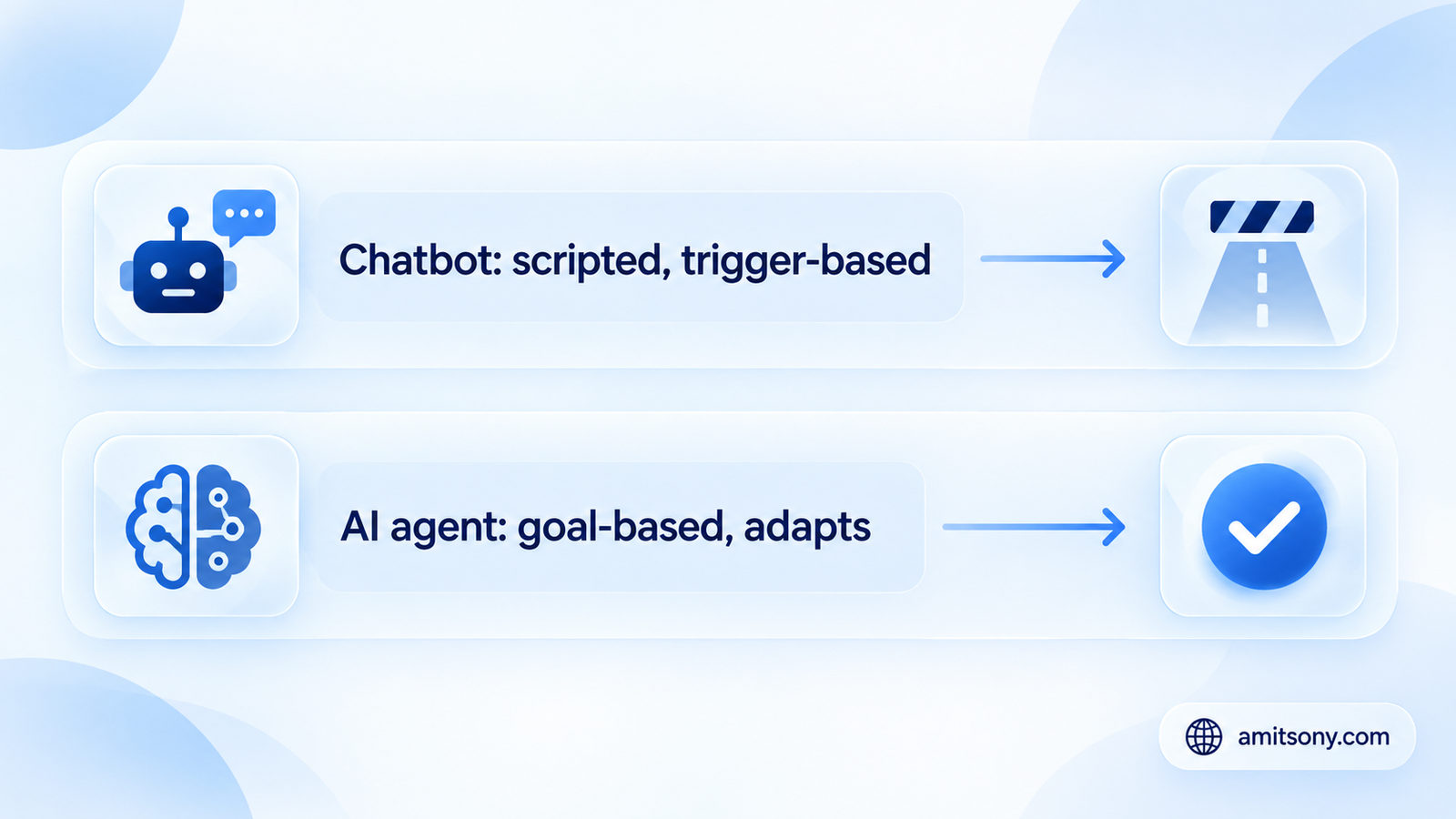
Traditional automation is trigger-based: it fires when a predefined condition is met and follows a scripted path. It's reliable for simple, repeatable requests and breaks down the moment a customer's question doesn't fit the script.
AI agents are goal-based instead. They pursue an outcome, pull real-time data from your inventory system, CRM, or order management platform, and adapt to the messy middle where scripted flows fail, a customer asking about a delayed order who also wants to swap the size and apply a discount code, all in one message.
The practical result: leading agents now report automating 60% to 90% of tier-one support volume, order tracking, returns, shipping updates, freeing human staff for the complex or sensitive cases that still need a person.
Which Tool Is Best for Ecommerce-Native Customer Support?
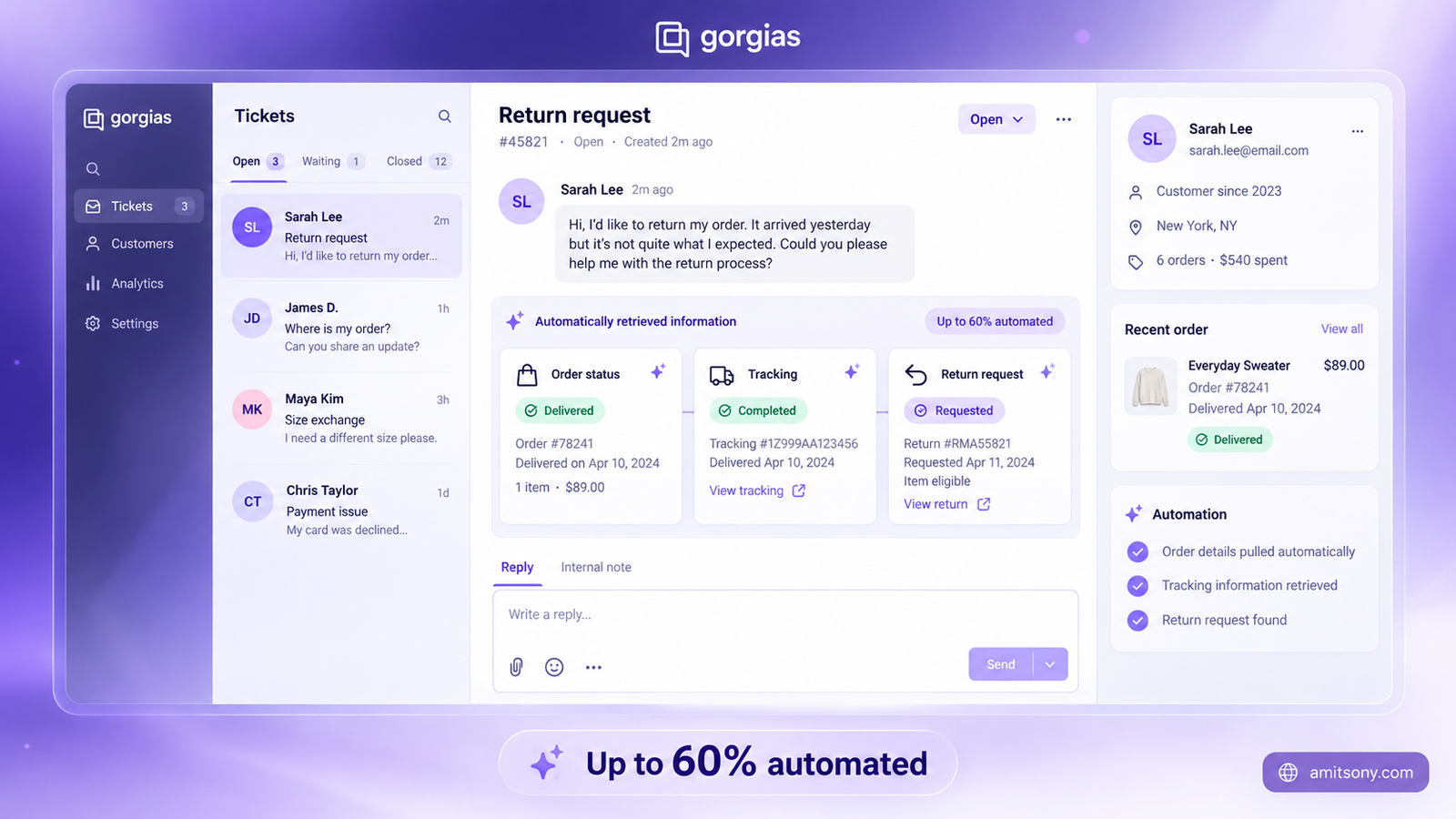
Gorgias was built specifically for ecommerce helpdesks rather than adapted from a general support platform, and it shows in how tightly it integrates with order data, returns, and shipping updates. Its AI Agent handles these categories automatically, with vendors reporting automation of up to 60% of incoming support inquiries.
Native Shopify and WooCommerce integration means the agent can see real order status and history directly, rather than working from a support ticket alone.
The strongest default pick specifically because it was designed around ecommerce workflows from day one, not retrofitted from a generic helpdesk.
Which Tool Is Best for Enterprise-Scale, Multi-Channel Support?
Intercom Fin is the enterprise option in this category, built for complex resolution workflows end to end rather than simple FAQ deflection, with voice channel support as a genuine differentiator most competitors don't match.
Independent comparisons are consistent on where it fits: strong for large operations needing high resolution rates across many channels with enterprise-grade security, and genuinely overkill for a smaller store where the pricing and setup complexity outweigh the benefit.
Check your actual support volume honestly before choosing this over a lighter tool. Enterprise-grade capability you don't need is still enterprise-grade cost you do pay.
Which Tool Is the Practical Choice for Smaller Stores?
Tidio consistently comes up as the right-sized alternative to enterprise platforms, the tool independent reviewers point smaller stores toward specifically when Intercom Fin's complexity and cost don't make sense yet.
It covers the same core ground, order tracking, common question deflection, live chat handoff, at a scale and price that fits a growing store rather than an enterprise support operation.
Which Tool Fits If You Already Use Klaviyo for Marketing?
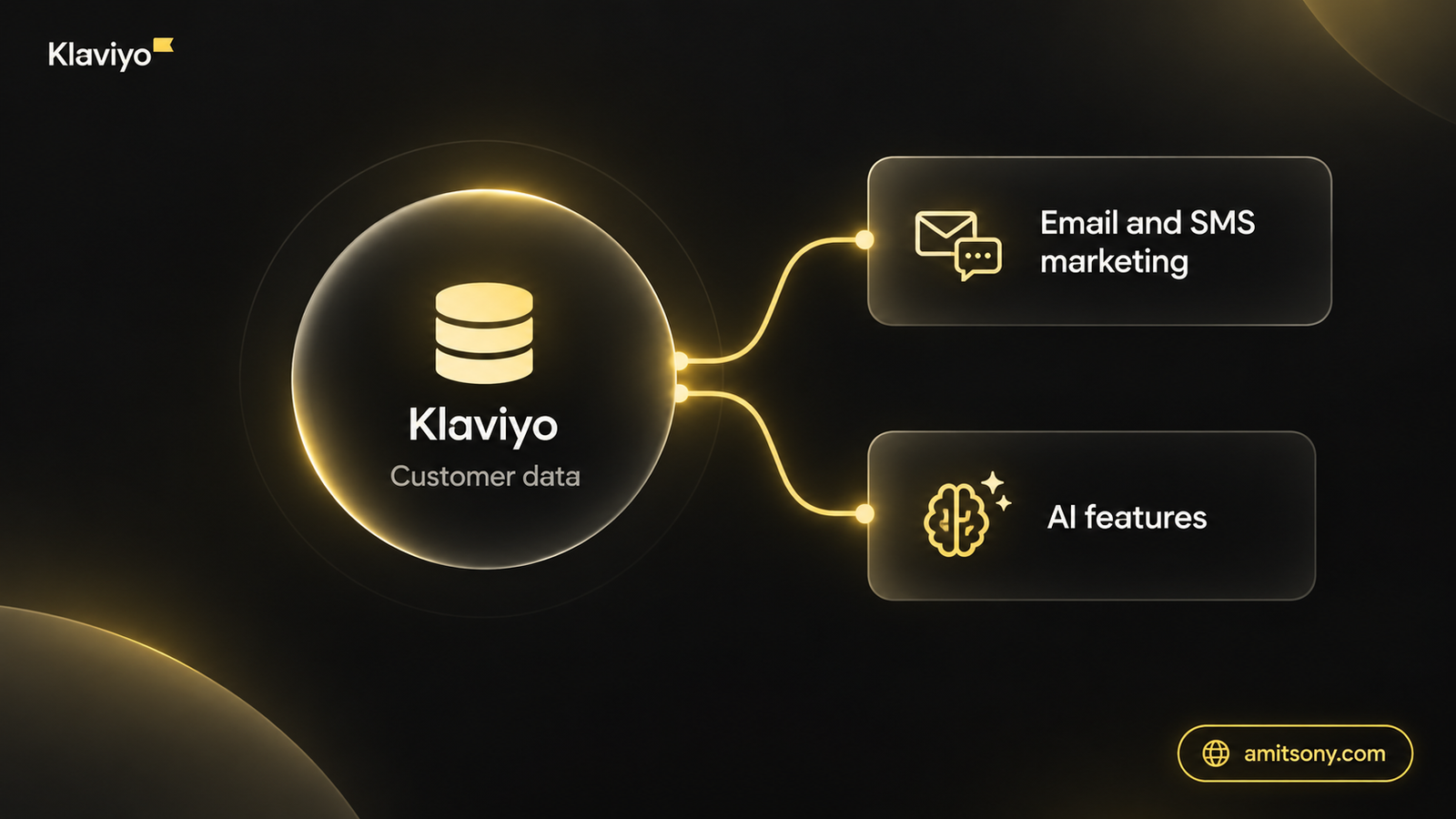
If your store already runs its email and SMS marketing through Klaviyo, extending into its AI features is genuinely the path of least resistance, one less platform to integrate, one data source instead of two.
This is a fit-driven recommendation more than a capability one: Klaviyo AI won't out-automate a dedicated support agent, but for stores centered on marketing automation, it keeps everything in one system.
What Free Option Does Shopify Already Give You?
Shopify Magic and Shopify Inbox are built directly into the platform, a genuinely free starting point most store owners never fully explore before paying for a third-party tool.
It won't match a dedicated agent's depth on complex multi-step resolution, but for a small or new store, checking what's already included before adding a new subscription is worth the ten minutes.
Beyond Customer Support — What Else Are Agents Actually Automating?
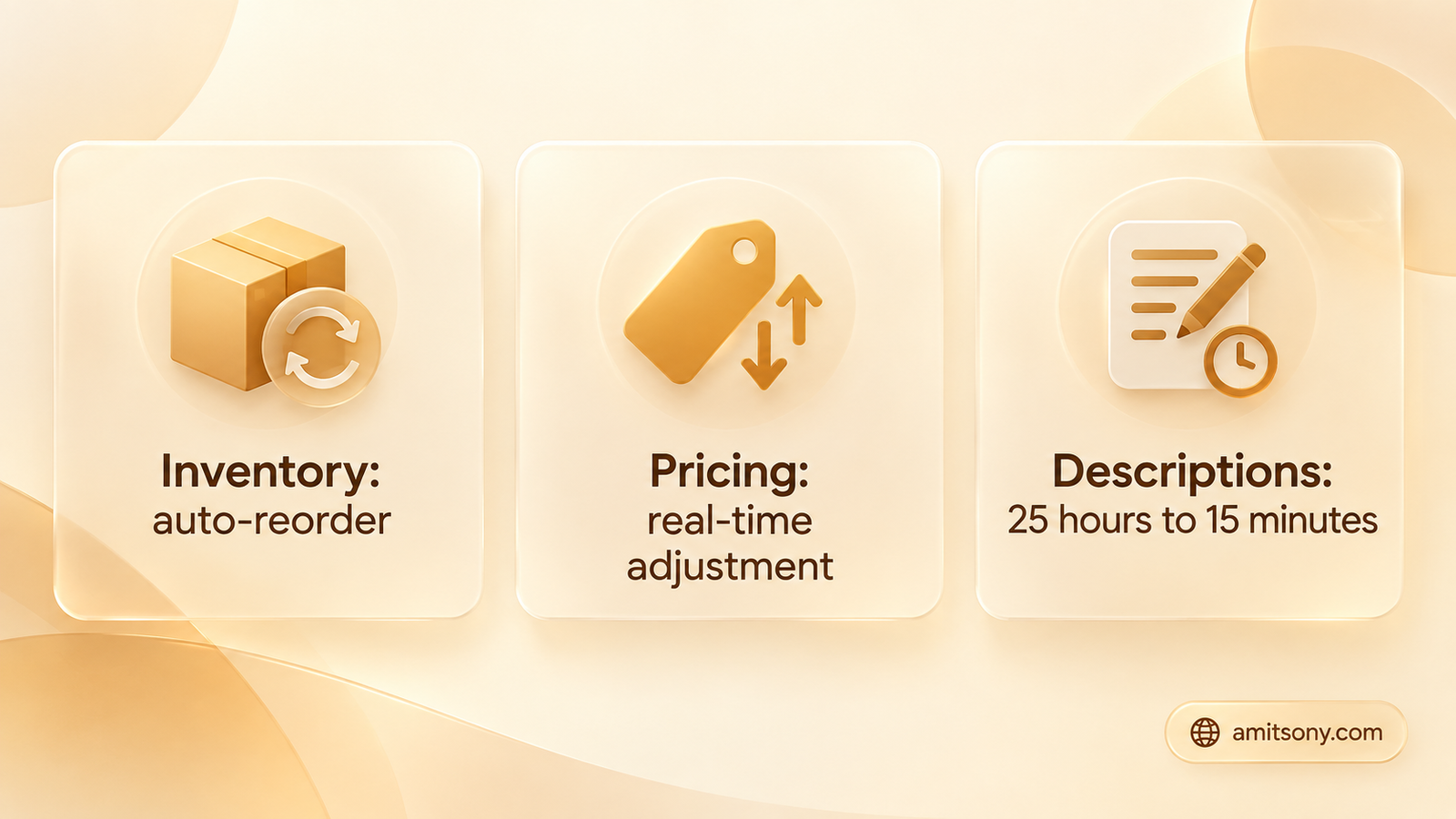
Inventory agents now monitor stock levels continuously and can automatically reorder from suppliers when a popular item runs low, sometimes pairing the restock with a targeted notification to customers who'd previously viewed that product.
Dynamic pricing agents adjust prices in real time based on competitor stock and pricing, inventory age, and demand signals, aiming to protect margin rather than just racing to the lowest price on the market.
Product description agents can generate listings dramatically faster than manual writing, a task that takes 25 to 33 hours manually can run in 5 to 15 minutes with AI assistance, increasingly written to be readable by AI shopping agents like ChatGPT and Perplexity too, since a meaningful share of product discovery now starts inside an AI assistant rather than a search bar.
These categories are genuinely newer and less independently verified than customer-support agents. Pilot on a small product segment before rolling either dynamic pricing or auto-reordering out across a full catalog.
What Guardrails Should You Set Before Turning an Agent Loose?
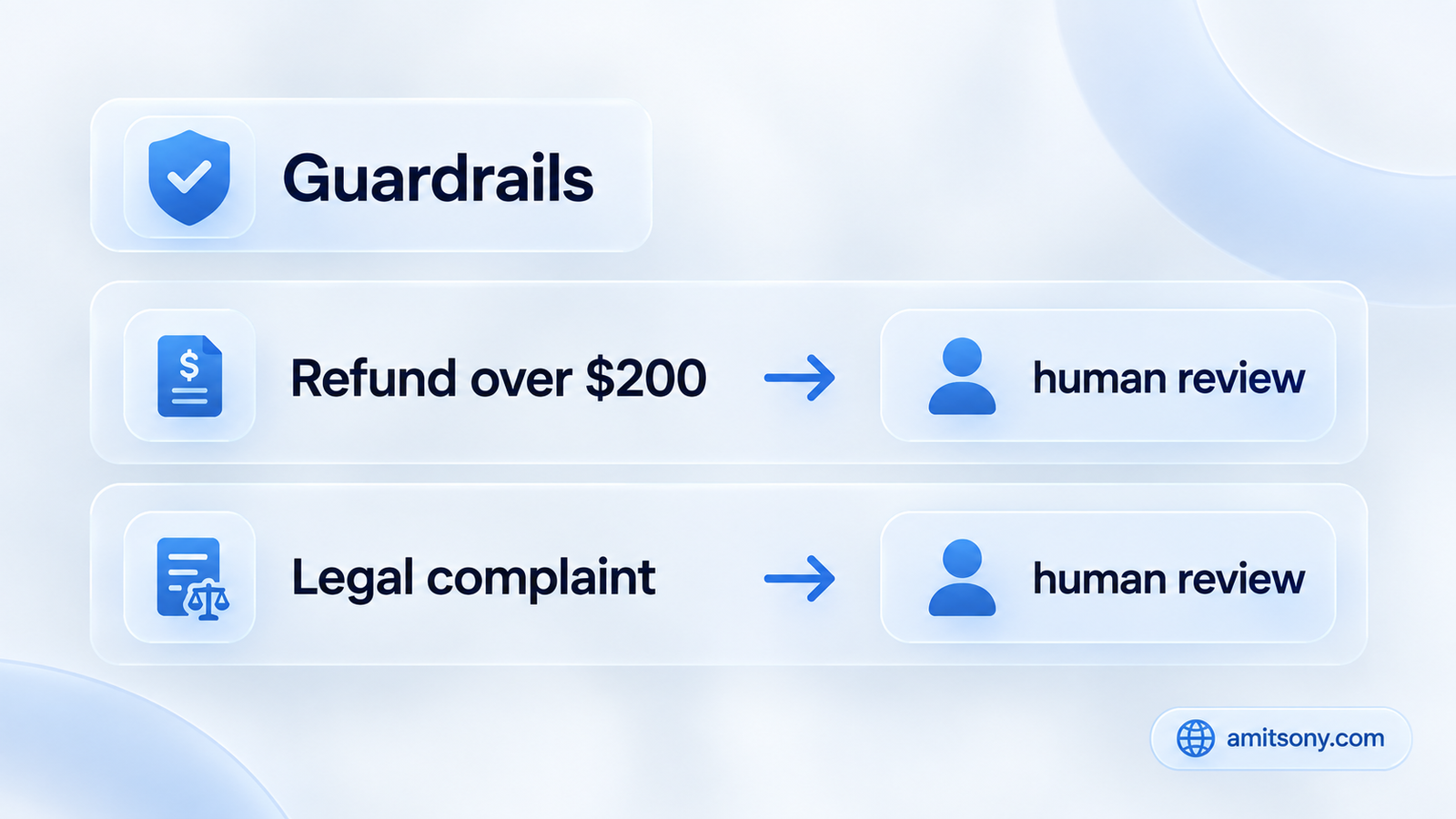
Define what the agent should never do just as explicitly as what it should. Natural-language escalation rules, hand off to a human for refunds over a certain amount, anything involving a legal complaint, matter as much as the automation itself.
Platforms increasingly build this in directly, Salesforce's Einstein Trust Layer is one example of guardrails meant to keep an agent inside brand and safety boundaries rather than relying purely on prompt instructions.
Start with one well-defined workflow, order status and returns, before expanding into pricing or inventory decisions that touch real revenue. The stores getting real results in 2026 rolled out agent by agent, not all at once.
Quick Verdict
Match the tool to your actual support volume and existing stack rather than the most feature-rich option on the page. Gorgias for ecommerce-native support, Fin for genuine enterprise scale, Tidio for a lighter budget, Klaviyo AI if marketing is already your hub, and Shopify's own free tools before any of them if you haven't checked those yet.
Frequently Asked Questions
What's the difference between a chatbot and an AI agent for ecommerce?
A chatbot follows scripted, trigger-based flows and struggles outside them. An AI agent reasons through a request, pulls real-time data from your systems, and adapts to complex or multi-part requests without a predefined script.
What's the best AI agent for a small Shopify store?
Start with Shopify Magic and Shopify Inbox, both already included, then consider Tidio or Gorgias as your support volume grows past what the built-in tools comfortably handle.
Is Intercom Fin worth it for a small ecommerce business?
Usually not. Independent reviews consistently describe it as enterprise-grade and often overkill for smaller stores, where the pricing and setup complexity outweigh the benefit compared to lighter tools like Gorgias or Tidio.
Can AI agents actually manage inventory and pricing automatically?
Yes, agents in 2026 can monitor stock and automatically reorder from suppliers, and adjust pricing based on competitor activity and demand, though these categories are newer and less independently verified than customer-support agents.
What should I set up before letting an AI agent run automatically?
Define explicit escalation rules for what the agent should hand off to a human, start with one narrow workflow, and expand scope only after you trust the results on that first use case.