
Building the wrapper is the easy, fast part now, days not months, using tools like Lovable or Bolt and a cheap model API. Surviving isn't: an estimated 90% of AI wrappers are expected to fail by the end of 2026. The ones that don't build a real moat, proprietary data, workflow lock-in, or owned distribution, on top of the wrapper.

Manus AI reached $100 million in annual recurring revenue in roughly eight months. It has no proprietary model, it's built entirely on top of existing foundation models, and people openly call it an AI wrapper. Meta acquired it for around $2 billion anyway. Cursor faced the exact same "it's just a wrapper" dismissal early on. It's now valued at $30 billion.
Set those success stories against a harder number: industry estimates suggest roughly 90% of AI wrapper startups will be dead by the end of 2026, and most of them never generated a dollar of revenue. Both things are true at once, and the difference between the two outcomes is almost never the wrapper itself. This guide covers what actually separates the two groups, from writing the first line of code to landing a paying customer.
What Exactly Is an AI Wrapper, and Is That Actually a Bad Thing?
An AI wrapper is a product built as a layer on top of someone else's foundation model, OpenAI, Anthropic, Google, rather than a company training its own model from scratch. A specific interface, a specific prompt, a specific workflow, wrapped around an API call.
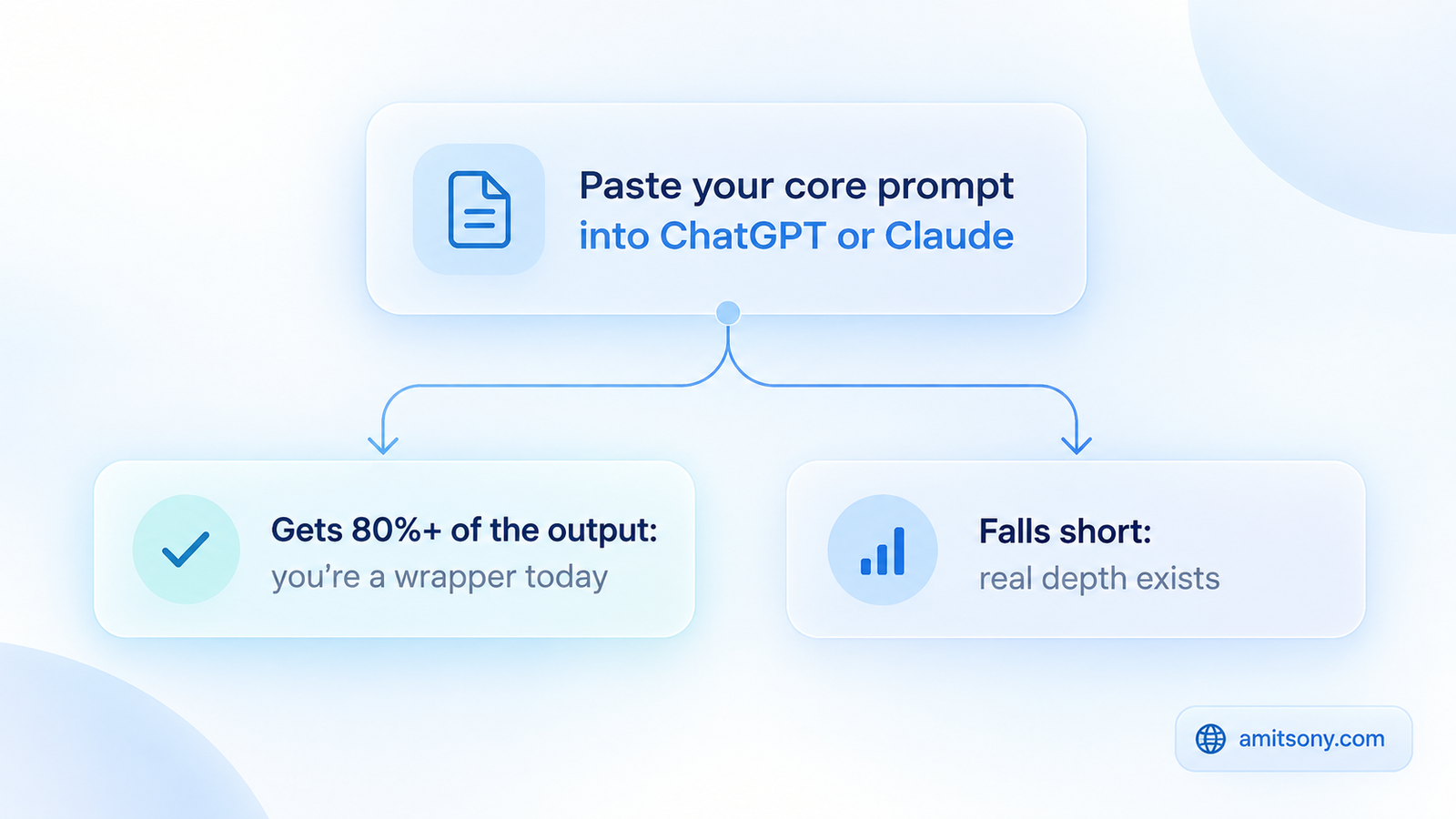
There's a blunt diagnostic worth running on any idea before you build it: can a technical user get roughly 80% of your product's output by pasting your core prompt directly into ChatGPT or Claude? If yes, you're a wrapper today. That's not automatically a death sentence, most successful AI products started exactly there, but it does mean the interface and the prompt alone aren't what you're eventually selling.
Manus and Cursor prove being a wrapper at the start doesn't cap your ceiling. What they both did afterward, building workflow depth, becoming the system a team actually operates inside, is the part that matters far more than the label.
How Do You Actually Validate the Idea Before Writing Code?
Before building anything, run the substitution test on your own idea honestly. If the answer is genuinely yes, that's fine as a starting point, but plan from day one for what you'll add that a raw model call can't replicate.
Talk to 10 to 15 potential users about the specific workflow you're targeting before writing code. You're checking for a real, recurring, painful task, not just interest in "AI" as a category, interest in AI alone doesn't predict who pays.
How Do You Actually Build the MVP Fast?
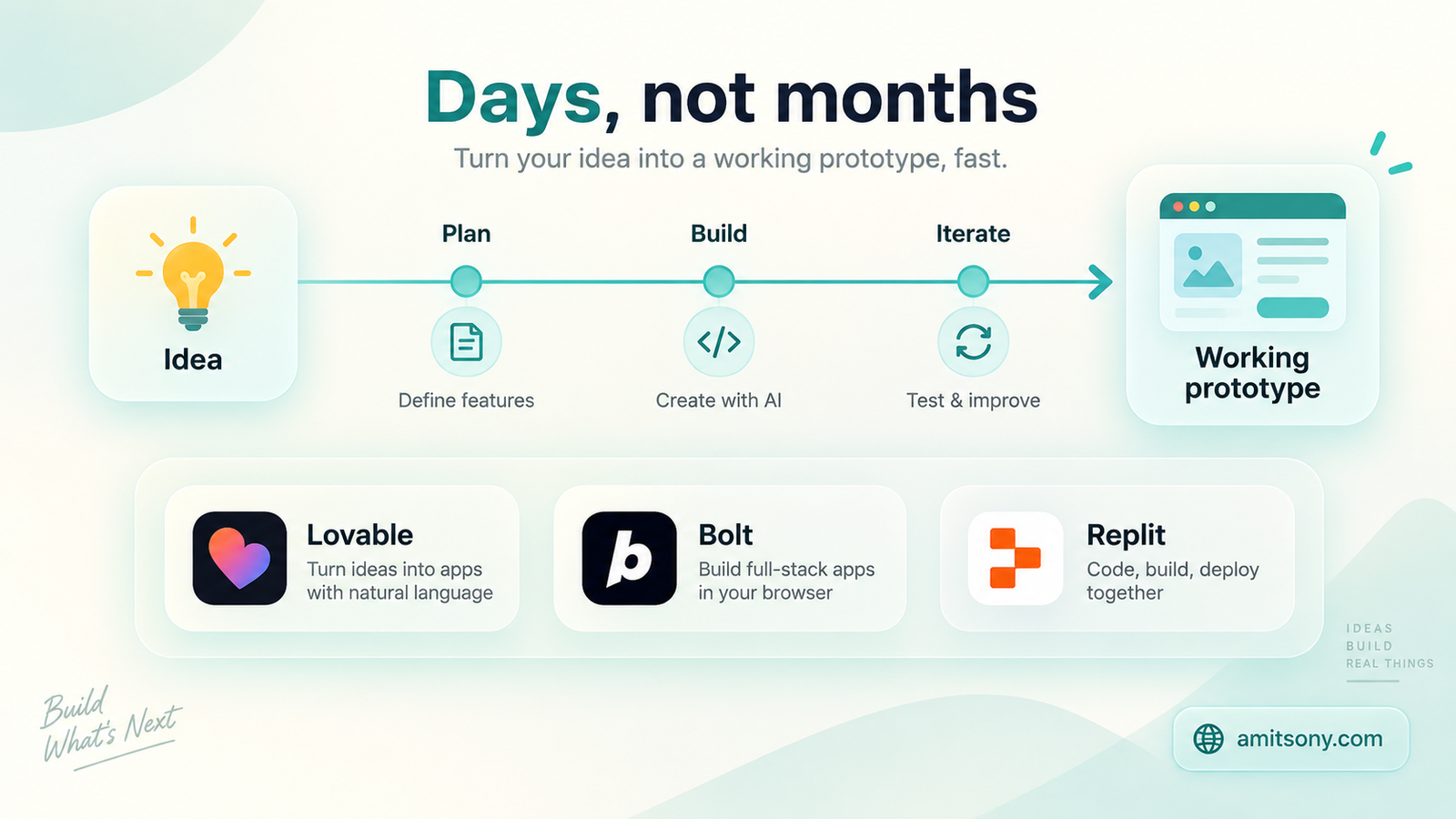
Speed to a working prototype has genuinely collapsed. Tools like Lovable, Bolt, and Replit can take you from an idea to a clickable, working product in days rather than months, letting you test the actual workflow with real users before investing in a custom backend.
For the AI layer itself, start with the cheapest capable model for your use case rather than the flashiest one. Something like DeepSeek V4 Flash or a comparable low-cost tier handles a huge share of wrapper workloads at a fraction of a flagship model's price, and you can always upgrade specific features to a stronger model once you know which ones actually need it.
Resist over-building in this phase. The goal of the MVP is learning whether the workflow is real, not shipping every feature you can imagine.
What Actually Makes an AI Wrapper Defensible?
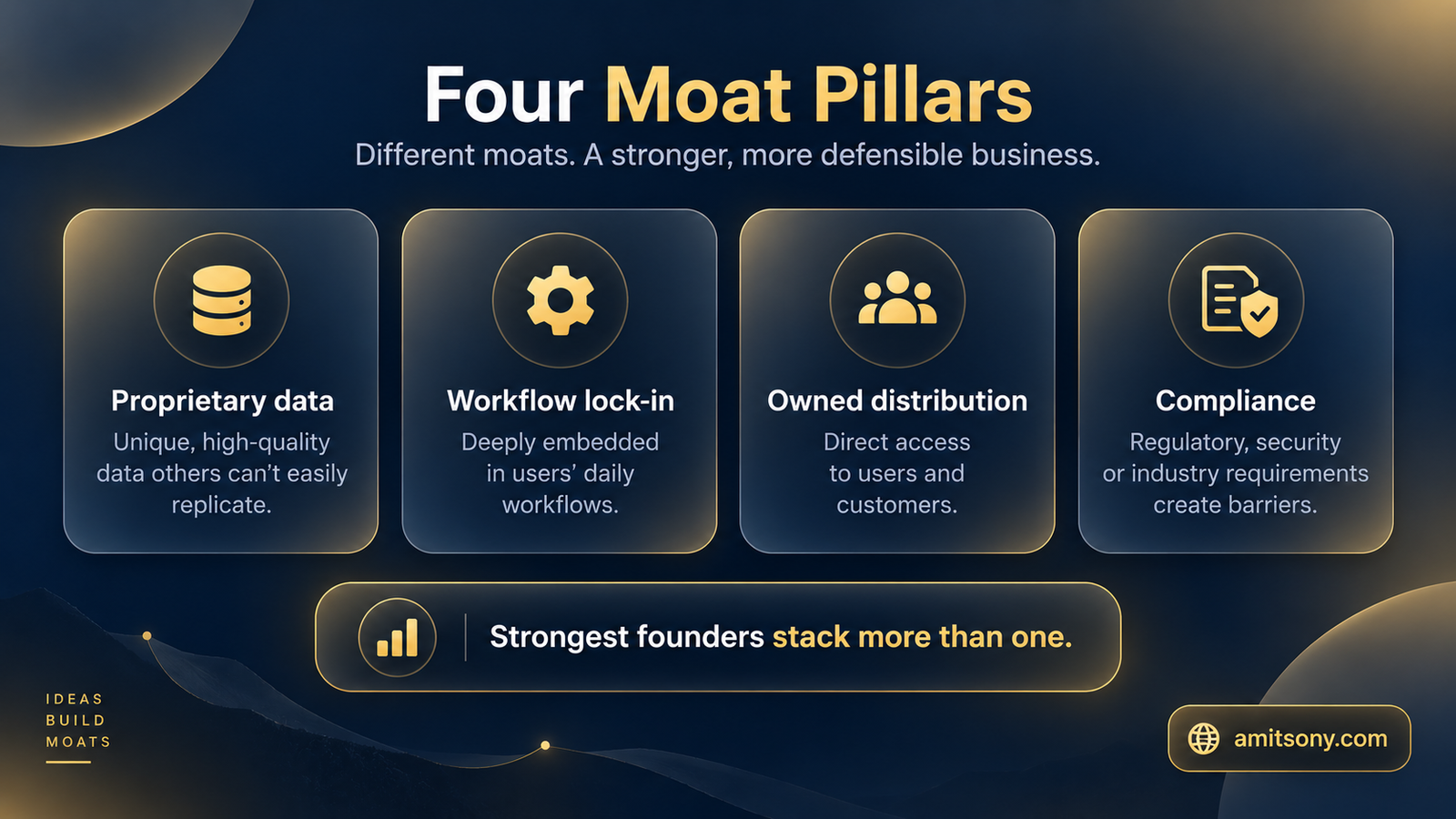
A survey of 100 SaaS founders and operators, published in Designli's 2026 Moat Report, breaks real defensibility into four dimensions: technical, proprietary data, service and retention, and distribution. The strongest companies in the survey were building across more than one at once, not betting everything on a single advantage.
A useful blunt test from a separate analysis: a moat is something a model provider can't ship next quarter and copy you out of existence. A clever prompt doesn't pass that test. A workflow a team is genuinely embedded in, a dataset that improves with every use, or a distribution channel a bigger competitor won't bother chasing, all pass it.
Regulatory and compliance work counts too, and it's underrated specifically because it's unglamorous. A product that's actually SOC 2, HIPAA, or GDPR compliant in an auditable, certified way is a real barrier a new entrant can't clear by shipping a nicer interface over the weekend.
Why Is Proprietary Data the Slowest but Strongest Moat?
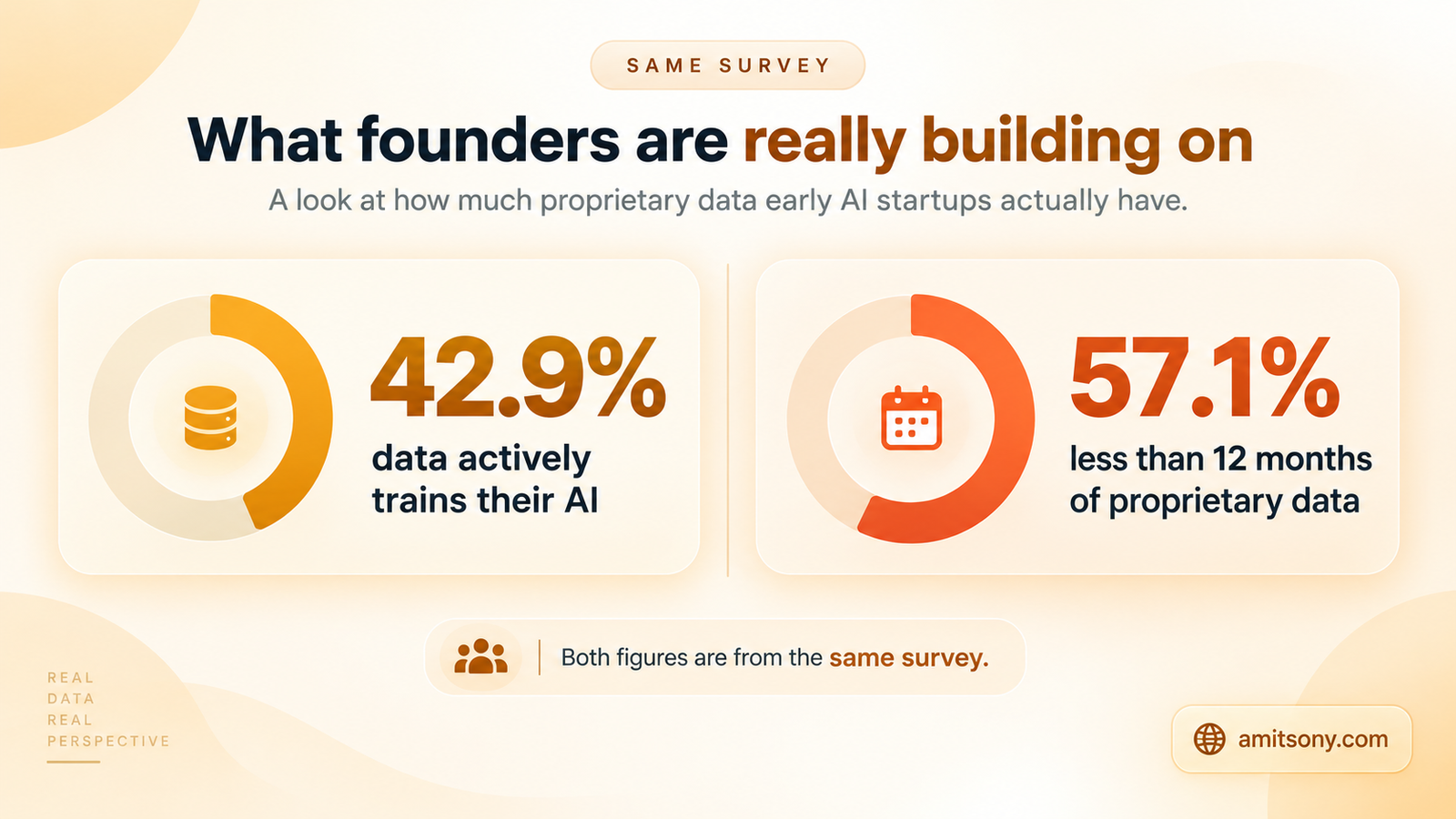
Of the moat types, data compounds the way none of the others do. In the Designli survey, 42.9% of respondents said their product's data actively trains and improves their AI, a real flywheel already running. Another 28.6% are producing unique benchmarks or insights no competitor currently has access to.
The honest gap: 57.1% of respondents have less than 12 months of proprietary data collected. This is a slow-building asset, and most founders are underestimating how early they need to start deliberately instrumenting it, not in theory, in practice.
The costly mistake happens in build order. Founders who ship the interface first and treat data collection as something to add later often find that years of usage generated data they aren't actually permitted to keep, because nothing in their terms of service secured those rights from day one. Get the contractual right to use interaction data written into your terms before you have thousands of users, not after.
Does Falling Model Pricing Kill Your Business or Help It?
It depends entirely on where your value actually sits. Model inference prices have fallen dramatically, by some estimates over 280-fold between late 2022 and late 2024, and they keep falling. If your entire product is reselling access to a model, that trend is a countdown clock, competitors undercut you and your margins evaporate with every provider price cut.
If your moat is the product, the workflow, and the proprietary data around the model, falling model costs are a tailwind instead. Your gross margin rises as the underlying compute gets cheaper, while the thing the customer is actually paying for, the workflow and the data, stays exactly as valuable.
This is the cleanest way to check your own positioning: are cheaper models good news or bad news for your specific business? If the honest answer is bad news, that's the signal to go build the layers on top before a bigger competitor adds your feature in a single release cycle.
How Do You Actually Get Your First Paying Customer?
Pick a specific niche the larger, generalist players won't bother chasing yet, and go get distribution there directly, a community you're already part of, a specific industry's existing channels, rather than trying to appeal to everyone at once.
Founder-led outreach beats a landing page and an ad budget at this stage. Talk to the first 20 to 50 users directly, watch exactly where they get stuck or where the workflow saves them real time, and let that shape the product before you scale anything.
Charge from the start, even a small amount. A free user who never intended to pay tells you far less than a $20 customer who chose your product over doing the task manually or pasting it into ChatGPT themselves.
What Should You Watch Out for in Contracts and Terms of Service?
Decide upfront what data your product collects and secure the contractual right to use it, in your own terms of service, before you have meaningful usage volume. Retrofitting this after the fact is far harder than it sounds, and some founders discover their existing users never actually granted rights they assumed they had.
If you're targeting business customers eventually, start thinking about compliance requirements, SOC 2 in particular, earlier than feels necessary. It's slow and unglamorous work, exactly why it becomes a real barrier once it's done.
Quick Verdict
Building an AI wrapper today takes days, not months, and that's exactly why it isn't the hard part anymore. The founders still standing in 2027 will be the ones who used that speed to learn fast, then spent everything after that on the parts a model provider genuinely can't ship in a single update: real data, real workflow lock-in, and real distribution.
Frequently Asked Questions
What is an AI wrapper?
A product built as a layer on top of an existing foundation model, like OpenAI or Anthropic's APIs, rather than a company training its own model. A specific interface and workflow wrapped around an API call.
How do I know if my AI product is "just a wrapper"?
Run the substitution test: can a technical user get about 80% of your output by pasting your core prompt directly into ChatGPT or Claude? If yes, you're a wrapper today, though that's a starting point, not necessarily a dead end.
What percentage of AI wrapper startups fail?
Industry estimates put the figure around 90% by the end of 2026, with most generating no meaningful revenue, though these are directional trade-press estimates rather than audited data.
What's the strongest moat for an AI wrapper business?
Proprietary data that compounds with use is generally considered the strongest and most durable, though it's also the slowest to build, and most founders underestimate how early they need to start collecting it deliberately.
Does falling AI model pricing hurt AI wrapper businesses?
It depends on where your value sits. If your product is just reselling model access, falling prices hurt you through competition. If your moat is the workflow and proprietary data around the model, falling model costs actually improve your margins.