
Kling 3.0 wins on native 4K resolution, price, and ease of use, starting around $6.99 a month. Seedance 2.0 wins on motion realism and directorial control through its 12-file reference system, with plans from free up to $167 a month. Neither wins outright, most serious creators in 2026 run both and pick the right one per shot.
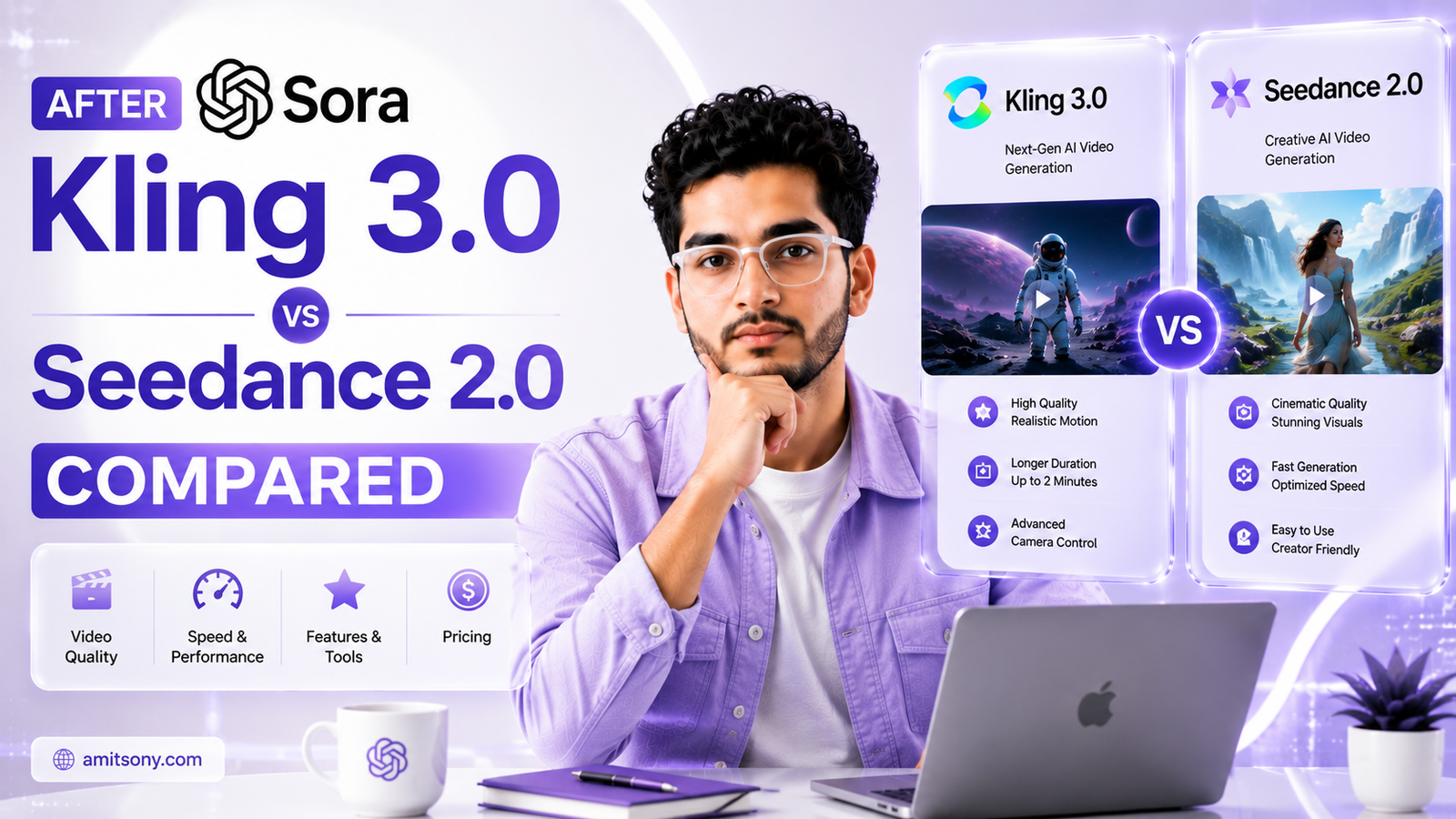
Sora's shutdown left a real gap in the AI video market, not a small one. Its app went dark in April 2026, and within weeks two names had absorbed most of the conversation that used to be about Sora: Seedance 2.0 from ByteDance and Kling 3.0 from Kuaishou, launched within a single week of each other in February 2026.
Neither is a clean successor. They're built on different priorities, and the honest answer to "which one should I use" depends entirely on what you're actually making. This comparison breaks down where each one genuinely wins, where the marketing gets ahead of reality, and how to actually access Seedance 2.0 without landing on one of the many fake "official" sites currently ranking for it.
Why Did Sora's Exit Open the Door for These Two?
OpenAI shut Sora's app and web experience down on April 26, 2026, after the product burned through roughly a million dollars a day in compute against barely any real revenue. That left a genuine vacuum, millions of users who'd built workflows around text-to-video generation needed somewhere to go.
Kling and Seedance weren't new entrants reacting to that gap, they'd already launched in February, but Sora's exit accelerated their adoption significantly through the spring. By April 2026, editorial roundups had narrowed the "serious AI video tool" conversation down to essentially these two names plus Google's Veo 3.1.
Worth noting upfront: this is a fast-moving space, and pricing or feature details below could shift again by the time you're reading this. Verify current rates directly with each platform before budgeting around them.
What Is Kling 3.0 and What Is It Actually Good At?
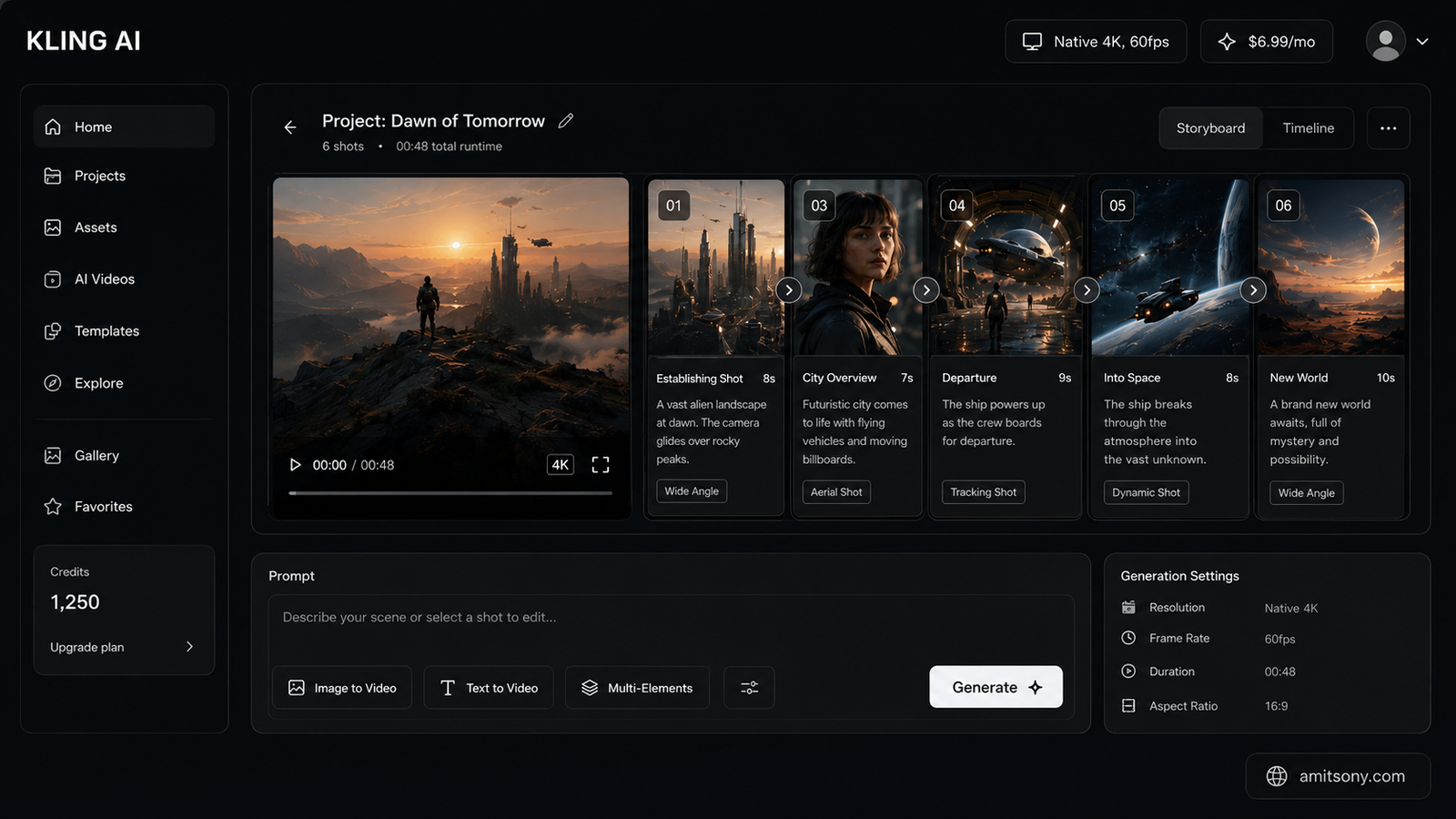
Kling 3.0 is Kuaishou's flagship video model, and its defining strength is production reliability. Native 4K output at 60 frames per second is currently unmatched by Seedance 2.0, which tops out at 1080p natively before any upscaling.
Multi-shot storyboarding is the other standout feature, structured direction across up to 6 connected shots in a single sequence, which matters a lot if you're building anything with narrative continuity rather than a single isolated clip.
Pricing is genuinely the most accessible in this comparison. The Standard plan runs $6.99 per month, with free daily credits available for casual testing before you commit. API access is priced transparently at $0.084 per second of generated video, which works out to roughly $0.50 per short clip at typical lengths, making it the cheaper option for high-volume, short-form output specifically.
The tradeoff shows up in creative control. Kling's reference and directing tools are solid but more conventional, you're not getting the same granular, multi-asset control that Seedance offers.
What Is Seedance 2.0 and What Is It Actually Good At?
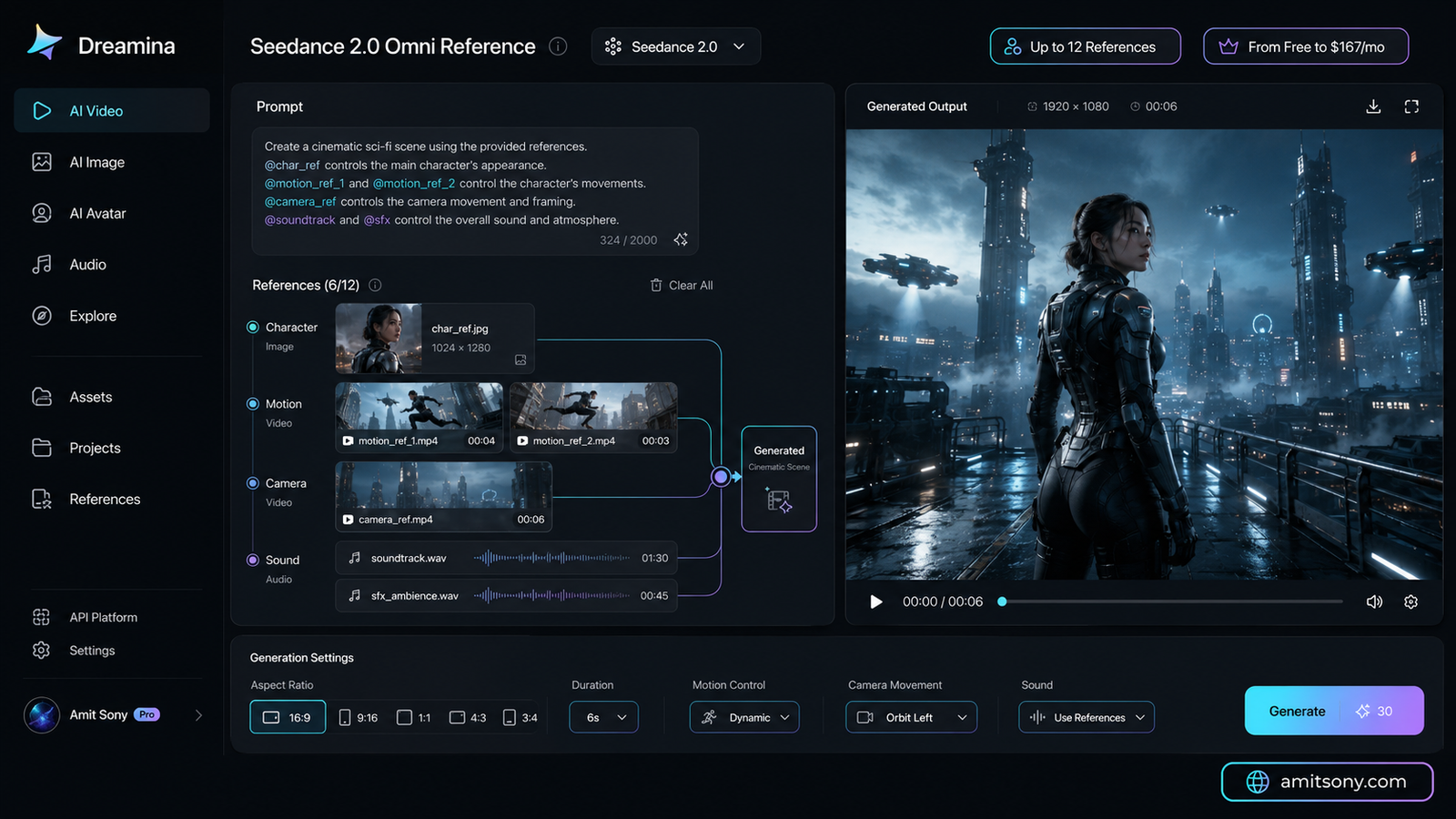
Seedance 2.0 is ByteDance's video model, and it's built around a genuinely different idea of control. Its Omni Reference system accepts up to 12 reference files in a single prompt, mixing text, images, audio clips, and video, and lets you @tag your prompt to point to exactly which asset should inform which part of the output.
That level of control is the reason people describe working with it as feeling closer to directing a film set than typing into a prompt box. Motion realism, especially in action scenes and natural human movement, is consistently rated as the strongest in its category.
The resolution ceiling is the clear tradeoff, 1080p natively, with upscaling available but prone to introducing artifacts on fine detail. Complex scenes with multiple interacting objects can also produce inconsistencies that Sora's physics engine historically handled more cleanly.
Pricing spans an unusually wide range, from a genuinely usable free tier through to $167 per month for professional-scale use, with a solid mid-tier consumer plan landing around $9 per month. One practical advantage over Kling: Seedance's credits roll over between billing periods, which favors anyone with inconsistent, bursty usage rather than steady daily output.
Which One Wins on Video Quality and Resolution?
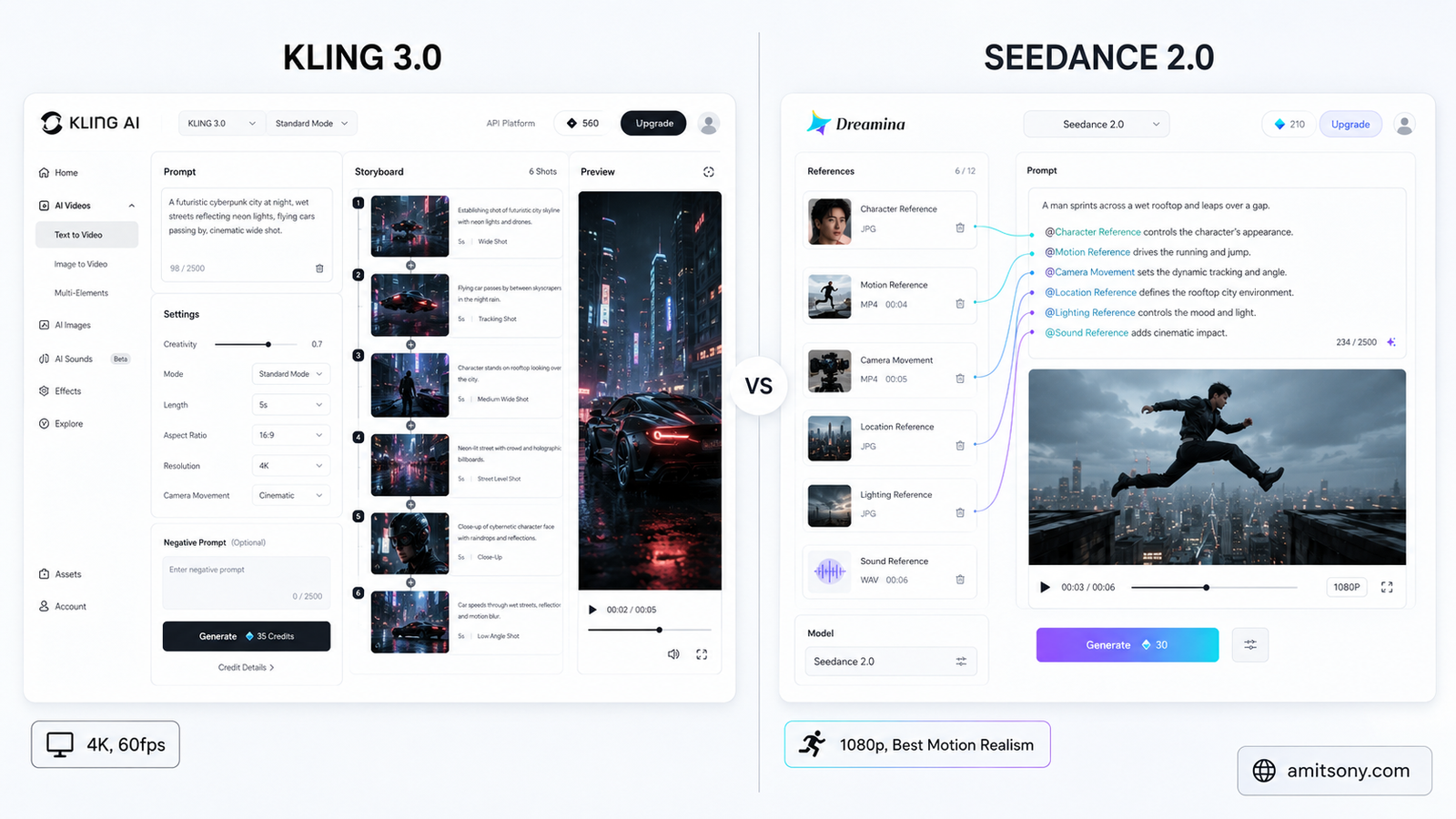
For raw resolution, Kling 3.0 wins clearly. Native 4K at 60fps is a real, measurable spec advantage, and it shows up immediately in anything shot for a large screen or requiring fine detail.
For motion and naturalness, the balance flips. Seedance 2.0's per-frame quality and human movement are consistently described as the most natural in its category, particularly for action sequences where Kling's output can look slightly more rigid.
Neither model matches Sora's old strength in physics simulation for complex multi-object scenes, and that gap is still there. If your project depends heavily on objects interacting with genuinely accurate physics, both of these models can produce inconsistencies a physics-focused model wouldn't.
Which One Wins on Pricing?
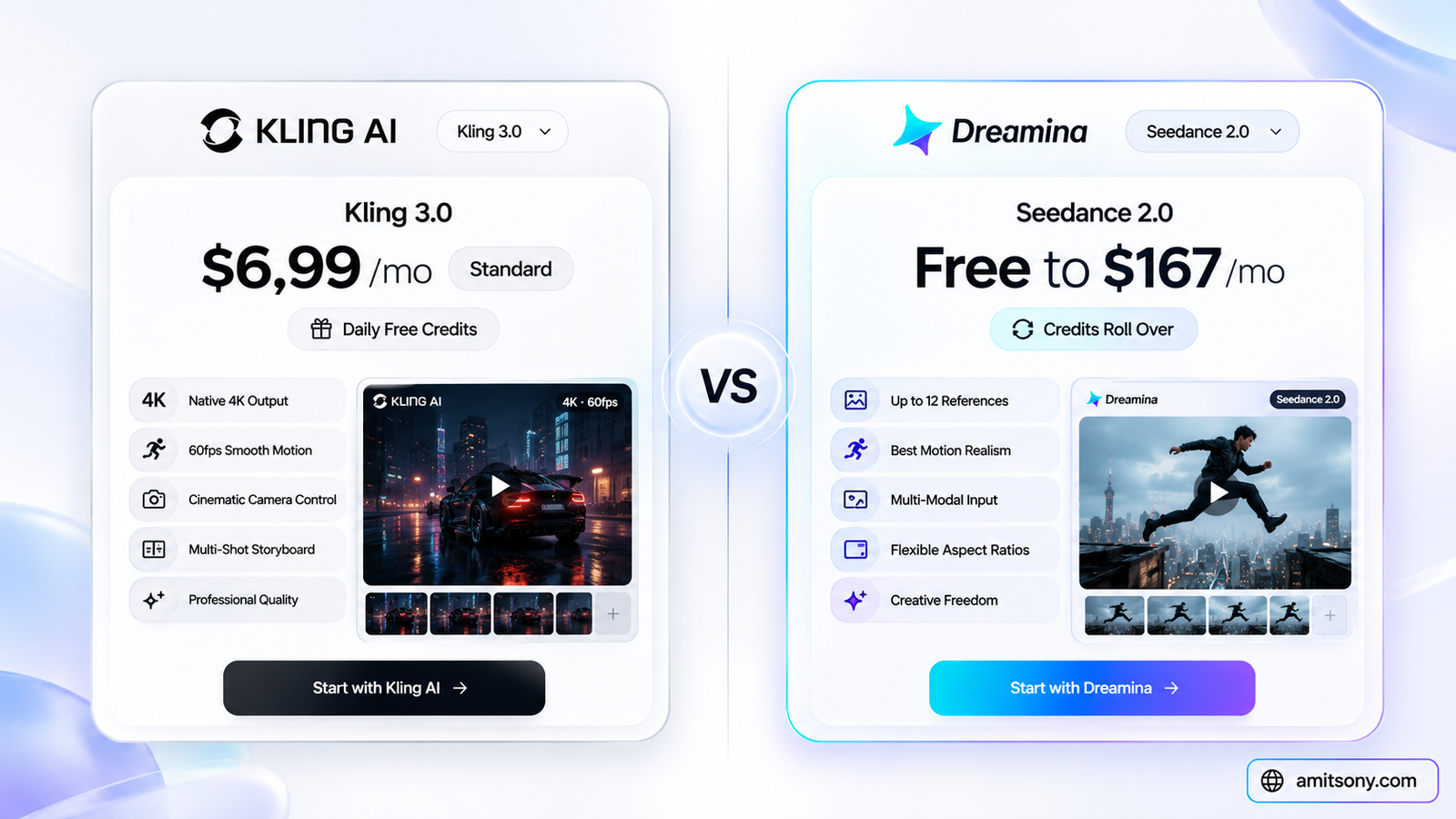
For a predictable, low monthly cost, Kling wins. $6.99 per month for Standard access, plus daily free credits, makes it the easiest to start using without much financial commitment.
For heavy, bursty, or high-volume professional use, Seedance's structure has real advantages despite the higher ceiling. Rolling-over credits mean a slow month doesn't waste what you already paid for, and the free tier is generous enough for genuine prototyping before you spend anything.
If you're building on the API rather than using a consumer interface, Kling is currently the more transparent and cost-effective option for short-form clips under 10 seconds, at roughly $0.084 per second. Seedance's API access has been complicated by a separate issue worth knowing about, covered next.
Where Do You Actually Access Seedance 2.0 Safely?
Search "Seedance 2.0 official website" and you'll land on at least a dozen domains claiming to be the real thing. Most aren't. This is a genuinely confusing landscape, and a few of those sites exist specifically to charge for access that's actually free through the real platform.
The verified access point for international users is Dreamina, ByteDance's official creative platform, also the company behind CapCut. New users get a starting batch of free credits, and a single video generation typically costs around 30 credits. Treat any other domain promising exclusive or early access with suspicion, ByteDance rolls Seedance 2.0 out through Dreamina, not through third-party sites.
There's also a real regulatory wrinkle worth knowing. In March 2026, ByteDance paused its planned public API rollout after receiving cease-and-desist letters from Warner Bros., Disney, and other studios over AI-generated videos using unauthorized celebrity likenesses.
Face generation from realistic human headshots was separately restricted in February 2026 as an anti-deepfake safeguard. Consumer access through Dreamina remained functional throughout, but if you were planning to build a product on Seedance's public API specifically, that path has been indefinitely delayed.
Which One Should You Actually Pick for Your Workflow?
Pick Kling 3.0 if you need consistent, repeatable output at native 4K, you're working with multi-shot narrative sequences, or you want the lowest-friction, lowest-cost way to start generating today.
Pick Seedance 2.0 if the project depends on precise directorial control over multiple reference assets at once, or the content is motion-heavy, action scenes, dance, sports, anything where natural human movement is the whole point.
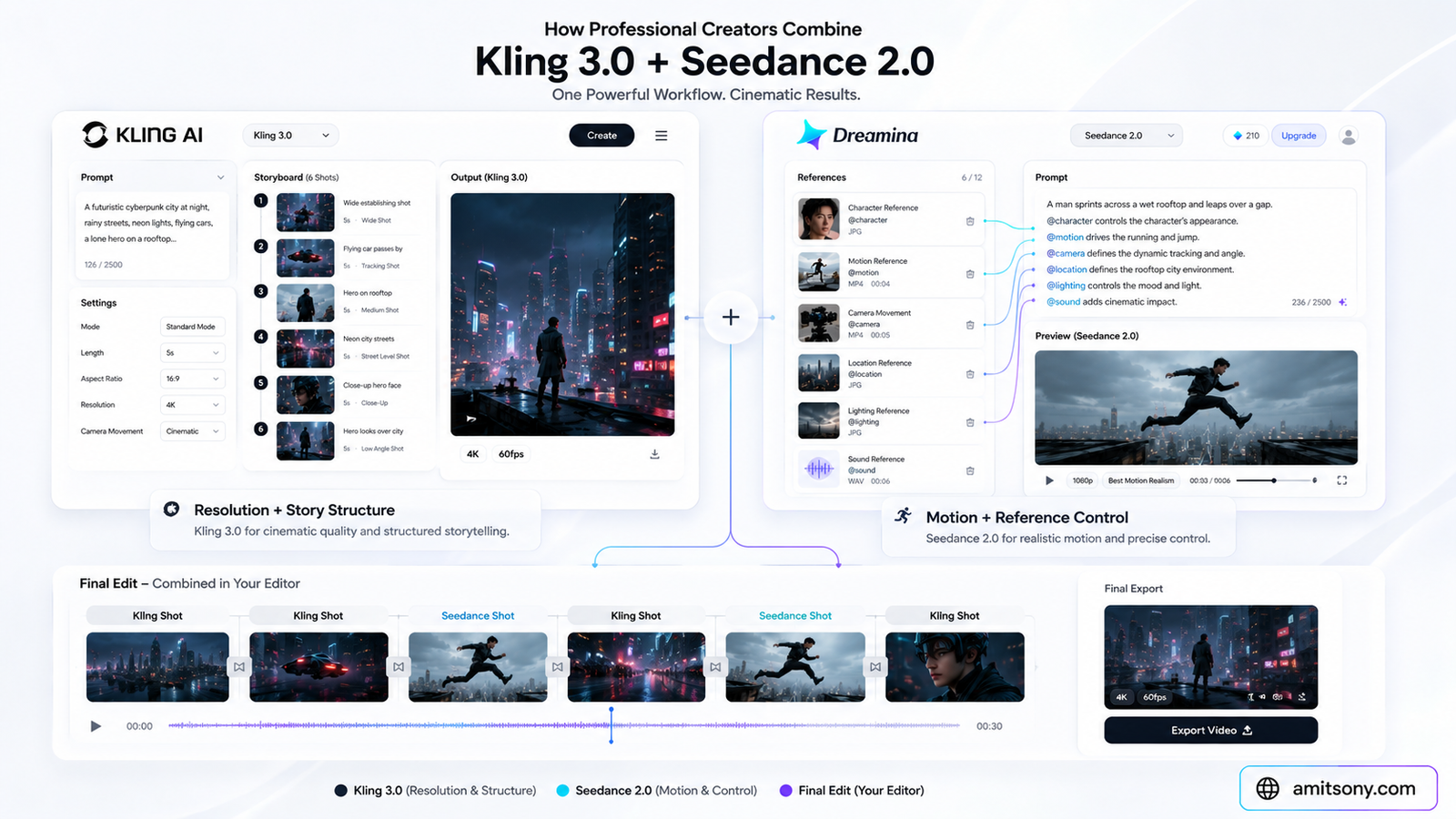
Honestly, treating this as an either-or decision is where most people go wrong. The workflow that keeps coming up among serious creators in 2026 is using both, Kling for the shots that need resolution and structure, Seedance for the shots that need motion realism and tight reference control.
Is There a Way to Get Both Without Two Subscriptions?
Yes, and it's worth knowing about if managing two separate billing cycles and two credit systems sounds like more admin than it's worth. NinjaChat.ai bundles access to both Kling 3.0 and Seedance 2.0 under one subscription, priced at $11 per month.
That's a genuinely useful shortcut for anyone still deciding which model fits their workflow, since it removes the cost of committing to one platform before you've actually compared them on your own footage. It won't replace a direct subscription if you end up a heavy user of just one model, direct access usually offers deeper controls, but as a way to trial both without doubling your monthly spend, it's a reasonable starting point.
Frequently Asked Questions
Is Kling 3.0 or Seedance 2.0 better overall?
Neither wins outright. Kling leads on resolution, price, and ease of use, while Seedance leads on motion realism and multi-asset directorial control.
What happened to Sora that made room for these two?
OpenAI shut down Sora's app and web experience on April 26, 2026, after it failed to generate enough revenue to justify its compute costs.
Where should I actually sign up for Seedance 2.0?
Use Dreamina, ByteDance's official international platform. Most other domains claiming to be the "official Seedance 2.0 website" are not affiliated with ByteDance.
Why did ByteDance pause the Seedance 2.0 API?
Warner Bros., Disney, and other studios sent cease-and-desist letters in March 2026 over unauthorized celebrity likeness generation, leading ByteDance to indefinitely delay the public API rollout.
Which one is cheaper to start with?
Kling 3.0, at $6.99 a month with free daily credits, though Seedance 2.0 also offers a genuinely usable free tier for testing.