
LangGraph and CrewAI give developers full control over custom agents, n8n and Make automate real workflows without heavy coding, and Gumloop and Lindy AI let non-technical teams build agents in plain English. Enterprises leaning toward governance should look at Microsoft Copilot Studio or Salesforce Agentforce instead. Match the platform to your team's technical depth, not the hype.

62% of organizations are already experimenting with or actively scaling AI agents this year, according to McKinsey's latest global survey. But most of what gets called an agent is still a chatbot with extra branding, something that answers questions well but can't actually update your CRM, send an email, or fix its own mistake mid-task.
OpenAI is even retiring its own visual Agent Builder canvas on November 30, 2026, barely months after launching it. That's proof this category is still moving fast enough to burn early bets. This guide skips the marketing decks and focuses on which platforms let you build agents that take real actions, stay observable, and don't fall apart the moment you hand them to a non-technical teammate.
Why Do Most AI Agents in 2026 Still Not Actually Work?
Most agent products on the market today are conversational interfaces wearing an agent costume. They respond well to prompts but stop the moment an action needs write access to a real system, a CRM update, a calendar change, a refund.
The platforms that matter in 2026 clear a higher bar: connector depth, execution reliability, and observability when something goes wrong three steps into a workflow. A platform that can't tell you why an agent failed at 2am isn't production ready, no matter how good its demo looked.
There's also a churn problem. OpenAI announced in June 2026 that it's shutting down Agent Builder's visual canvas by the end of November, only months after shipping it. Betting a whole workflow on one vendor's no-code layer is risky when roadmaps shift this fast.
The platforms below survived that filter. Some are code-first, some are fully visual, and none of them pretend a chatbot and an agent are the same thing.
Which Platform Is Best for Developers Who Want Full Control Over Agent Logic?
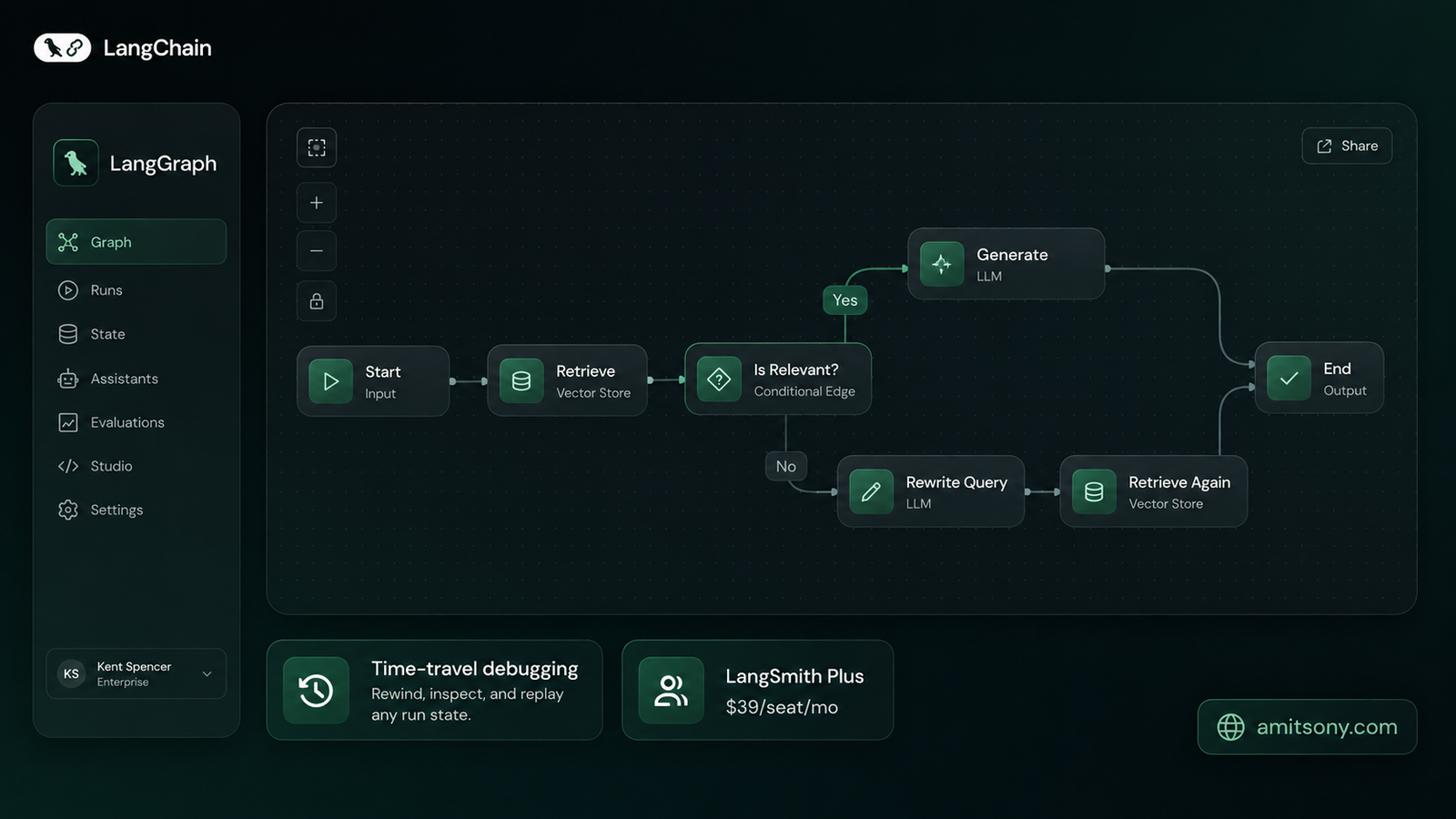
LangGraphlanggraph treats an agent as a graph, not a script. Every decision point, every branch, every retry is an explicit node you can see, test, and roll back to, a feature called time-travel debugging.
The framework itself is completely free and open-source under the MIT license, so you can self-host with zero licensing fees. What most teams end up paying for is LangSmith, LangChain's companion observability platform.
LangSmith's Developer tier is free for 5,000 traces a month, enough for prototyping. Production teams usually land on Plus at $39/seat/month, which includes 10,000 traces with overage billed separately. Enterprise pricing stays custom and unpublished.
This is the pick if your team can write Python and actually wants to see every state transition an agent makes. Skip it if you need something a marketing team can touch without an engineer standing by.
Which Tool Is Best for Multi-Agent Systems That Work as a Team?
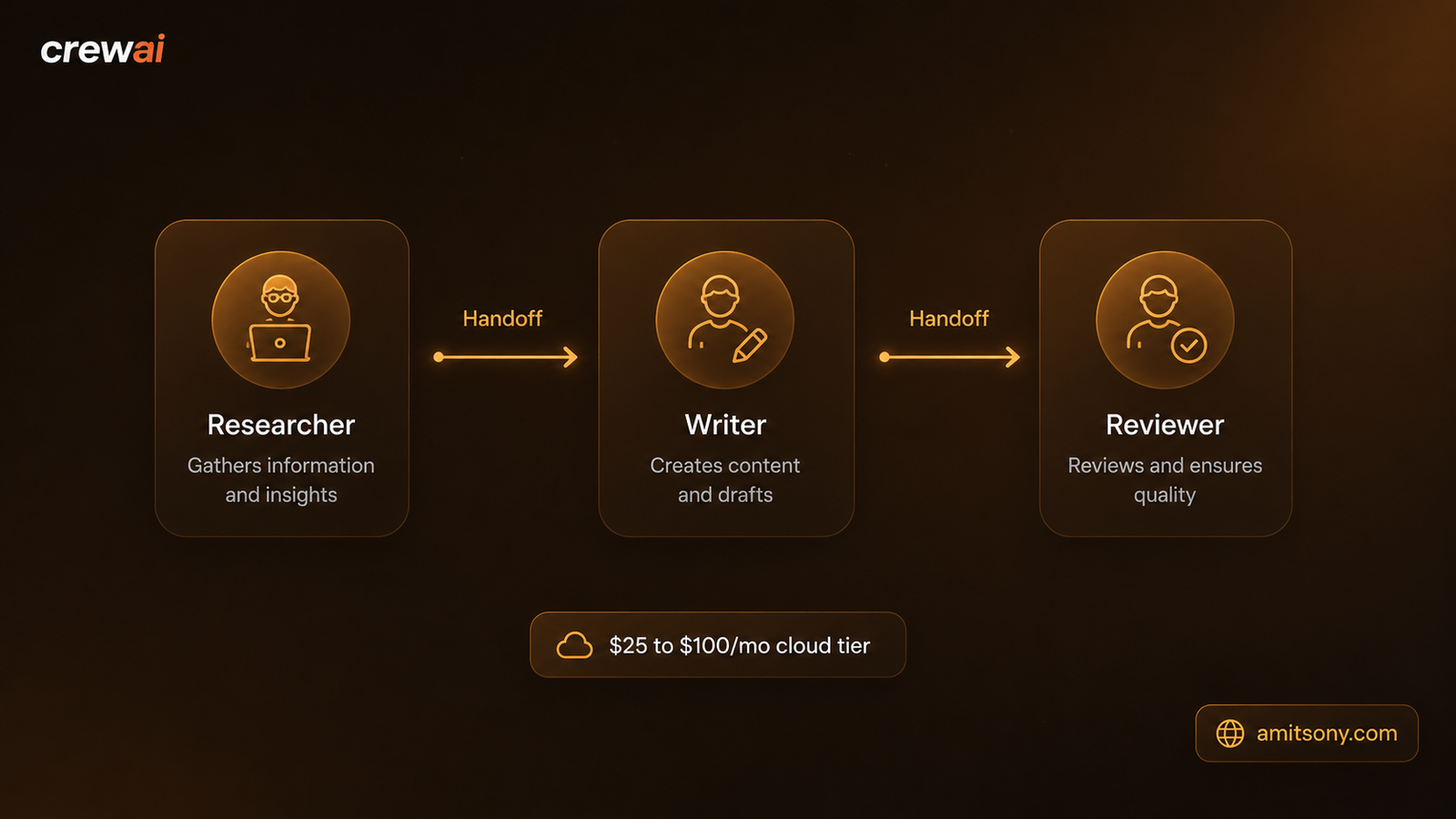
CrewAI whole pitch is role-based teams. Instead of one agent doing everything, you assign a researcher, a writer, and a reviewer, and CrewAI handles how they hand work off to each other.
The core framework is free and self-hostable, same as LangGraph. Where it differs is the managed cloud layer, which bills by execution rather than by seat. Published numbers shift often between sources, but expect somewhere in the $25 to $100 per month range once you outgrow the free tier, before your underlying LLM API costs even start.
That LLM cost is the part people forget. Every agent in a crew makes its own inference call, and every handoff passes conversation history, so a 5-agent crew running real volume can burn through tokens fast even on a cheap CrewAI plan.
Worth it if your workflow genuinely needs specialized agents collaborating, like a research crew or a content pipeline. Overkill if one well-prompted agent could do the job alone.
Which No-Code Platform Is Best for Automating Real Business Workflows?
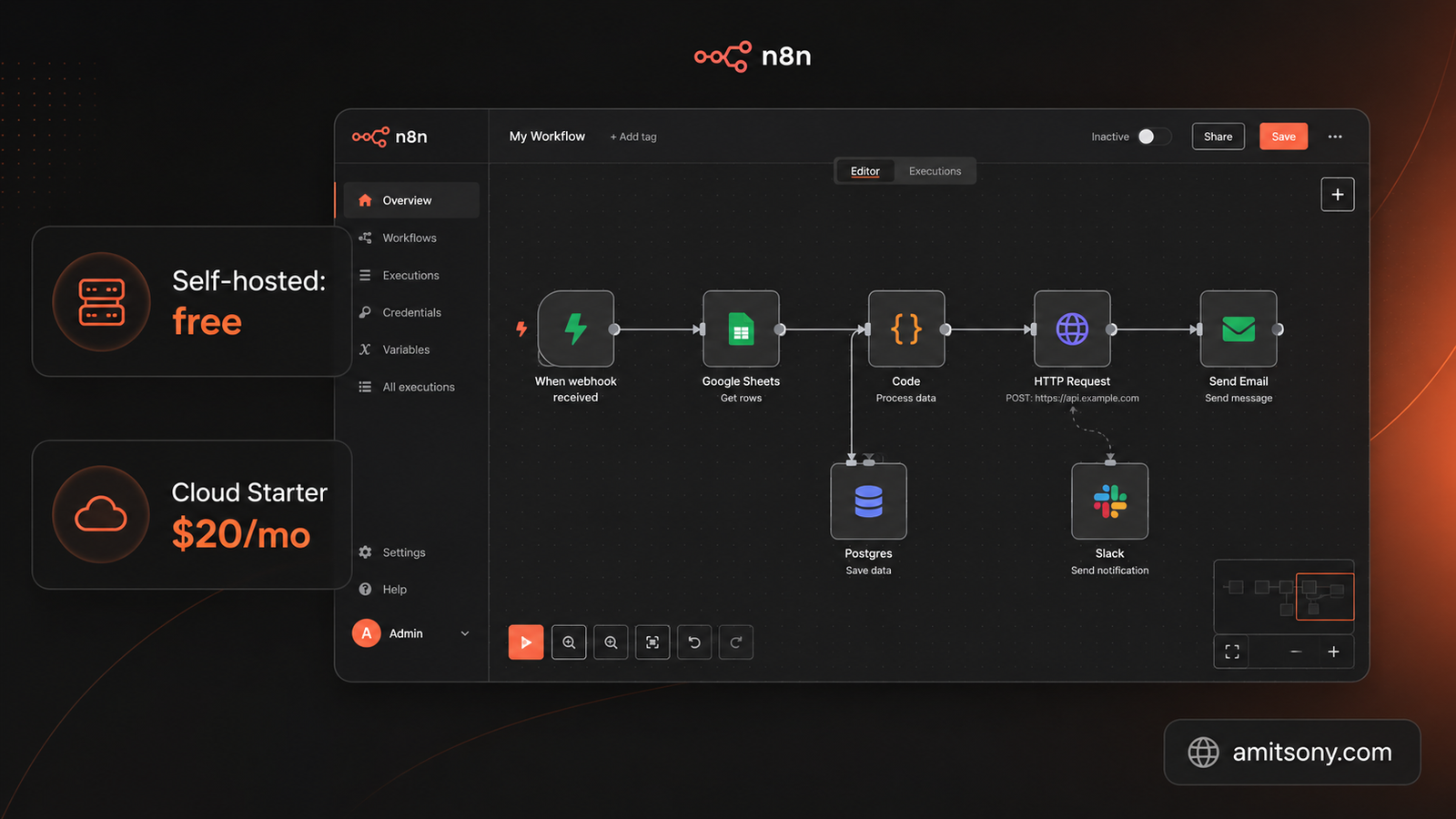
n8n bills per workflow execution, not per step, which matters more than it sounds. A 10-step workflow that runs a thousand times costs the same as a 1-step workflow run a thousand times, unlike per-task pricing on competing tools.
Self-hosting the Community Edition is completely free with unlimited executions. You only pay for the server, typically $5 to $7 a month on a basic VPS. That single fact makes n8n the cheapest serious option for technical teams willing to manage their own infrastructure.
If you'd rather not touch a server, n8n Cloud starts at roughly $20/month for the Starter plan and 2,500 executions, climbing to about $50/month for Pro at 10,000 executions. Every cloud plan now includes unlimited active workflows, so the execution count is the only real limit.
This is the strongest pick for technical teams that want agent workflows wired into 500+ real tools without paying per-step fees. Non-technical teams will find the canvas has a real learning curve.
Which Platform Is Best for Non-Technical Teams Building Visual Agent Scenarios?
Make shipped native AI Agents across every plan on February 11, 2026, meaning the same visual Scenario Builder that non-technical ops teams already use for automations now supports actual agent logic, not just triggers and actions.
Pricing runs on credits, not a flat fee. Free gives you 1,000 credits a month and 2 active scenarios. Core starts around $10.59/mo for 10,000 credits, Pro is about $18.82/mo, and Teams runs close to $34/mo. Every module a scenario touches spends at least one credit, so branchy agent logic burns through the quota faster than the sticker price implies.
Make is the better fit than n8n if your team is marketing or ops people rather than engineers, the visual builder is genuinely more approachable. Just watch credit consumption once agents start making their own branching decisions.
Which Tool Is Best for an AI-Native No-Code Agent Builder?
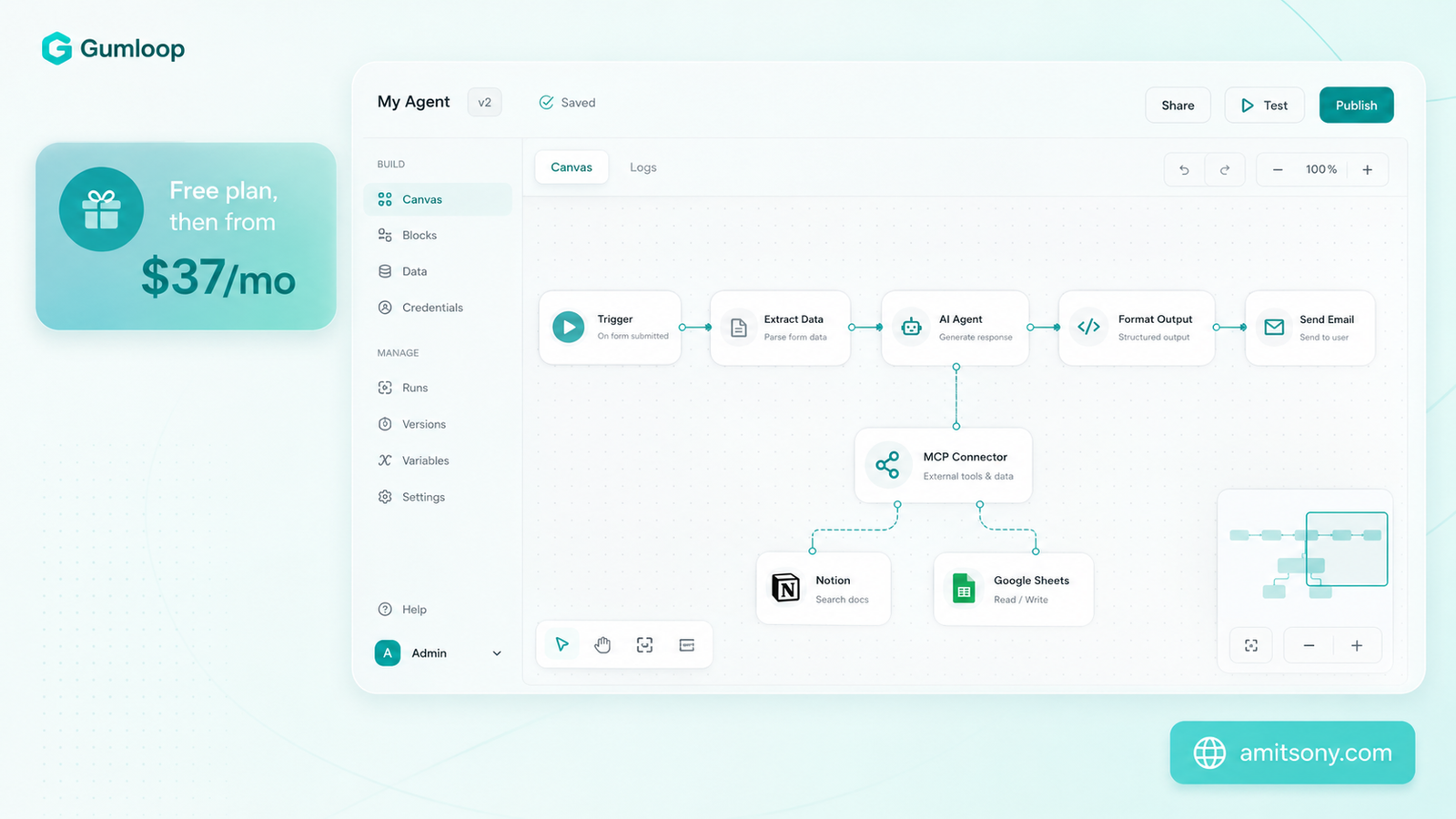
Gumloop was built agent-first rather than automation-first. It includes premium LLM models inside the platform, so you're not juggling separate API keys for every model you want an agent to use, and it supports MCP, the emerging standard for connecting agents to external tools.
Pricing starts with a free plan, then moves to paid tiers from $37/month. Teams at companies like Shopify and Instacart reportedly use it internally, which says something about how it scales past a solo builder's weekend project.
If you want an agent builder that feels native to 2026 rather than a workflow tool with an AI plugin bolted on, this is worth trying before Make or n8n.
Which Platform Is Best for a Personal AI Executive Assistant?
Lindy AI repositioned itself in early 2026 from a general agent builder into something closer to a consumer-facing AI executive assistant. Describe a task in plain English, like managing your inbox or researching leads, and it builds the agent for you.
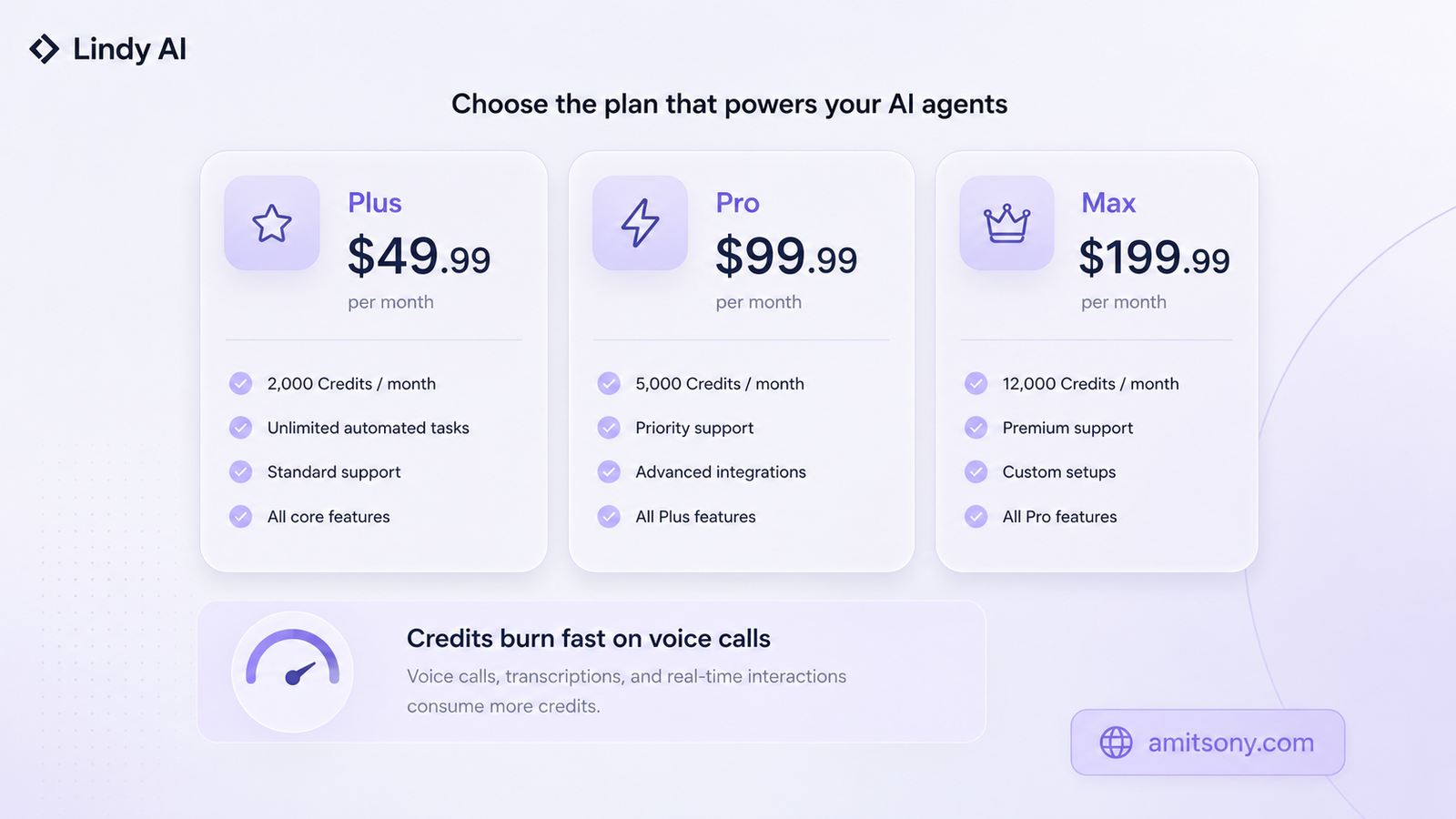
Pricing is Plus at $49.99/mo, Pro at $99.99/mo, and Max at $199.99/mo, all billed monthly with no annual discount. There's no permanent free plan anymore, just a 7-day trial.
The catch is the credit system. Lindy meters everything by compute intensity, and voice calls burn credits fast. A single qualified lead with a follow-up call can eat through dozens of credits in one go, so budget more headroom than the plan names suggest.
Good for solo operators who want an assistant that just handles email and meetings without touching a workflow canvas. Skip it if you need predictable monthly costs, the credit meter makes budgeting genuinely hard.
Which Platforms Should Enterprises Consider for Governance and Scale?
Once an organization needs SSO, audit logs, and compliance evidence baked into every agent action, the calculus changes. Microsoft Copilot Studio, Salesforce Agentforce, and Google's Vertex AI Agent Builder all compete here, each tied tightly to their own cloud ecosystem.
Sierra is worth a specific mention if your use case is narrowly customer service, its Agent Data Platform keeps long-term customer context across interactions. Forrester's own 2026 review flags it as weaker on legacy system integration, so it's not a universal enterprise pick.
None of these are the right starting point for a small team testing an idea. They make sense once you're already deep inside Microsoft, Salesforce, or Google's ecosystem and need the governance layer more than the building experience.
How Do You Actually Pick the Right Agent Platform for Your Team?
Full control, comfortable with code: LangGraph
Multi-agent teams collaborating on complex tasks: CrewAI
Technical team automating real business tools: n8n
Non-technical team, visual builder: Make
Agent-native no-code building: Gumloop
Personal AI assistant, solo operator: Lindy AI
Enterprise governance and compliance: Microsoft Copilot Studio or Salesforce Agentforce
Start with the smallest platform that solves today's actual problem. Every team on this list started with one working agent before they built ten.
Frequently Asked Questions
What's the difference between an AI agent and a chatbot?
A chatbot answers questions. An agent takes actions, updating a CRM, sending an email, or completing a task, using tools and APIs without a human doing each step manually.
Is LangGraph or CrewAI better for building agents?
LangGraph gives more granular control over a single agent's logic. CrewAI is built specifically for multiple agents collaborating as a team, so the choice depends on whether you need one agent or several working together.
What happened to OpenAI's Agent Builder?
OpenAI announced in June 2026 that it's retiring the visual Agent Builder canvas on November 30, 2026, so new projects should avoid building around it long-term.
Can I build AI agents for free?
Yes. LangGraph and CrewAI's core frameworks are free and open-source, and n8n's self-hosted Community Edition has no execution limits, you only pay for server hosting.
Which AI agent platform is easiest for non-technical teams?
Make and Gumloop both use visual builders designed for non-engineers. Lindy AI goes further, letting you describe a task in plain English instead of building a workflow at all.