
Udio wins on vocal realism, Stable Audio is the pick for MIDI and DAW work, AIVA owns orchestral scoring with full copyright, and Mureka suits creators who already write lyrics. Beatoven.ai and Mubert are cheaper for background music, while Riffusion stays free. No single tool replaces Suno completely, match the tool to the job.

Suno crossed 2 million paying subscribers this year, yet Universal Music Group and Sony Music are still suing the company over training data, Warner's November settlement aside. Studio credits burn on renders that fail, the free tier bans commercial use entirely, and longtime users have been grumbling about a groove that feels stiffer since the vocal upgrades on v5.5. Suno is still the fastest way to get a finished song from a single prompt. It just isn't the only answer anymore.
This guide skips the recycled top-10 roundups and names the one thing each alternative genuinely does better: cleaner vocals, real MIDI export, orchestral scoring, cheaper licensing, or a workflow built around lyrics you already wrote. Pick based on what you're actually making, not the tool with the loudest marketing.
Why Are Creators Looking Beyond Suno in 2026?
Money and legal risk sit at the top of the list. Sony and UMG filed separate copyright suits against Suno back in June 2024, and neither has settled the way Warner did. That uncertainty rides along with every commercial track made on the platform, paid plan or not.
Then there's the credit math. Suno's free Basic plan gives 50 credits a day, roughly 10 songs, but strictly for personal use. Commercial rights start at $10/mo on Pro, and credits vanish on renders that flop, not just the ones you keep.
Quality complaints round it out. Vocals got noticeably better with v5.5, but a chunk of the user base says the instrumental groove feels stuck and more synthetic than earlier versions. Voice and persona regressions have frustrated the power users who built entire channels around a specific Suno voice.
None of this makes Suno bad. It's still the easiest on-ramp for someone who wants a finished song from one prompt. It just means "easiest" and "best for your specific job" have stopped being the same question.
Which AI Music Generator Has the Best Vocal Quality?
Udio now carries full licensing from both Universal Music Group and Warner Music Group, which settled a big chunk of its legal risk overnight. The output renders in 48kHz stereo with instrument separation clean enough that you can actually pick out individual parts instead of one wall of sound.
Magic Edit is the feature that sells it. You can regenerate one section of a track, a bridge or a weak second verse, while the rest stays untouched. Suno doesn't give you that kind of surgical control.
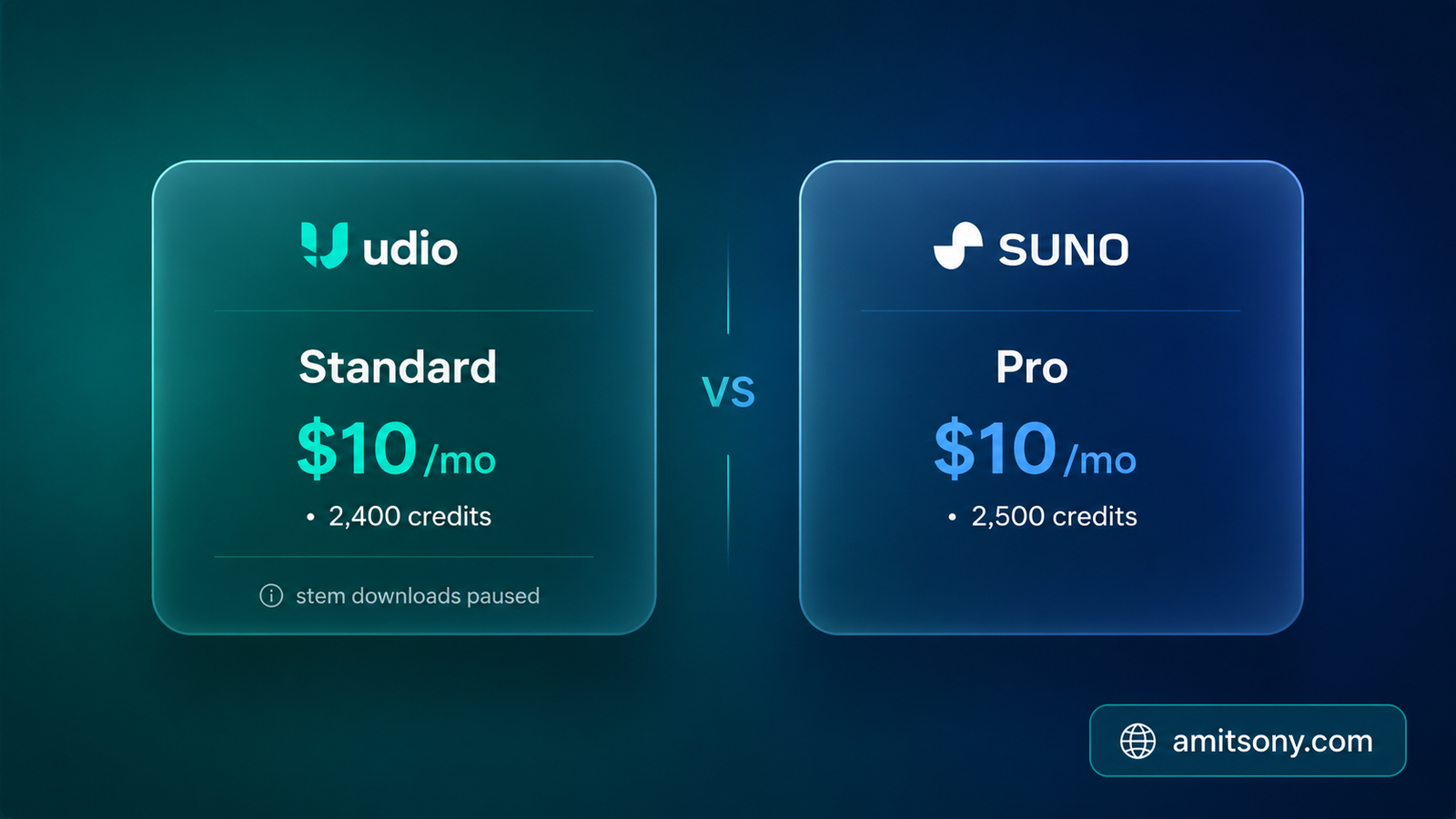
Pricing runs Free at 10 credits a day with a 100-credit monthly cap, Standard at $10/mo for 2,400 credits, and Pro at $30/mo for 6,000 credits. Credits don't roll over on any paid tier.
Here's the catch nobody advertises: after Udio's licensing deal with UMG, WAV, video, and stem downloads got suspended for most users. You can generate a gorgeous song and then discover you can't actually pull the file you need.
If pure vocal realism is the whole reason you're shopping around, Udio earns the $10. Just don't sign up expecting stems today, check the current download status before you build a workflow around it.
Which Tool Is Best for Producers Who Need MIDI and Stems?
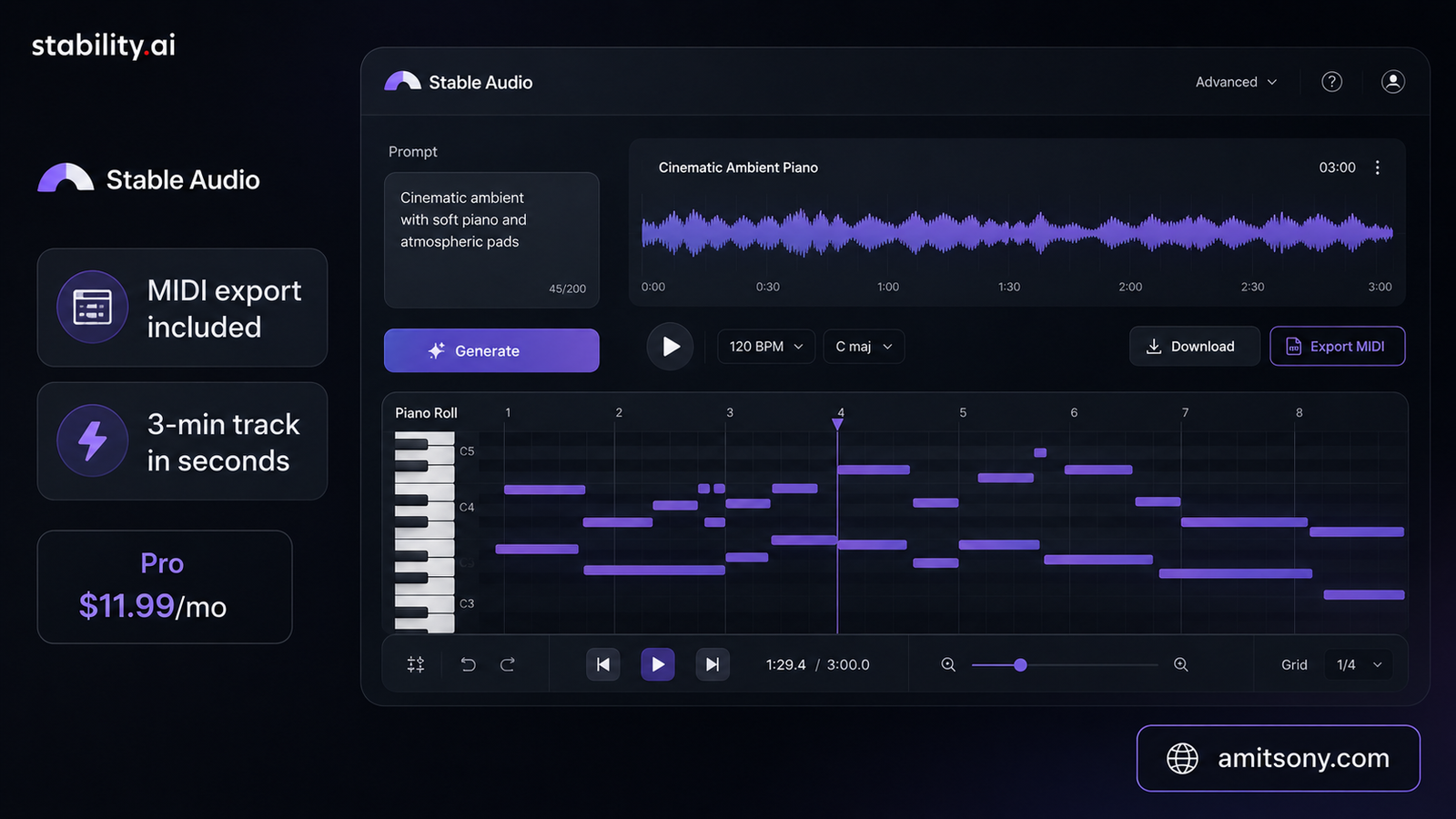
Stable Audio from Stability AI is built for a different crowd entirely. Its newest model generates a 3-minute track in seconds using an 8-step process, and it exports MIDI alongside the audio file, something no other major generator on this list does.
MIDI export means you can drag the composition straight into Logic, Ableton, or Pro Tools and re-trigger any part with your own sound libraries. You're not stuck with stems, you get the actual musical events underneath the recording.
The trade-off is vocals. Stable Audio is primarily an instrumental and sound-design engine, so a pop song with sung lyrics isn't its lane. Pricing is Free to start, Pro at $11.99/mo, and Studio at $29.99/mo for stem separation and advanced MIDI editing.
This is the only tool here built for people who actually live inside a DAW. If you want a finished pop song with a vocal, skip it and go back to Udio or Suno.
What's the Best AI Music Generator for Film, Game, and Orchestral Scoring?
AIVA has been building toward this niche longer than most of its competitors have existed. It offers 250+ styles, a real editor for adjusting individual instrument lines, and MIDI export across every plan, including free.
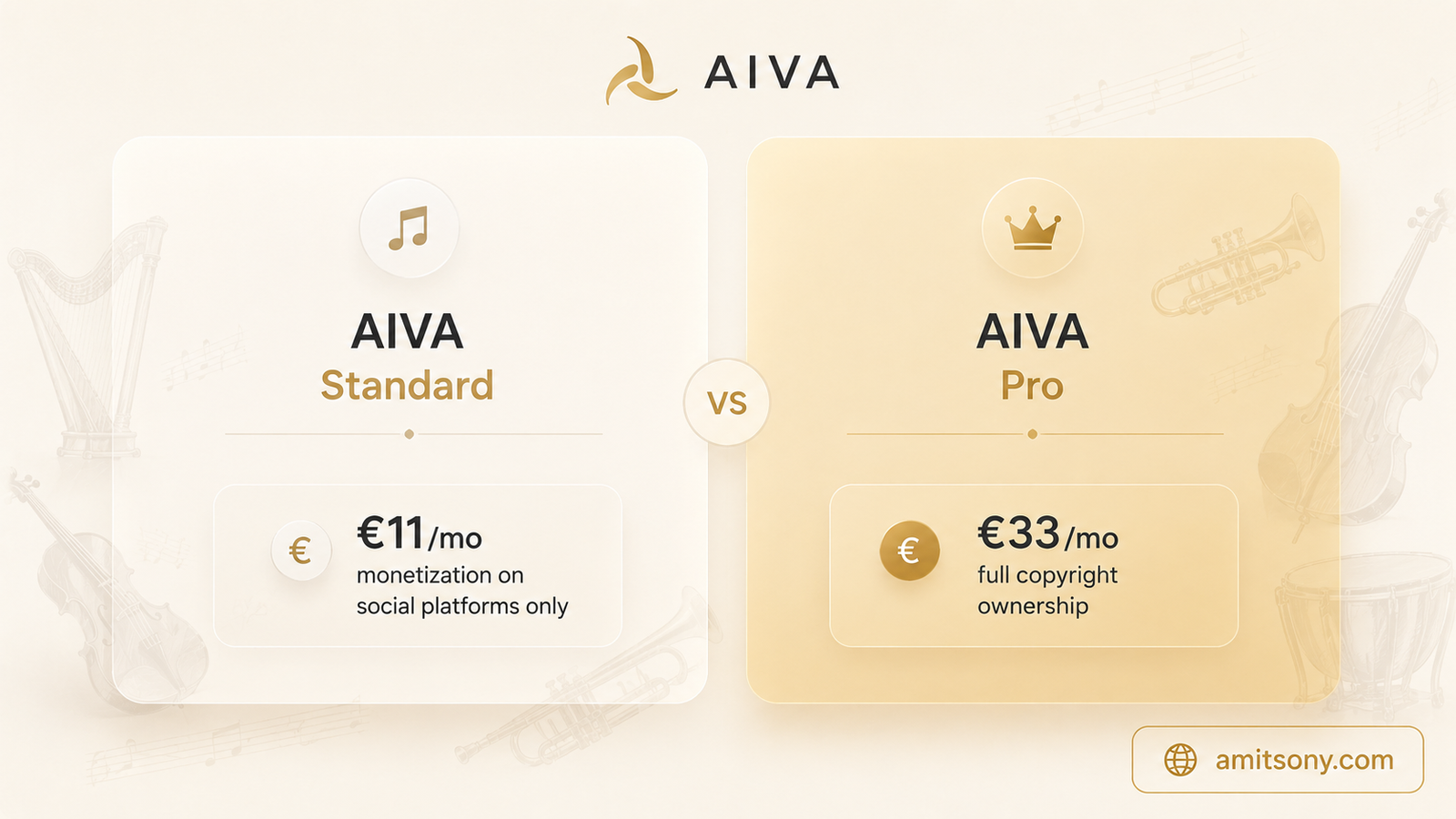
The Forever plan costs nothing and gives you 3 downloads a month for non-commercial use, with AIVA attribution required. Standard runs €11/mo billed annually, roughly $12, for 15 downloads and limited monetization on YouTube, Twitch, TikTok, and Instagram.
Pro is where the real value sits: €33/mo billed annually, close to $36, for 300 downloads a month, every export format including WAV, and full copyright ownership of what you make. That last part is rare. Most AI music tools hand you a license to use the output, not the copyright itself.
Students and educators get a discount of 15 to 30% depending on billing cycle. AIVA is the only tool on this list where the top plan makes you the actual owner, not just a licensee. That matters if you're scoring client work and someone eventually asks who owns the track.
Which Alternative Works Best If You Already Have Your Own Lyrics?
Mureka solves a specific annoyance: most AI music tools take your lyrics and force them into whatever melody the model prefers. Mureka matches its phrasing to your actual verse and chorus breaks instead, which matters a lot if you've already written something you care about.
It also splits finished tracks into up to 12 stems, generates pure instrumentals, and ships a podcast mode most competitors skip entirely. A desktop plugin brings the generation step directly into your DAW.
Pricing starts around $9/mo for the Pro plan, covering roughly 500 songs. Premier runs closer to $27/mo and unlocks WAV export, stem separation, Studio access, and voice cloning. Here's the catch: production features like stems, MIDI pulls, and video exports burn through a separate internal currency called Gold, and a real workflow eats through that pool faster than the sticker price suggests.
Mureka is the right call if you write your own lyrics and hate watching an AI rewrite your verse to fit its own melody. Just budget more Gold than you think you'll need before you commit to Premier.
What's the Cheapest Royalty-Free Option for YouTube and Podcasts?
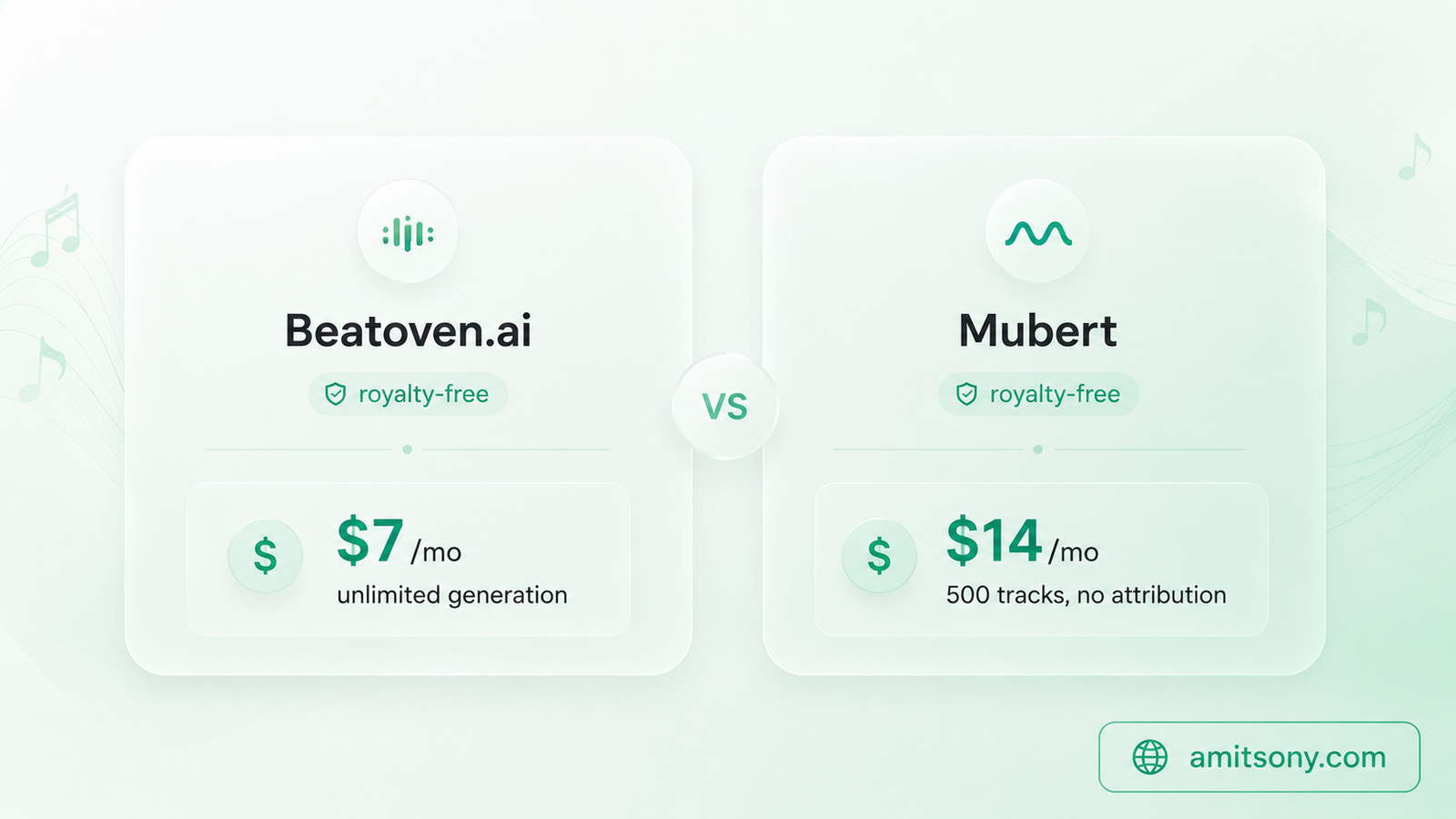
Two tools cover this niche well, and they solve slightly different problems. Beatoven.ai works from mood and genre selections rather than open text prompts: pick happy, tense, or calm, set your duration, and it composes a track to fit exactly. The Creator plan costs $7/mo for unlimited generation with commercial licensing, no per-track fees.
Mubert takes a different route. The free Ambassador plan gives 25 tracks a month with attribution and a watermark, while Creator at $14/mo removes both and unlocks 500 royalty-free tracks. It's instrumental only, no vocals at all, but the developer API is genuinely well documented if you're building music into an app, starting at $199/mo for the Startup tier.
For a single YouTube channel or podcast, Beatoven's $7 plan is the better deal by a wide margin. Mubert only starts winning once you need the API or you're generating hundreds of tracks a month across multiple properties.
Is There a Suno Alternative With Cleaner Commercial Licensing?
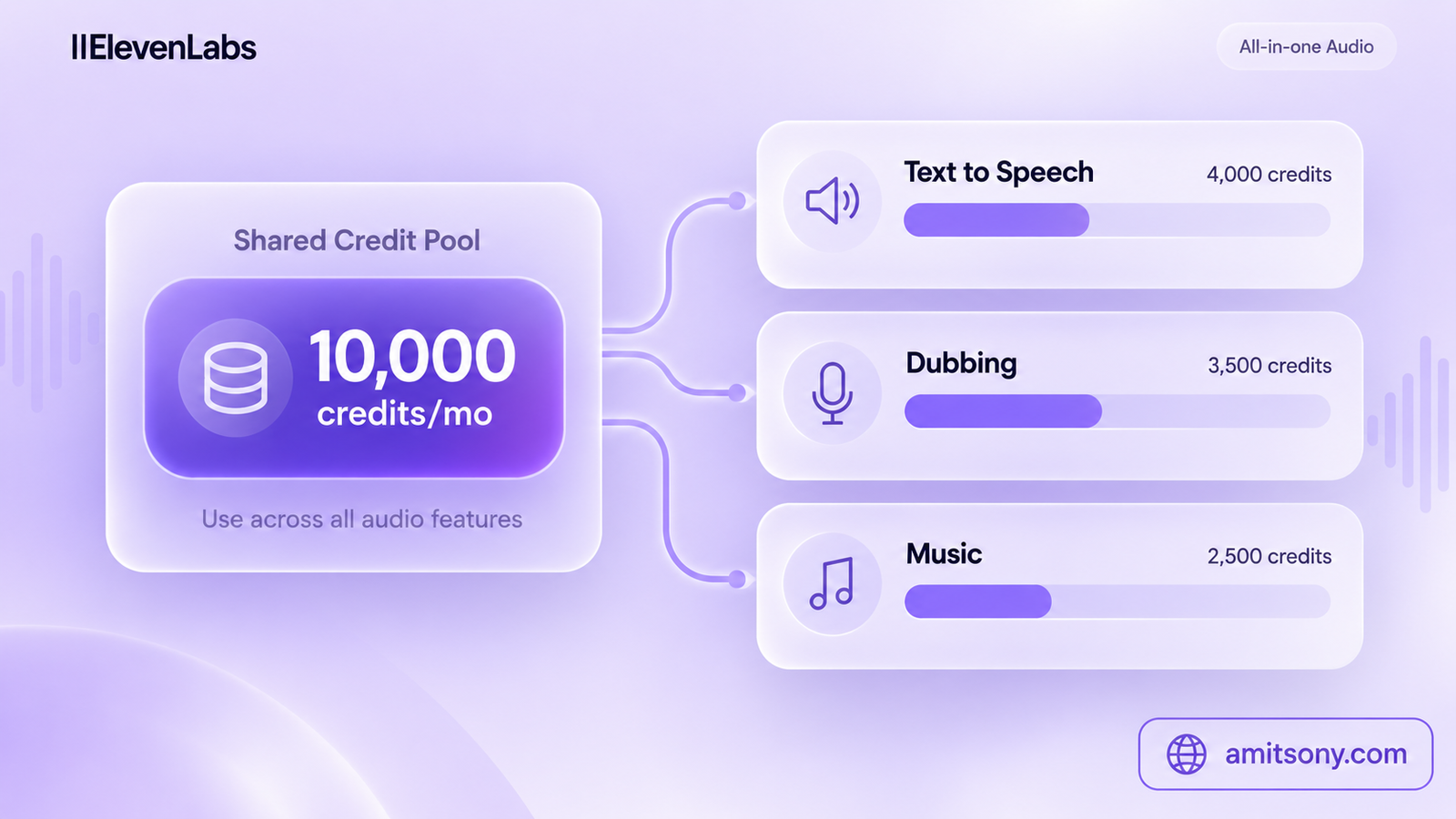
ElevenLabs Musicmusic folds directly into ElevenLabs' existing credit system rather than launching as its own separate product. The Free tier gives 10,000 credits a month shared across text-to-speech, dubbing, sound effects, and music, but there's no commercial license until you upgrade.
Starter at $5/mo unlocks commercial use for light usage. Creator at $22/mo is where most working creators land, though ElevenLabs currently runs a first-month discount at roughly half price.
The real advantage shows up if you're already paying for ElevenLabs voiceover or dubbing work. One licensing agreement now covers your music and your voice output, instead of juggling two separate platforms with two separate terms of service.
The downside is just as real: because credits are shared across every product, a heavy month of dubbing or voice cloning eats into your music budget too. This isn't the tool to reach for if music is your main output. It earns its spot only if you're already inside the ElevenLabs ecosystem and want one invoice instead of three.
What's the Best Free Suno Alternative With No Login Required?
Riffusion stays genuinely free, no account, no credit card, no daily cap that pushes you toward a paid tier. Output is royalty-free for commercial use, which is unusual for a tool with zero cost attached.
The trade-off is polish. Development has moved slower than the funded, VC-backed players on this list, so don't expect the same vocal realism or mix quality you'd get from Udio or Suno's newest model. It's built for experimenting, not shipping a finished single.
Riffusion is the one to bookmark for pure messing around, testing an idea before you spend real credits somewhere else. Don't expect it to replace a paid tool for anything going out to a client.
Which Tool Produces the Most Realistic AI Vocals for Pop and Ballads?
Minimax Music launched its 2.5 model on January 28, 2026, from the same company behind Hailuo AI video. The vocal output carries natural vibrato, audible breath control, and smoother transitions between chest and head voice than most competitors manage.
Paragraph-level control is the other headline feature: 14 structural tags let you plan an emotional arc before generating anything, rather than hoping the model guesses your intended build from the chorus down.
There's no permanent consumer subscription here yet. Most access runs pay-per-generation through developer platforms, somewhere around $0.10 to $0.15 per song,
If your priority is a singer that sounds human rather than a finished, polished production, this is worth the dime-a-try cost. It's not a one-click consumer app the way Suno is, so budget a little extra patience getting it running.
Which Suno Alternative Should You Actually Pick?
Best vocal realism: Udio, once stem downloads come back fully.
Best for DAW producers: Stable Audio, for the MIDI export nothing else offers.
Best for owning what you make: AIVA Pro, for full copyright instead of a license.
Best if you write your own lyrics: Mureka, for phrasing control and stems.
Cheapest for content creators: Beatoven.ai, for unlimited royalty-free background beds.
Best free option: Riffusion, for zero cost and zero login.
There's no single winner here, and that's the actual point. Suno remains the fastest path from an idea to a finished song. Everything on this list exists because "fastest" isn't always what a given project actually needs.
Frequently Asked Questions
Is Udio better than Suno in 2026?
For vocal realism and mix quality, most listeners prefer Udio. For getting a finished song from one prompt with minimal fuss, Suno is still faster.
Which Suno alternative is free forever?
Riffusion has no subscription and no login required. AIVA's Forever plan and Suno's own free Basic plan also stay free but come with real usage limits.
Can I legally sell music made on these tools?
Only on paid plans in almost every case. Check each platform's terms before publishing anything, since free-tier output is typically restricted to personal, non-commercial use.
What's the best AI music tool for background video content?
Beatoven.ai at $7/mo or Mubert's Creator plan at $14/mo, both purpose-built for royalty-free content beds rather than full songs.
Does any Suno alternative export real MIDI?
Stable Audio and AIVA both do, on every paid plan, which matters if you plan to keep editing the composition inside a DAW afterward.
Are Suno alternatives safe from copyright issues?
Using any of these platforms is legal under their own terms of service. What stays unresolved is the copyright status of output made on tools still fighting active lawsuits, Suno included.