

Claude Sonnet 5 beats GPT-5.5 and Gemini 3.1 Pro on SWE-bench Pro at a fraction of the cost, making it the strongest price-to-performance coding model available. It's not the outright leader everywhere though, GPT-5.6 Sol scores higher on Terminal-Bench 2.1, and Gemini 3.1 Pro still wins on front-end and web-dev-specific benchmarks.

A model that costs one-fifth of its own flagship's input price just posted the best SWE-bench Pro score of any non-flagship model on the market. That's the actual headline behind Claude Sonnet 5's launch, and it's a more interesting story than most of the breathless coverage that followed it.
This review sticks to numbers that are actually verifiable, Anthropic's own system card, cross-checked against independent benchmark trackers, rather than the inflated scores that got repeated across blogs within hours of launch. Here's what Sonnet 5 actually scores, what it costs, and where it genuinely loses to the competition.
What Is Claude Sonnet 5 and When Did It Launch?
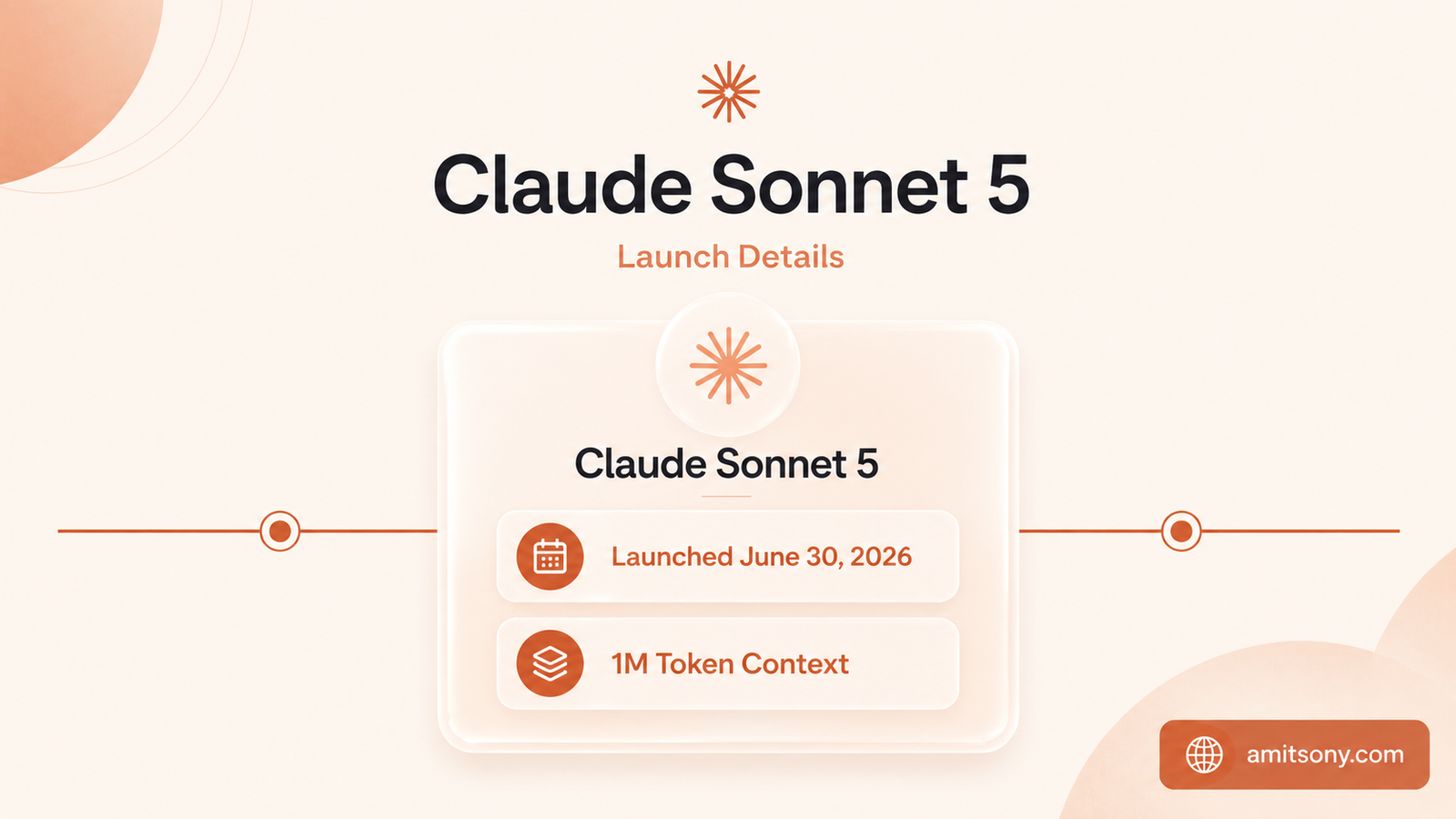
Claude Sonnet 5 went live on June 30, 2026, across Claude.ai, Claude Code, and the Claude API simultaneously. It's the default model for Free and Pro Claude.ai users, and it's also selectable on Max, Team, and Enterprise plans alongside Opus 4.8.
Anthropic's own positioning is specific and worth taking seriously. The company describes Sonnet 5 as closing the gap with Opus 4.8 rather than replacing it, a mid-tier model that now performs close to what previously required a much more expensive model to achieve.
The model ships with a 1M-token context window at standard pricing, no long-context premium the way some competitors charge, plus adjustable reasoning effort levels from low up through an x-high setting for the hardest agentic tasks. It also uses an updated tokenizer, which matters more than it sounds, more on that in the pricing section.
How Does Claude Sonnet 5 Actually Score on Coding Benchmarks?
Here's where most coverage of this launch went wrong. Within hours, blogs were quoting numbers like 82.1% and 92.4% on SWE-bench for Sonnet 5. Neither figure appears anywhere in Anthropic's actual announcement, pricing docs, or system card.
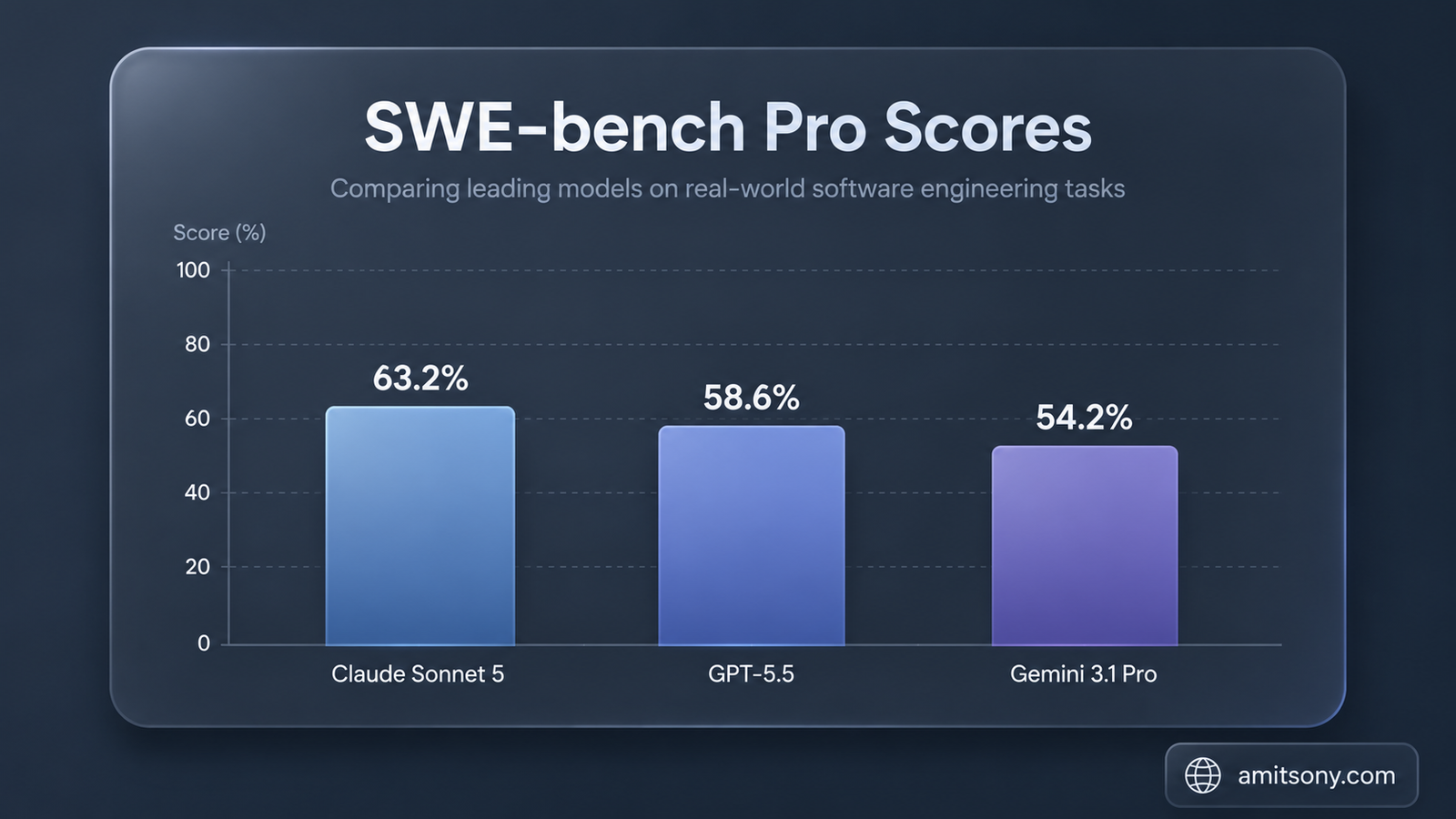
The real number is 63.2% on SWE-bench Pro, a harder, less saturated version of the benchmark than the more commonly cited SWE-bench Verified. On Terminal-Bench 2.1, Sonnet 5 scores 80.4%. On HLE with tool use, it scores 57.4%.
Compared on the same SWE-bench Pro test, the field lines up like this: Claude Fable 5 leads at 80.3%, Opus 4.8 follows at 69.2%, then Sonnet 5 at 63.2%, GPT-5.5 at 58.6%, the older Sonnet 4.6 at 58.1%, and Gemini 3.1 Pro at 54.2%. That makes Sonnet 5 the strongest model outside Anthropic's own Opus and Fable tiers on this specific test.
Worth flagging honestly: on July 8, 2026, OpenAI published an audit finding that roughly 30% of SWE-bench Pro tasks contain flawed tests or misleading descriptions. That doesn't erase the comparison, every model here was scored on the same flawed benchmark, but it's a real reason to treat any single number as directional rather than gospel.
Is Claude Sonnet 5 Better Than GPT-5.5 for Coding?
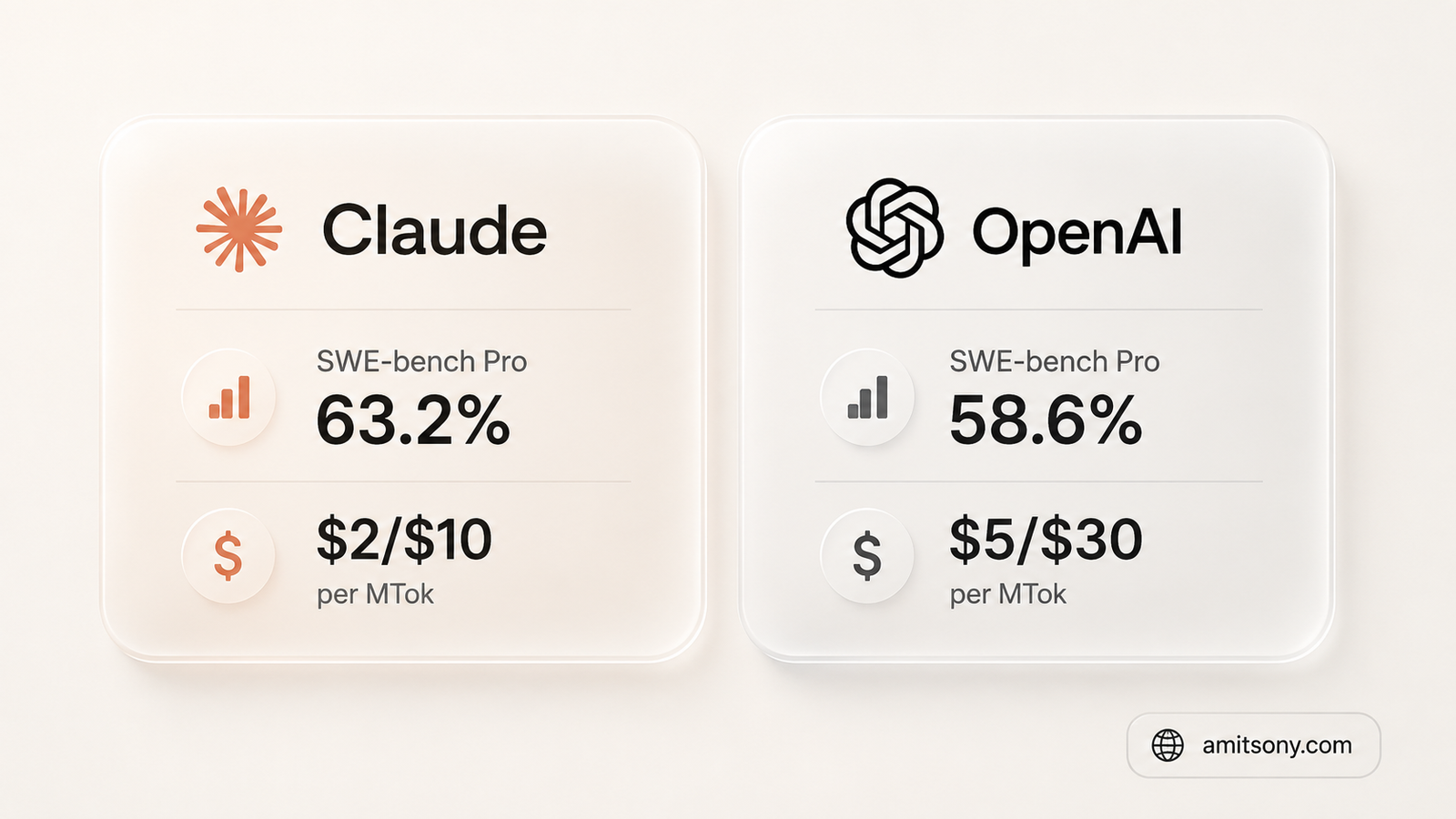
On the numbers that overlap, yes, and by a consistent margin. GPT-5.5 scores 58.6% on SWE-bench Pro against Sonnet 5's 63.2%, a 4.6-point gap. On Terminal-Bench 2.1, Sonnet 5 leads 80.4% to 78.2%.
The pricing gap makes this more interesting than the benchmark gap alone. GPT-5.5 runs $5 per million input tokens and $30 per million output tokens. Sonnet 5's introductory pricing is $2 per million input tokens and $10 per million output tokens through August 31, 2026, rising to $3 and $15 after that. Even at standard post-August pricing, Sonnet 5 undercuts GPT-5.5 by 40% on input and 50% on output.
GPT-5.5 does hold one real edge. It leads ARC-AGI-2 by a narrow margin, and it has the deeper ecosystem, Codex CLI reportedly has millions of weekly developers and months more production hardening behind it. Benchmarks aren't the only thing that matters when a tool has to fit into an existing workflow.
Does Claude Sonnet 5 Beat GPT-5.6 or Gemini 3.1 Pro?
This is where the "best coding model" claim gets genuinely complicated, and any article that gives you a clean single answer here is skipping details.
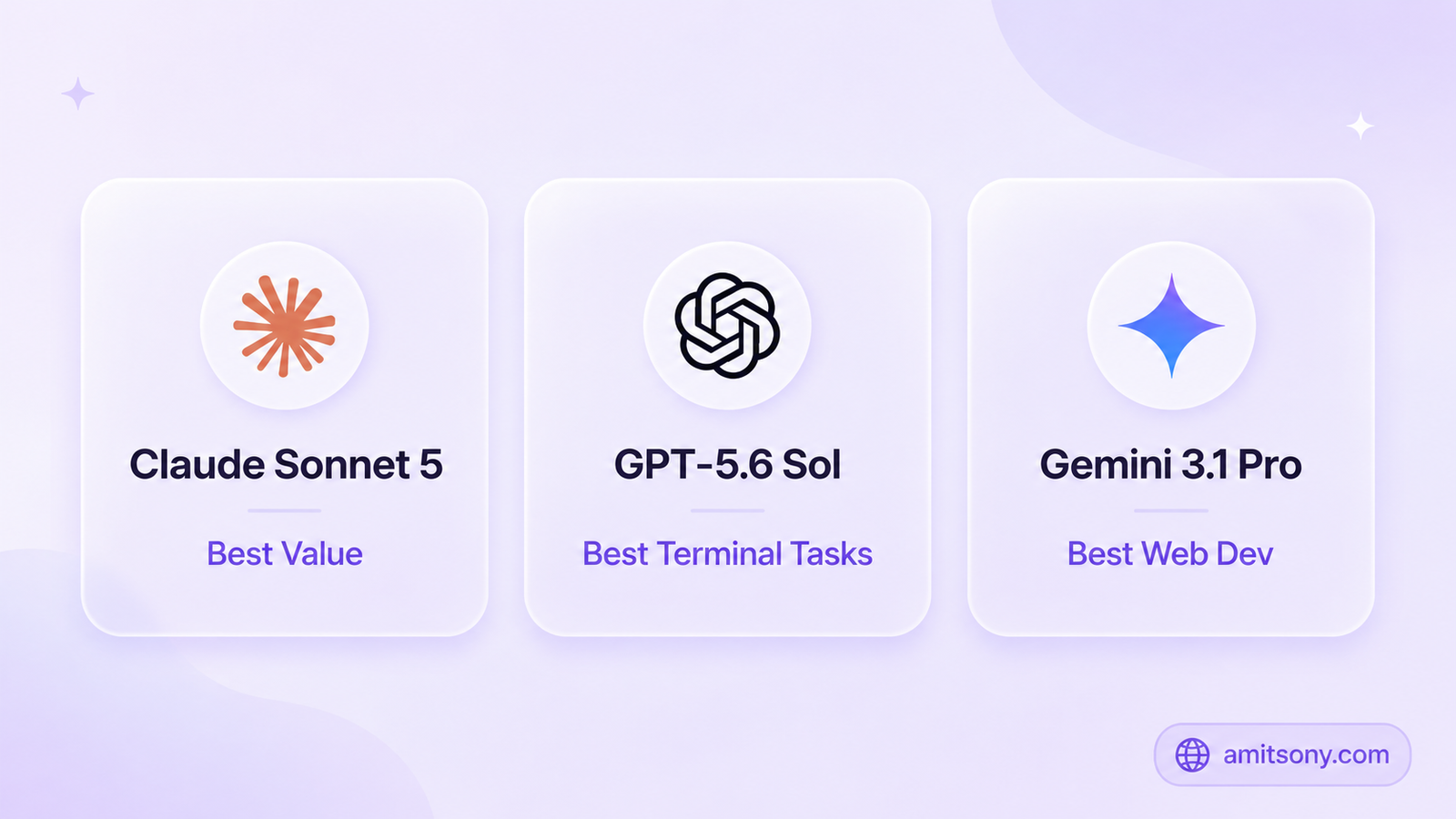
GPT-5.6 launched in three tiers, Sol, Terra, and Luna, reaching general availability on July 9, 2026, just days before this review. On Terminal-Bench 2.1 specifically, GPT-5.6 Sol scores 88.8% in standard mode and 91.9% in its higher-compute Ultra mode, a clear lead over Sonnet 5's 80.4%. On SWE-bench Pro, Sol scores roughly 64.6% against Sonnet 5's 63.2%, close enough to call essentially tied.
Gemini 3.1 Pro isn't really competing on the same benchmarks at all. It leads WebDev Arena with a score of 1,487 Elo and tops LiveCodeBench Pro at 2,439 Elo, both measures of front-end and web app generation specifically. If your work is UI-heavy, multimodal, or leans on a full-repo 1M-token context for large codebase analysis, Gemini remains the stronger pick for that narrower job.
Honest verdict: Sonnet 5 isn't the best at everything. GPT-5.6 Sol currently wins terminal-agent tasks outright, and Gemini 3.1 Pro wins front-end generation outright. What Sonnet 5 wins is the combination of being genuinely competitive on general coding while costing meaningfully less than either.
How Much Does Claude Sonnet 5 Actually Cost to Run?
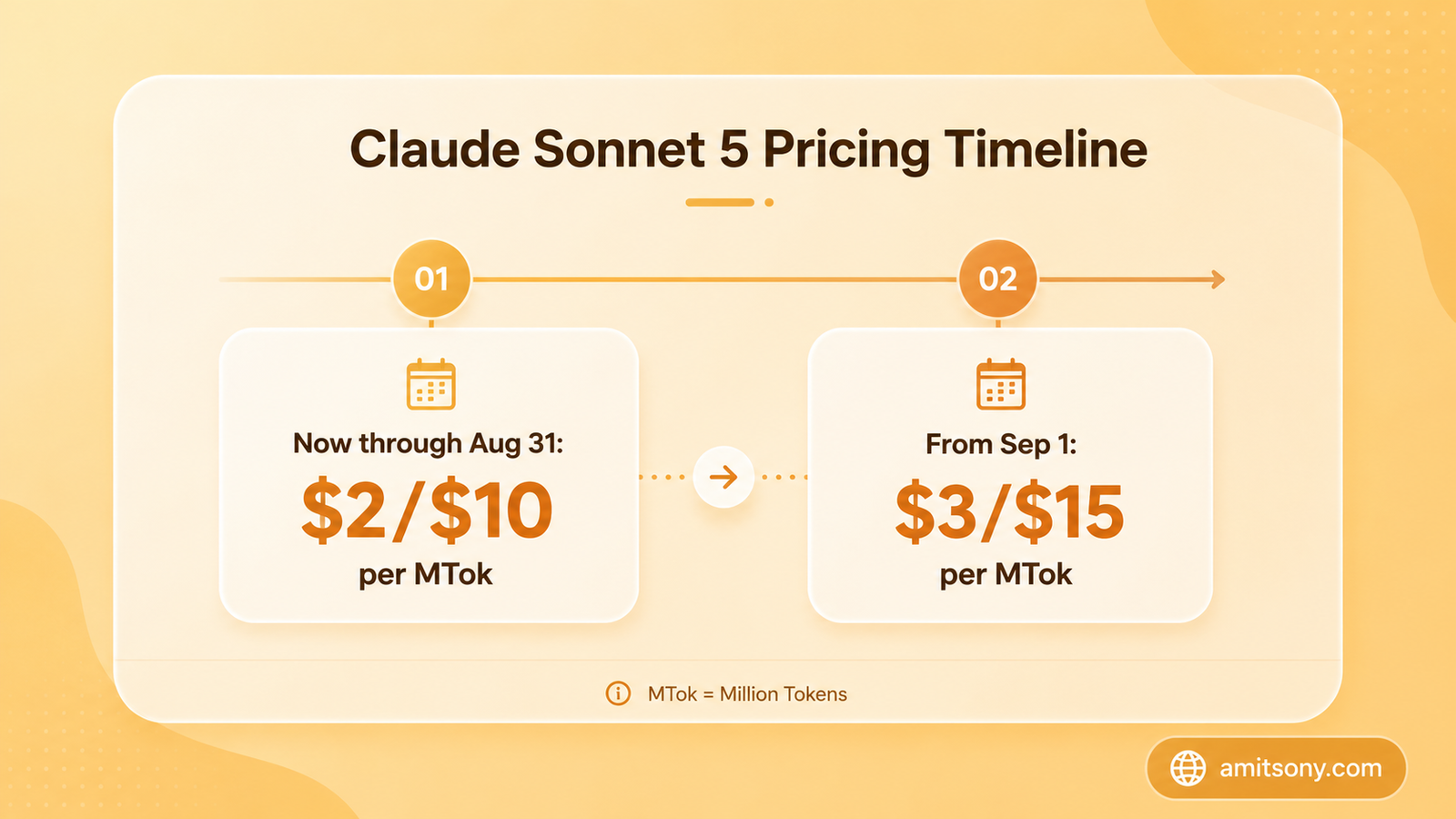
The headline price is genuinely aggressive, but there's a catch worth understanding before you budget around it. Sonnet 5 uses an updated tokenizer, and the same piece of text can map to roughly 1.0 to 1.35 times more tokens than it did on Sonnet 4.6. Some of the sticker-price savings gets quietly eaten by that shift.
Real-world cost-per-task numbers are more useful than raw per-token rates here. On the Zyte Scraping Code Benchmark, a practical test of coding agents on real extraction tasks, Sonnet 5 costs $1.48 per run at introductory pricing, essentially identical to GPT-5.5 Sol's $1.47. For comparison, GPT-5.6's cheapest tier, Luna, runs jobs for $0.26, and Claude Fable 5 costs $4.74 for the same task.
Prompt caching changes the math significantly for repeated-context workloads. Cache reads cost roughly 10% of the standard input price, and Anthropic advertises up to 90% savings on heavily reused context like large codebases or long system prompts. Batch processing adds another 50% discount on non-real-time jobs like bulk evaluations or offline agent runs.
Budget for the standard $3/$15 rate starting September 1, 2026, not the introductory number, if you're planning anything beyond a short-term pilot.
What's It Actually Like to Use for Real Development Work?
Early access partners consistently describe the same shift, Sonnet 5 finishes tasks that previous Sonnet models would stop halfway through. One enterprise team reported handing it a two-part job spanning a CRM update and an outbound announcement, and it completed both ends without stalling partway, something that reportedly used to happen regularly on earlier versions.
That follow-through matters more than any single benchmark number for actual day-to-day use. A model that checks its own output without being explicitly told to, and that keeps working through a messy, multi-file debugging session instead of returning a partial fix, saves real time even when its raw accuracy score isn't the category leader.
The tradeoff is that this is still a mid-tier model. For the hardest, highest-stakes repo-scale engineering work, Opus 4.8 and Fable 5 still post meaningfully higher SWE-bench Pro scores, 69.2% and 80.3% respectively. Sonnet 5 is the model you reach for by default, not necessarily the one you escalate to when a task genuinely needs maximum accuracy.
Where Does Claude Sonnet 5 Fall Short?
Terminal-heavy agentic work is the clearest gap. GPT-5.6 Sol's Terminal-Bench 2.1 lead, especially its 91.9% Ultra-mode score, is a real and current advantage for shell scripting, DevOps workflows, and command-line-heavy automation specifically.
Front-end and UI generation is the second gap. Gemini 3.1 Pro's lead on WebDev Arena and LiveCodeBench Pro isn't a small margin, and if your work is mostly building and iterating on web interfaces, that benchmark gap likely shows up in practice too.
The tokenizer change is a smaller but real annoyance. Teams migrating existing prompt libraries from Sonnet 4.6 need to actually re-measure token counts rather than assume old estimates hold, since prose-heavy content can undercount by a meaningful margin using stale numbers.
And a fair number of the benchmark comparisons circulating online right now simply aren't apples-to-apples. Different vendors report different benchmark variants, SWE-bench Pro versus Verified, Terminal-Bench 2.0 versus 2.1, measured on different harnesses and dates. Treat any table that stacks Sonnet 5 next to GPT-5.6 or Gemini with clean percentage points as a third-party estimate unless it explicitly names the harness and date.
So Is Claude Sonnet 5 the Best Coding Model Right Now?
Not unconditionally, and any review claiming otherwise is oversimplifying. What Sonnet 5 actually wins is a specific and genuinely valuable category, general-purpose agentic coding at a mid-tier price, beating both GPT-5.5 and Gemini 3.1 Pro on the one coding benchmark all three were measured on the same way, while costing meaningfully less than either.
GPT-5.6 Sol takes the terminal-agent crown outright. Gemini 3.1 Pro takes front-end generation outright. Anthropic's own Opus 4.8 and Fable 5 still beat Sonnet 5 on raw coding accuracy when price isn't the constraint.
For most teams building production coding agents on a real budget, Sonnet 5 is currently the strongest price-to-performance option on the table. For teams chasing the single highest accuracy score regardless of cost, it's not the model to reach for, and it was never trying to be.
Frequently Asked Questions
When did Claude Sonnet 5 launch?
June 30, 2026, simultaneously across Claude.ai, Claude Code, and the Claude API.
How much does Claude Sonnet 5 cost through the API?
Introductory pricing is $2 per million input tokens and $10 per million output tokens through August 31, 2026, rising to $3 and $15 after that.
Does Claude Sonnet 5 beat GPT-5.5 on coding benchmarks?
Yes, it scores 63.2% versus 58.6% on SWE-bench Pro and 80.4% versus 78.2% on Terminal-Bench 2.1, while costing significantly less per token.
Is Claude Sonnet 5 better than GPT-5.6 for coding?
It depends on the task. GPT-5.6 Sol leads clearly on Terminal-Bench 2.1, while the two are roughly tied on SWE-bench Pro.
Should I use Claude Sonnet 5 or Claude Opus 4.8?
Sonnet 5 for most everyday coding and agentic work given its lower cost; Opus 4.8 when a task genuinely needs the highest possible accuracy regardless of price.