

AI text sounds robotic because of predictable phrasing and repetitive sentence structure, not because it's inherently detectable. Real fixes: vary sentence length, cut generic phrases, add specific details only you'd know. Tools like QuillBot and Surfer help rewrite mechanically, but independent testing shows humanizer bypass rates vary wildly, from 23% to 91%, so editing it yourself still works best.

Ask five people to describe what AI-written text sounds like and they'll all say some version of the same thing: generic, repetitive, weirdly formal, full of phrases like "in today's digital landscape" that nobody actually says out loud. That's not a detection problem, it's a writing quality problem, and it's the real reason humanizing AI content has become its own industry.
This guide covers both sides honestly, the actual writing techniques that make AI-assisted content read naturally, and the tools people reach for when they don't want to do that editing by hand. Worth knowing upfront, this space is packed with inflated marketing claims, so we'll flag those where we see them.
Why Does AI-Generated Text Sound Robotic in the First Place?
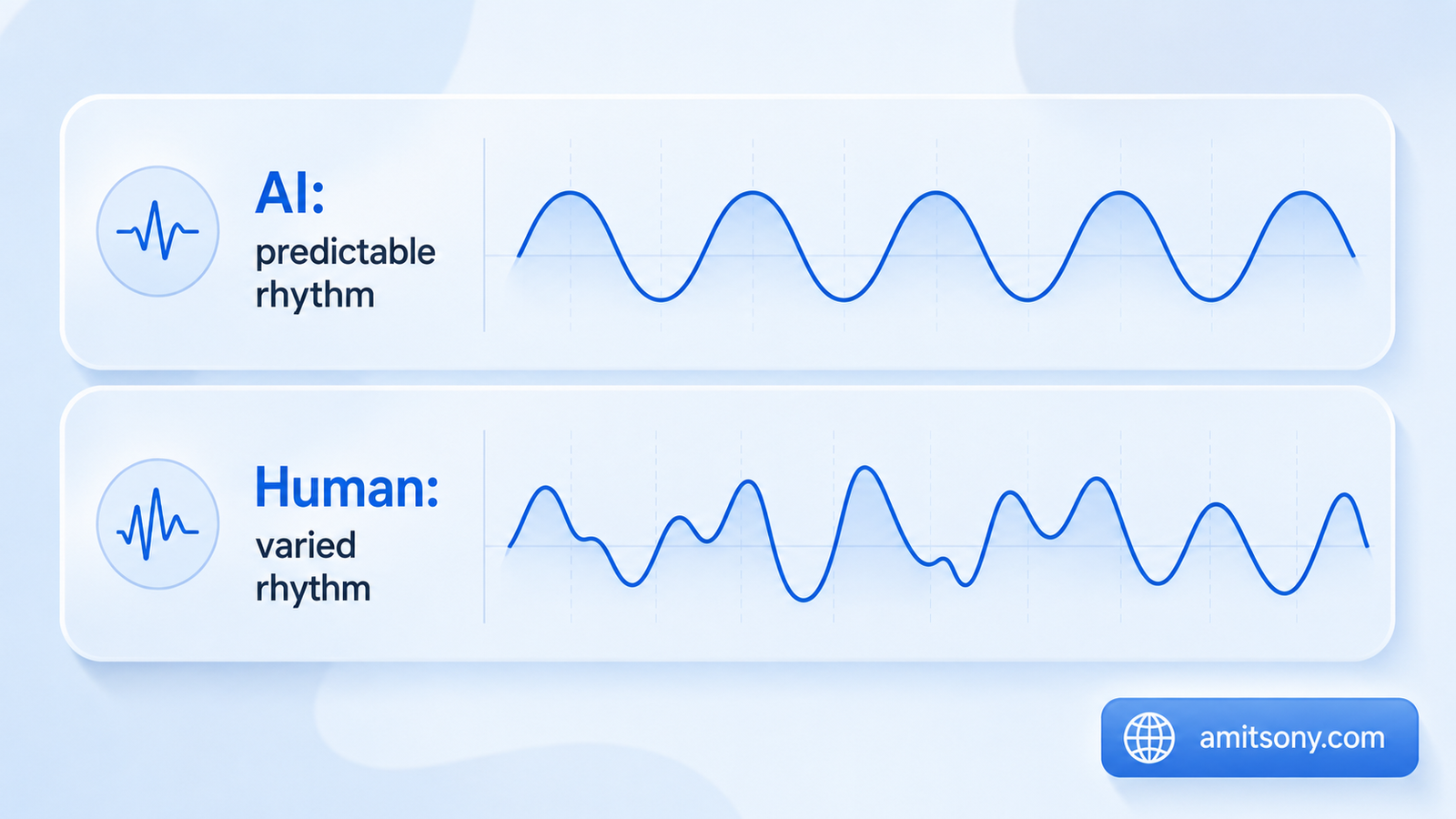
Large language models are trained to predict the statistically likely next word, which naturally produces smooth, low-surprise sentences. Researchers call this low perplexity, and it's efficient for a model, but human writing is messier, full of unexpected word choices, fragments, and asides that a predictive system tends to smooth away.
The pattern shows up in specific, nameable habits: every paragraph runs the same length, every section opens the same way, transitions lean on the same handful of words like "moreover" and "furthermore," and certain phrases show up constantly across completely unrelated topics, "dive into," "unlock the power of," "in today's fast-paced world."
None of this is a flaw exactly, it's just what optimizing for fluency produces by default. The fix isn't mysterious, it's the same editing discipline good writers already use, just applied deliberately to a first draft that came from a model instead of your own head.
What Are the Real Writing Techniques That Actually Humanize AI Text?
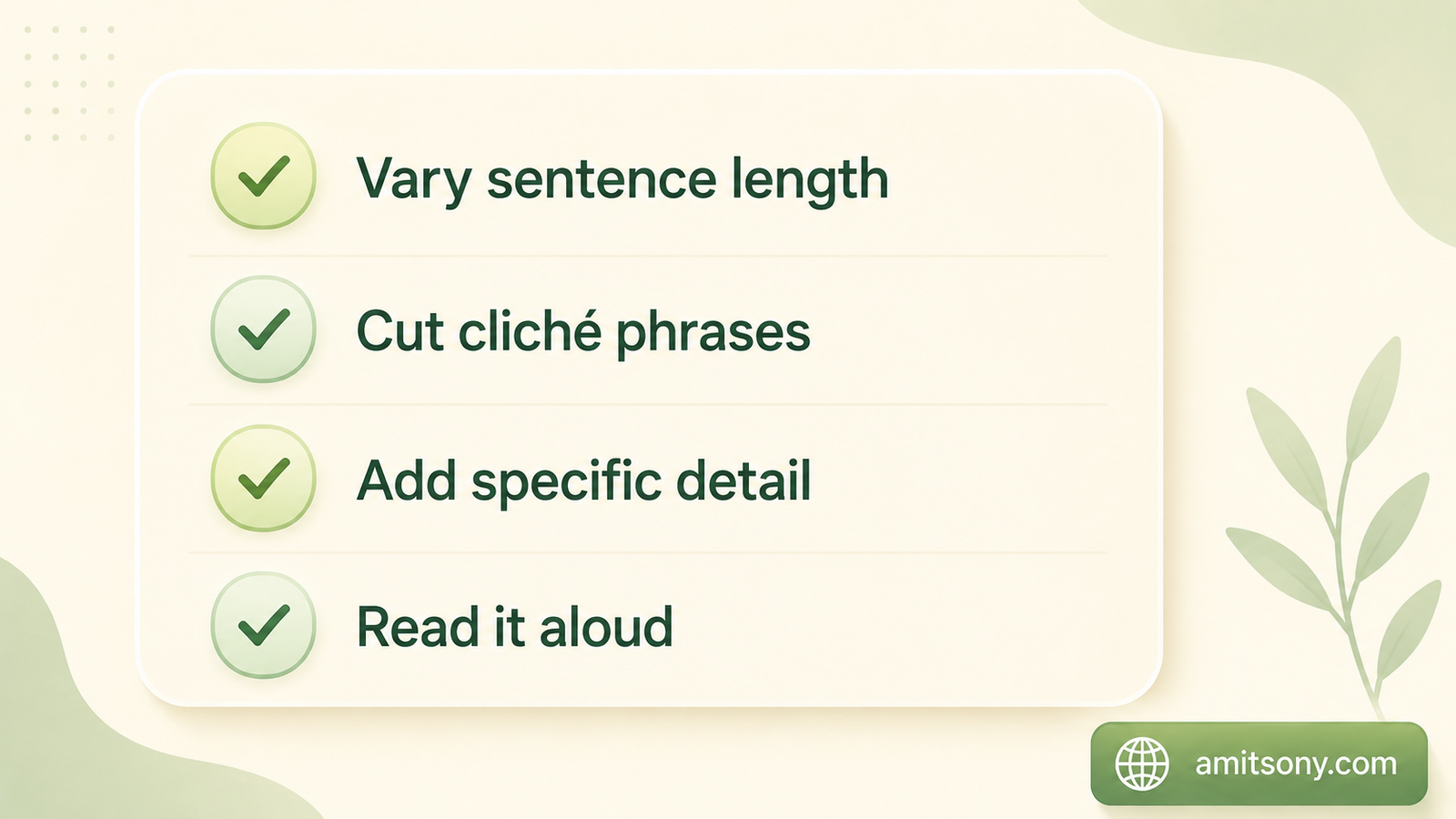
Vary sentence length on purpose. AI drafts tend to settle into a rhythm of medium-length sentences one after another. Break that up: a short sentence. Then a longer one that carries more detail and a subordinate clause or two. The variation itself reads as human.
Cut the cliché phrases by name. Keep a running list of the words your AI tool overuses, phrases like "seamless," "elevate," "harness," "game-changer," and delete them on sight. These phrases carry almost no information and they're the fastest tell that a paragraph came from a model.
Add one detail nobody else would know. A specific number, a small real-world observation, an opinion stated plainly, "this plan is overpriced for solo users." AI drafts hedge and generalize by default, concrete specificity is the single fastest way to make a paragraph feel like it came from someone who actually did the thing.
Read it out loud. If a sentence is hard to say naturally, it's probably structured the way a model structures things rather than the way people actually talk. This single step catches more robotic phrasing than any tool will.
Which Tools Can Help Rewrite AI Text to Sound More Natural?

QuillBot is the most established name in this space, and it's genuinely useful beyond just rewriting, it bundles a grammar checker, a paraphraser, and an AI detector in the same interface. The free tier humanizes up to 125 words at a time, 6 uses a day, enough to test it before paying.
Premium runs $8.33/month on annual billing, unlocking a higher word limit per pass and an advanced rewriting mode. Students get a further discount down to roughly $6.25/month.
Surfer approaches this from a different angle, SEO-aligned rewriting, meaning it tries to keep your target keywords and content structure intact while smoothing out AI phrasing. Worth it specifically if the content is going straight into a blog post you're trying to rank, less useful for general writing.
A wider category of tools markets itself specifically around detector bypass rather than writing quality. Independent coverage of these is mixed, some testers find certain tools reliable on short-form content, others report the rewritten sentence structure reads noticeably worse even when it does dodge a detector. Treat any specific bypass percentage this category advertises with real skepticism, the claims vary wildly between a tool's own marketing and outside testing, and several of the sites ranking these tools are affiliated with the products they're ranking.
Do Humanizer Tools Actually Beat AI Detectors?
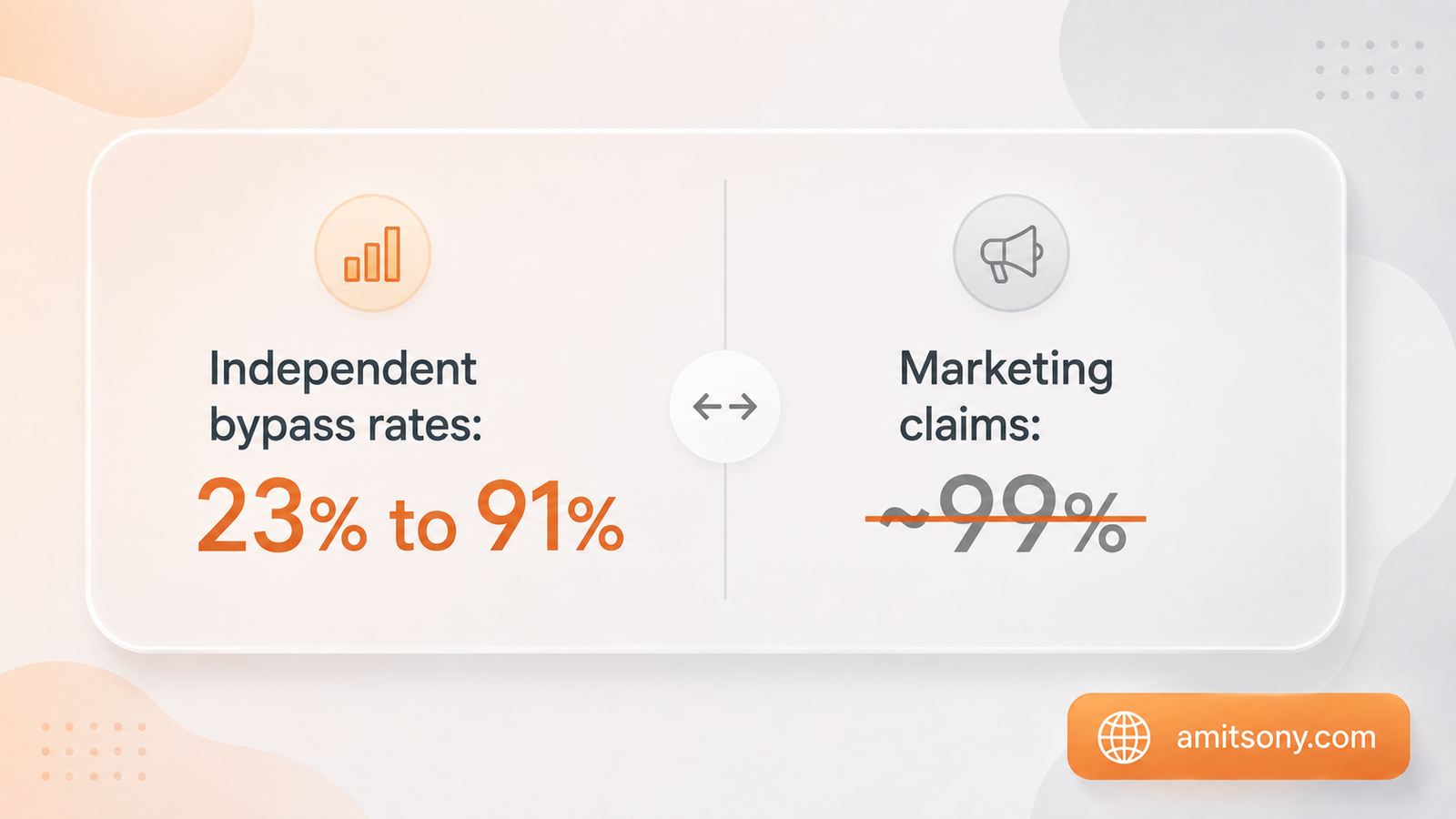
Sometimes, and the honest range is wide. An independent benchmark that ran 14 different humanizer tools against 6 major detectors across 2,400 samples found bypass rates anywhere from 23% to 91% depending on the specific pairing, with average detector accuracy dropping by 31 percentage points once text had been run through a humanizer.
That's a real effect, not nothing. But it's also nowhere near the 99% success numbers a lot of individual humanizer tools advertise on their own homepages. Several of the review sites ranking these tools are themselves affiliated with the products they're recommending, which is worth knowing before trusting any single "best humanizer" list, including the comparison above.
If detector bypass is genuinely the whole reason you're reaching for one of these tools, go in expecting inconsistent results, not a guarantee.
Is Humanizing AI Content Actually Against the Rules?
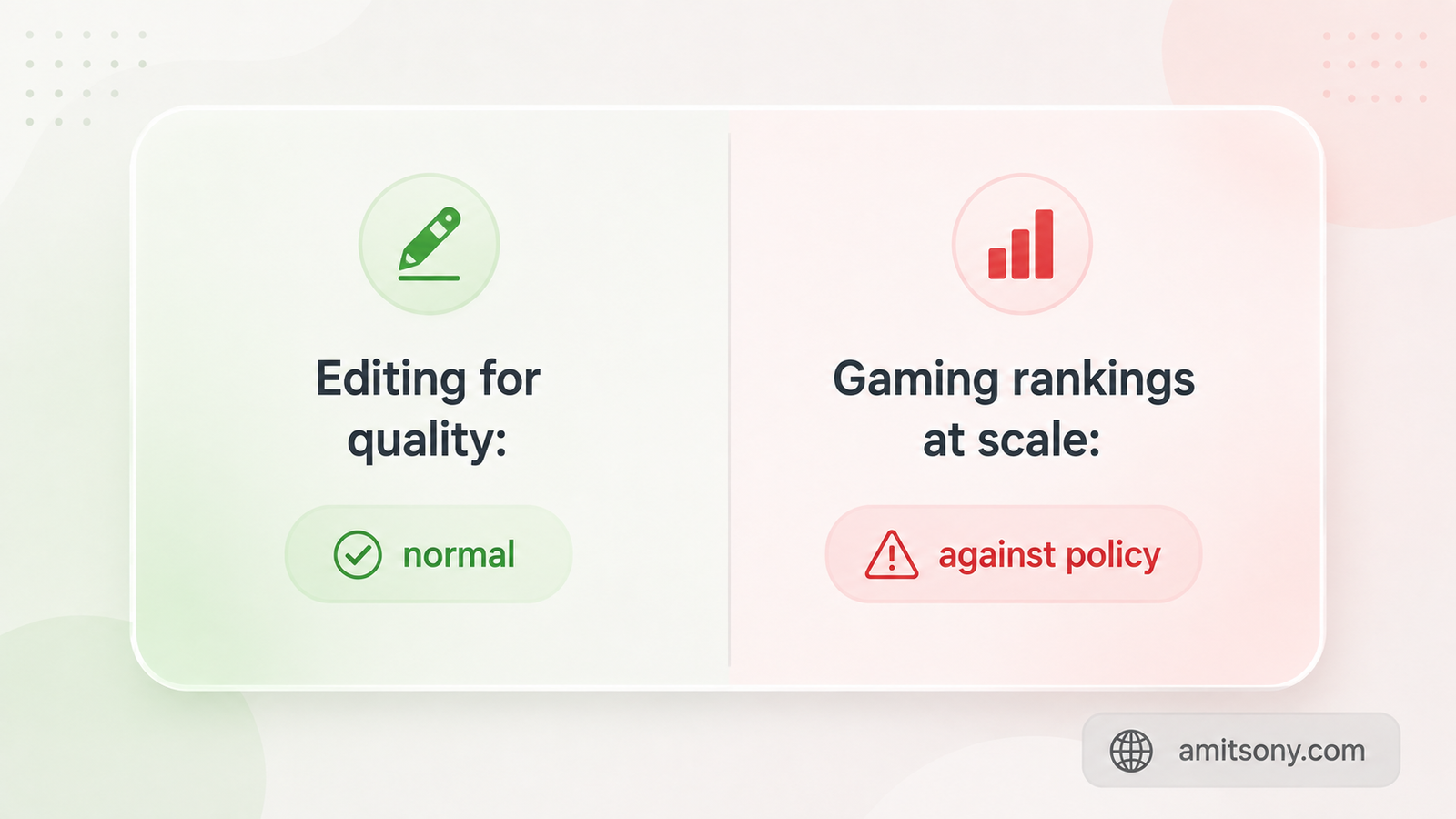
Depends entirely on the context and what you're claiming. Google's spam policy targets content designed to manipulate rankings without providing real value, running AI text through a paraphraser to game detection while the content itself stays thin and unhelpful is exactly the kind of scaled manipulation the policy is written to catch.
Editing AI-assisted drafts to sound more natural for a blog, a business email, or marketing copy isn't remotely the same thing, that's just normal editing, and nobody requires disclosure for using a grammar checker or a paraphraser either.
Academic settings are different and stricter. Submitting AI-written, humanizer-run text as your own original work for a grade is a different category of problem than editing that a plagiarism-detection score alone won't capture, and most universities treat the underlying act, not just the detection outcome, as the violation.
The line that actually matters isn't whether text can dodge a detector, it's whether you're being honest about how something was made when honesty is actually expected.
What's the Honest Way to Use AI Content Without It Looking Robotic?
Draft with AI, then edit like the draft is a first pass from a junior writer, not a finished product. Apply the techniques from earlier: vary rhythm, cut clichés, add something only you know, read it aloud.
Use a humanizer tool as a starting point if you want, not a final step. Run the output back through your own read-aloud check afterward, because these tools frequently trade robotic phrasing for slightly awkward phrasing instead of genuinely natural writing.
If disclosure is expected, give it. A short note that AI tools assisted the draft and a real person edited and reviewed it costs nothing and heads off exactly the credibility problem detection scores are a proxy for in the first place.
Quick Verdict
Nobody has a magic tool that reliably makes AI text indistinguishable from human writing and passes every detector every time, and most of the marketing claiming otherwise doesn't hold up under independent testing. The editing techniques work better than any tool, and they work for free.
Frequently Asked Questions
What's the best free tool to humanize AI content?
QuillBot's free tier handles up to 125 words per pass with no sign-in required, enough to test the quality before deciding whether a paid tool is worth it.
Do AI humanizer tools actually work against detectors?
Sometimes. Independent testing found bypass rates ranging from 23% to 91% depending on the tool and detector, well below the near-perfect success rates most humanizer products advertise themselves.
Is it against the rules to humanize AI content for a blog?
Not inherently. Editing AI-assisted drafts to sound natural is normal editing. The rules get stricter around ranking manipulation at scale or academic submissions claiming AI-assisted work as fully original.
Why does AI writing sound robotic even when the grammar is perfect?
Low perplexity. AI models produce statistically predictable word choices and sentence rhythms, while human writing is naturally messier, with varied sentence length and unexpected phrasing.
Can editing AI text myself work as well as a paid humanizer tool?
Often better. The techniques that make text sound human, varying rhythm, cutting clichés, adding specific detail, are things any writer can do without paying for a tool at all.