
You make money with AI agents in 2026 by either building and selling agent setups to local businesses, listing pre-built agents on marketplaces like the GPT Store or MindStudio, or freelancing on Upwork and Fiverr. Most beginners earn their first ₹15,000 to ₹75,000 per project within 60 to 90 days.

Every second post on LinkedIn right now seems to be someone claiming they quit their job after their AI agent started printing money. Most of that is noise. But underneath the noise, something real is happening: small businesses everywhere are paying actual cash for AI systems that handle leads, support tickets, and content, and a lot of that money is going to regular people, not just engineers at big tech companies.
This guide skips the hype and focuses on what is actually working right now. You will get the tools people use, what those tools cost, what clients pay in India and globally, and the niches where demand is highest. No course to buy, no fake screenshots, just a practical map.
What Exactly Is an AI Agent in 2026?
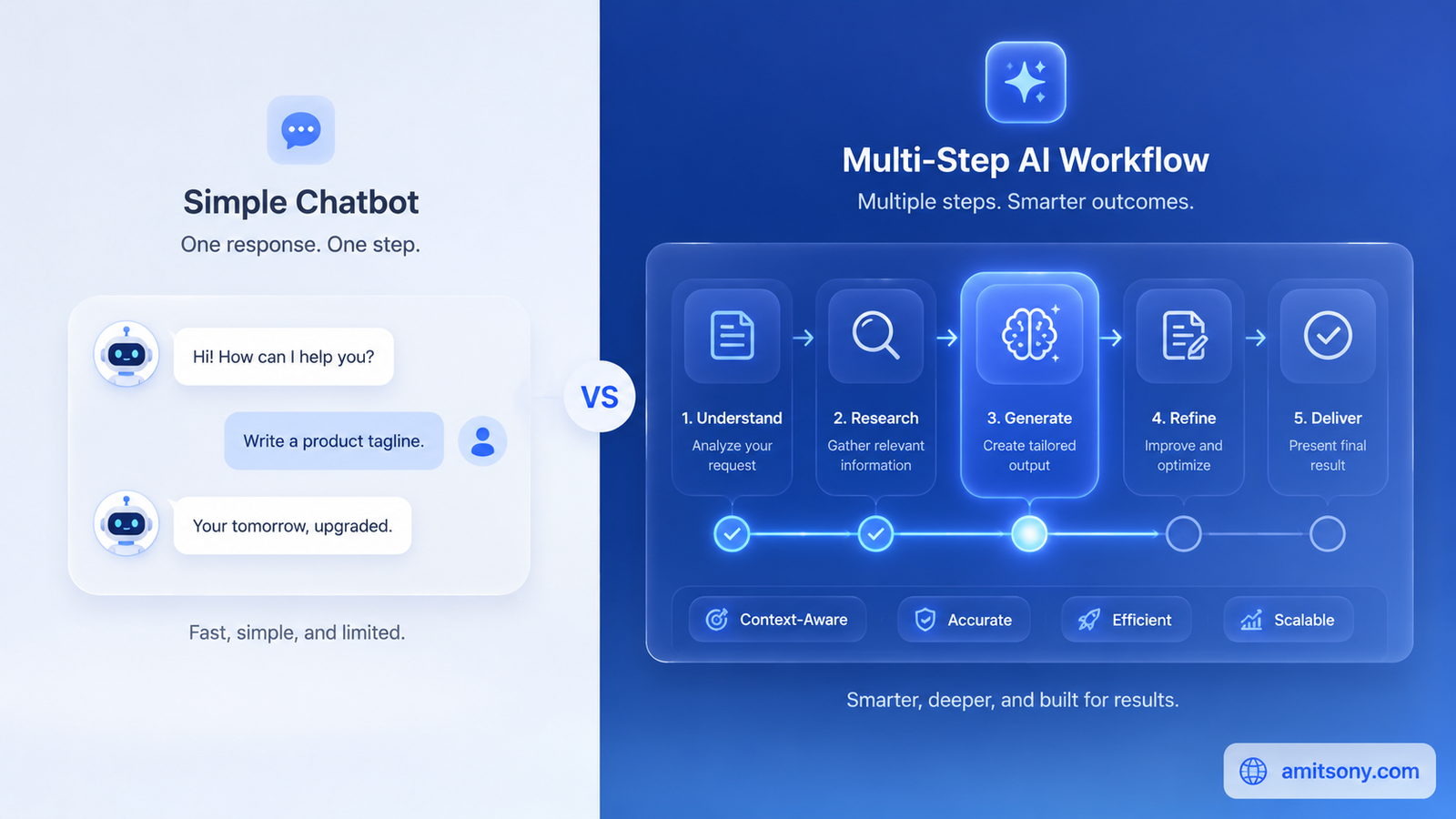
An AI agent is software that does multi-step work on its own, not just chat back and forth. A chatbot answers a question. An agent researches a lead, drafts the outreach email, checks the CRM, and schedules the follow-up call, all without you clicking through each step.
That distinction is why businesses pay so much more for agents than they ever paid for basic chatbots. A chatbot saves a customer support team some typing. An agent can replace an entire chunk of a job description.
By 2026, this shift has become mainstream rather than experimental. Businesses are wiring AI agents directly into sales, support, and operations instead of testing them on the side, and enterprise platforms increasingly let companies manage agents alongside human staff in the same dashboard.
This matters for you because it means the market has moved past curiosity. Companies are not asking "should we try an agent." They are asking "who can build us one this month."
How Are People Actually Earning Money From AI Agents Right Now?
The honest answer is that most income comes from services, not magic passive products. Someone configures an agent for a business, charges for the setup, then charges again every month to keep it running.
The most common pattern looks like this: you set up a customer-facing agent on WhatsApp, a website, or Telegram for a small business owner. You charge a one-time setup fee, then a smaller recurring fee for monitoring and tweaks.
A second pattern is content and marketing support. An agent drafts blog posts, social captions, and email sequences, and you sell that output as a monthly content package rather than billing by the hour.
A third, smaller pattern is selling pre-built agents through marketplaces, where you build once and many buyers pay for access. This scales better long-term but takes longer to gain traction since thousands of new listings appear every week.
The freelance data backs this up. Skills tied to applying AI inside existing job roles grew sharply on platforms like Upwork over the past year, and most business leaders now say AI is pushing them to hire specialized freelance talent instead of expanding full-time headcount.
How Do You Start an AI Agent Service Business From Scratch?
Start with people you already know. The fastest path to your first paying client is a friend with a small business, a coach, a real estate agent, or a local clinic, not a cold pitch to a stranger.
Offer a free demo first. Build a working agent on WhatsApp or Telegram, let them test it for a week, and only then convert the demo into a paid engagement.
For pricing in the Indian market, a WhatsApp lead-capture or FAQ agent for a small business typically sells for ₹15,000 to ₹30,000 as a one-time setup. On top of that, a monitoring and maintenance retainer of ₹5,000 to ₹15,000 per month is standard once the agent is live.
If you are targeting international clients instead, the numbers jump. Western agencies commonly charge $500 to $1,500 for setup plus $100 to $300 per month for ongoing management, since a human customer support hire costs that client $35,000 to $50,000 a year in comparison.
Once you have two or three live clients, document what worked. Template the workflow, the prompts, and the integrations so the next client takes hours instead of days to onboard. This is what turns a one-off gig into a repeatable business.
Which No-Code Tools Should You Use to Build and Sell Agents?
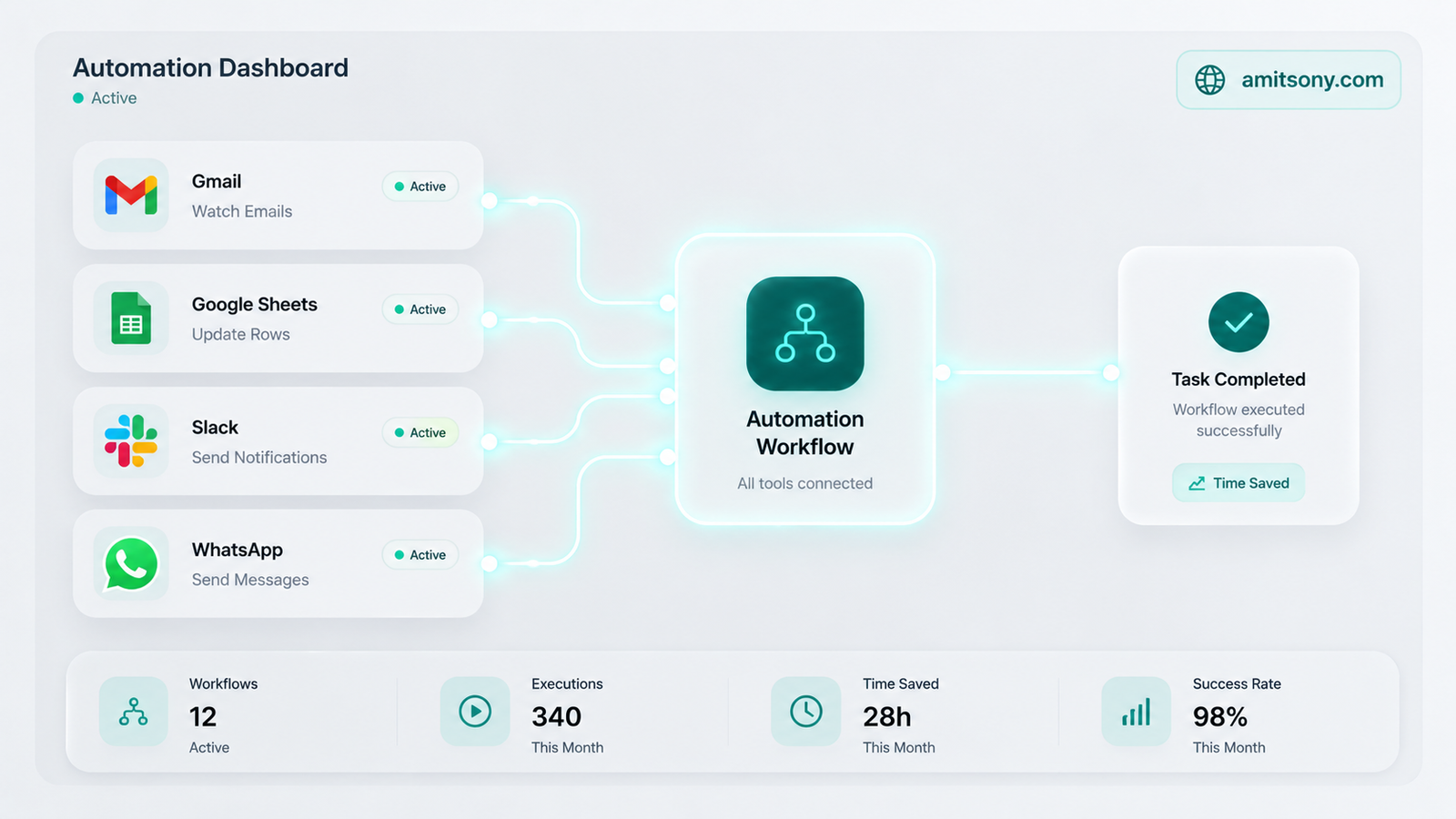
You do not need to code to build a working agent today. The right tool depends on whether you need predictable, linear automation or an agent that reasons through ambiguity on its own.
n8n is the most popular choice for technical and semi-technical builders. Cloud pricing starts around ₹2,300 a month for the Starter tier, and you can self-host it for free if you are comfortable running your own server for roughly ₹300 to ₹650 a month.
Lindy suits non-technical builders who want a personal-assistant style agent for inbox management, scheduling, and lead research. Pricing sits around $49.99 a month for the entry plan, billed in credits rather than a flat rate, so heavier workflows burn through the allowance faster than expected.
Gumloop and Relevance AI are the two names that keep coming up for client work. Gumloop works like a visual flowchart builder, ideal for predictable, step-by-step automations, starting free with a paid Pro tier around $37 a month. Relevance AI behaves more like hiring a digital employee that decides its own steps, which fits sales research and outreach better, though usage-based billing means costs can climb if an agent loops while retrying a task.
For client-facing deployments where you want to white-label the result, MindStudio lets you publish agents that clients discover and pay for directly through the platform, while the platform itself handles hosting and billing.
Where Can You List or Sell Your AI Agents Online?
Building an agent is the easy half. Getting it discovered by paying buyers is the part most people underestimate, since thousands of new agent listings go live across marketplaces every week.
The biggest general-purpose option is OpenAI's GPT Store , which already hosts millions of custom assistants, though discovery there favors agents with a tight, specific use case over generic ones.
For developer-friendy distribution, Anthropic's Claude offers a directory for agent skills tied directly into its product, while Replit's Agent Market lets you sell agents as full standalone apps with their own interface rather than just a chat extension.
If you would rather skip building a marketplace presence entirely and go straight to client work, Upwork and Fiverr remain the most reliable income sources. Demand for AI-related freelance skills has grown fast enough that median rates for AI and automation engineers on Upwork now sit around $50 an hour, with senior specialists charging $100 to $300.
Whichever route you pick, do not spread yourself across every platform on day one. Pick one marketplace or one client channel, get your first few wins, then expand once you understand what actually converts.
How Much Can You Realistically Earn Building AI Agents?
Income depends heavily on whether you are productizing a simple agent or solving a specific high-value business problem. A simple agent sold through a marketplace might earn $20 to $100 per month per user, which adds up slowly unless you have real distribution.
A custom agent built for one business and solving an expensive problem, like financial reconciliation or lead qualification, commands far more. Retainers for that kind of work often range from the low thousands to $5,000 a month, depending on scope and measurable impact.
In the Indian freelance market specifically, realistic month-by-month progress looks like this: your first ₹50,000 in monthly income typically happens by month two or three of consistent outreach, with ₹1 lakh and beyond becoming realistic by month four to six once a few retainer clients stack up.
None of this happens passively. The agencies clearing the higher end of these numbers are the ones selling a clear workflow improvement with a visible business outcome, not agents marketed as generic "AI."
Which AI Agent Niches Are Most Profitable for Beginners?
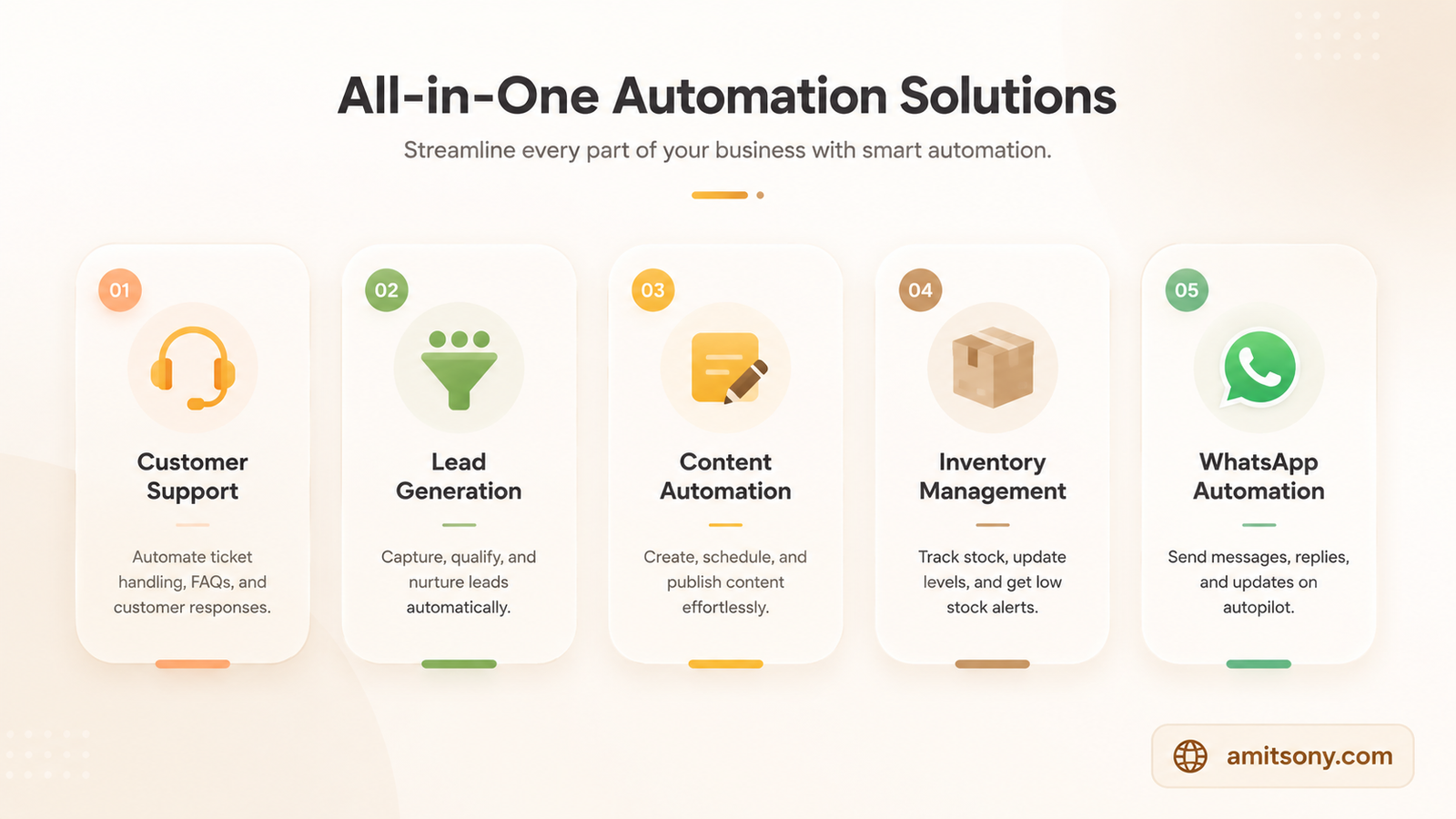
Boring, operational niches outperform flashy consumer ideas almost every time. Inventory management for e-commerce sellers, compliance monitoring for regulated industries, and lead qualification for real estate are consistently the highest-paying categories because the business impact is easy to measure.
Customer support automation remains the most accessible entry point. A single full-time support hire costs a business $35,000 to $50,000 a year, so an agent handling 70 to 80% of incoming questions is an easy sell even at a modest monthly fee.
For the Indian market specifically, WhatsApp-based agents are the single highest-demand category right now. Coaching businesses, edtech startups, clinics, and real estate agencies all want something that answers inquiries on WhatsApp, and most are willing to pay ₹10,000 to ₹75,000 for the build plus a small monthly retainer for upkeep.
Content production is the other reliable niche. An agent that handles 60 to 70% of the drafting work for blog posts, social captions, and newsletters lets you serve more clients with the same hours, typically billed at ₹25,000 to ₹2,00,000 a month per client depending on volume and market.
What Mistakes Kill an AI Agent Side Business Before It Starts?
Pricing in dollars on global platforms too early is a common trap. New freelancers competing on Upwork against established sellers from lower-cost markets often lose on price before they even get noticed. Starting with local clients in your own currency, building proof, then testing international rates later works far better.
Trying to be a generalist is another quiet killer. "I do AI" is not an offer anyone can refer you for. Pick one specific problem, one specific audience, and let your first few projects build a portfolio around that.
Skipping a written scope is the mistake that shows up later as an unpaid invoice. Every project, even a small one for a friend, needs a one-page agreement covering deliverables and payment terms.
Finally, undercharging for too long quietly caps your income. Your second client should pay more than your first, and by your fifth client you should be charging roughly double your starting rate if the work is landing well.
Frequently Asked Questions
Do I need to know how to code to make money with AI agents?
No. Tools like n8n, Lindy, and Gumloop let you build working agents using visual builders and plain English instructions.
How fast can a beginner earn their first money from AI agents?
Most people land a first paid project within 2 to 12 weeks if they offer a free demo to someone in their existing network first.
Is selling AI agents on a marketplace better than freelancing?
Freelancing pays faster since you work directly with one client. Marketplaces scale better long-term but take longer to gain visibility among thousands of competing listings.
What is the most beginner-friendly AI agent niche?
WhatsApp-based customer inquiry agents for small businesses, since the setup is simple and Indian SMBs already understand the value.
How much does it cost to start building AI agents?
Most no-code tools offer a free tier. A small VPS for self-hosted automation costs roughly ₹300 to ₹650 a month if you outgrow the free plan.