

Gemini 3.7 Flash shipped August 13, 2026, just three weeks after its predecessor, with real coding gains and introductory pricing at half the old rate. The catch: that price doubles on January 1, 2027, from $0.75/$3.75 to $1.50/$7.50 per million tokens. It's a refinement of 3.6 Flash, not a new model, which is exactly how it shipped so fast.
Gemini 3.7 Flash shipped on August 13, 2026, exactly three weeks after Gemini 3.6 Flash. That's not a typo, and it's not a minor patch either, Google is calling it "the most intelligent workhorse model yet for coding and agents," with real, measured benchmark gains to back it up.
This review pulls from Google's own model card, engineering blog post, and cloud documentation, cross-checked against independent coverage, to explain what actually changed, what the pricing really looks like once you read past the introductory rate, and whether shipping this fast is a good sign or a warning sign.
What Exactly Is Gemini 3.7 Flash?
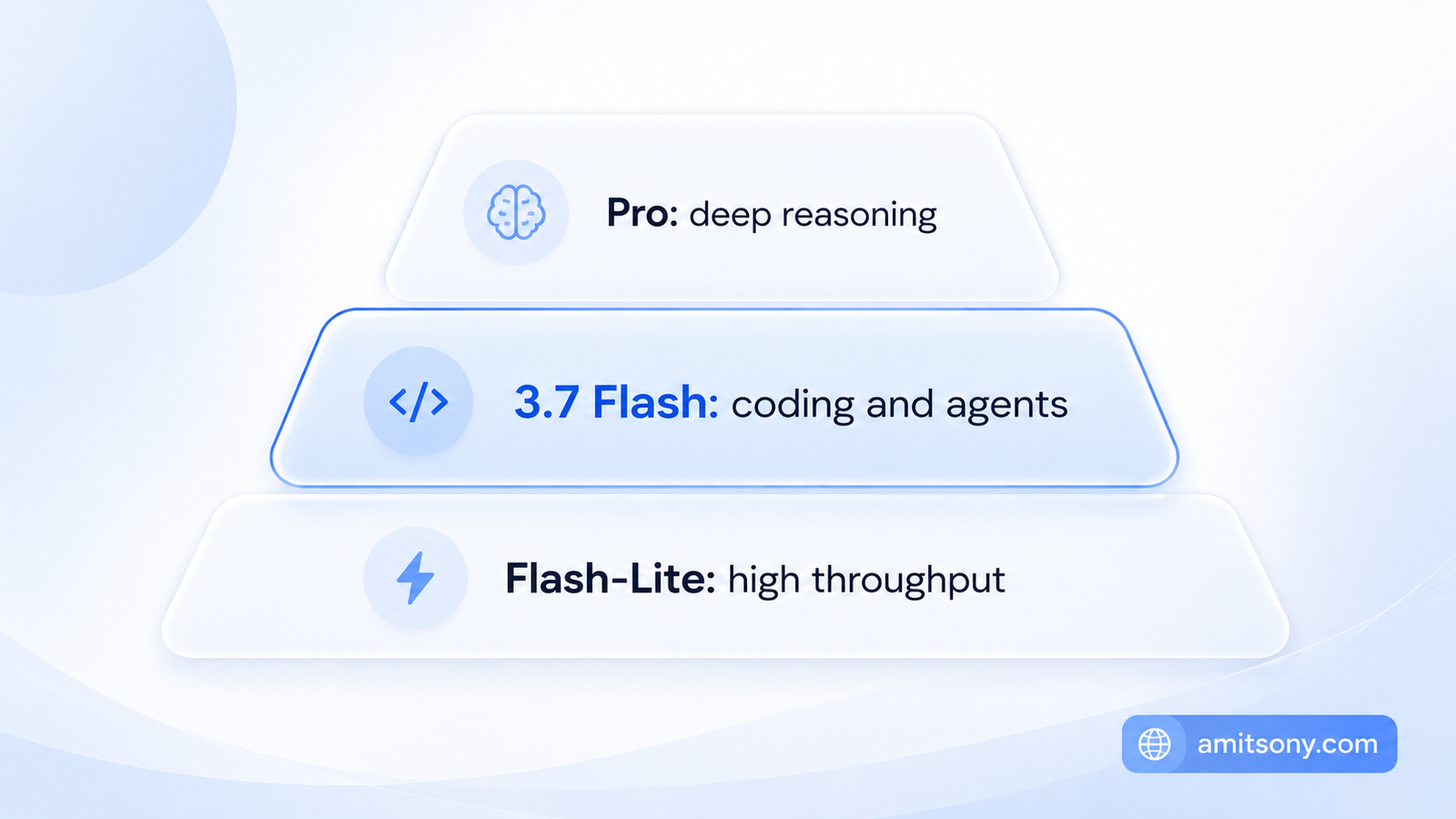
Gemini 3.7 Flashintroducing-gemini-3-7-flash/ sits in the middle of Google's current lineup: faster and cheaper than the deep-reasoning Pro tier, more capable than the high-throughput Flash-Lite tier, built specifically for coding, agentic workflows, and knowledge work rather than frontier-level reasoning.
Google's own model card is direct about what this actually is: an algorithmic refinement of Gemini 3.6 Flash, not a new base model. The gains come from changes to the reasoning core, informed by developer feedback, which is exactly why Google could ship it only three weeks after its predecessor while still posting real improvements.
It handles multimodal input, text, images, audio, video, and PDFs, across a 1,048,576 token context window, and returns text output up to 65,536 tokens.
How Much Faster Is It Actually, According to the Benchmarks?
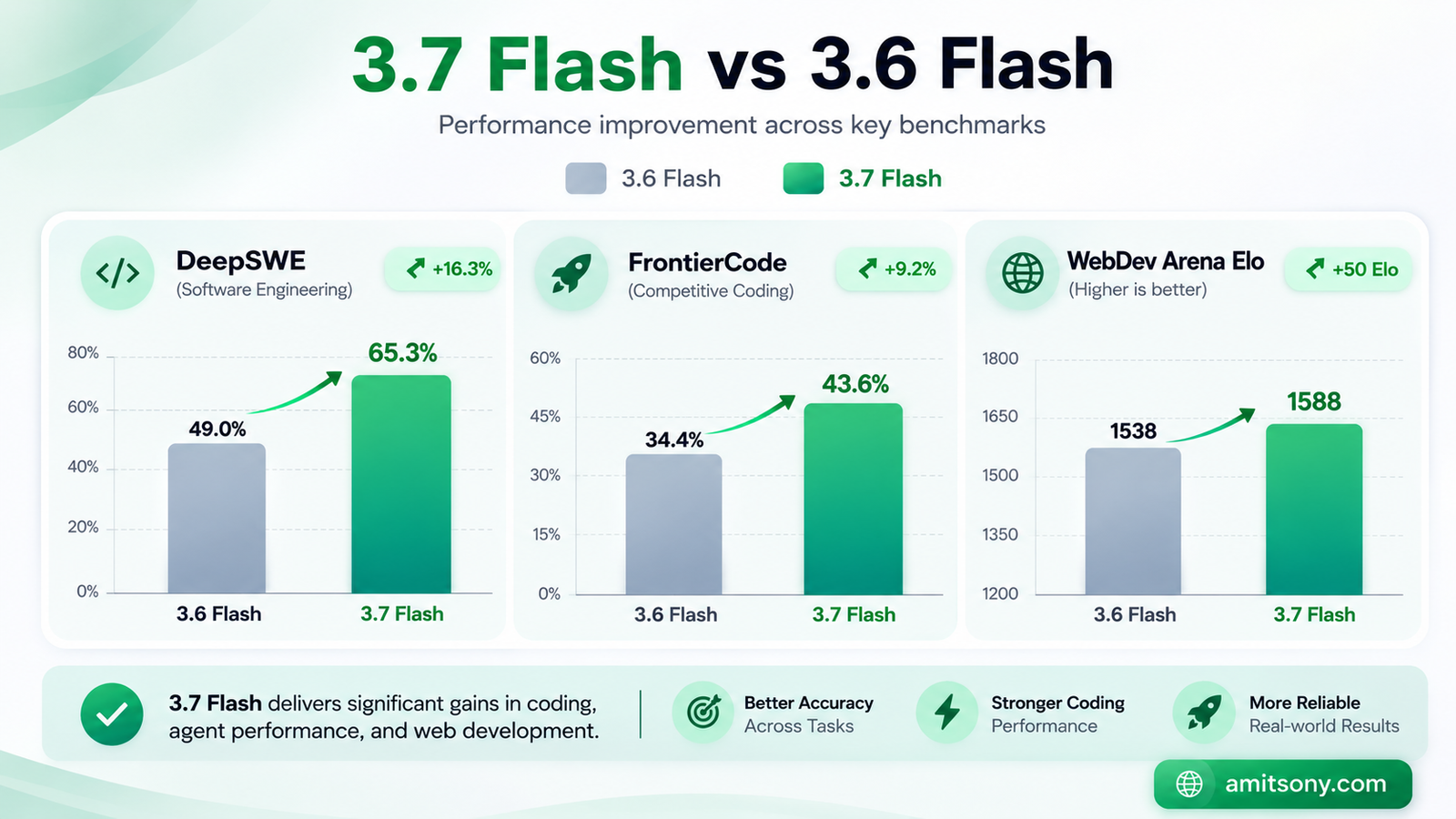
The coding gains are the headline, and they're specific rather than vague. DeepSWE v1.1 jumped from 49.0% to 65.3%. FrontierCode 1.1 Main went from 34.4% to 43.6%. Both are real jumps, not rounding-error improvements.
On Arena.ai's WebDev Arena, 3.7 Flash scores an Elo of 1588, up from 1538 for 3.6 Flash last month. On the independent Artificial Analysis Intelligence Index, it scores 56 at the high thinking level, versus 52 for its predecessor.
Google also says it generates more functional layouts and feature-complete apps in fewer prompts for web development specifically, and shows measurable gains in debugging and issue resolution over the previous model.
What's the Catch With the Pricing?
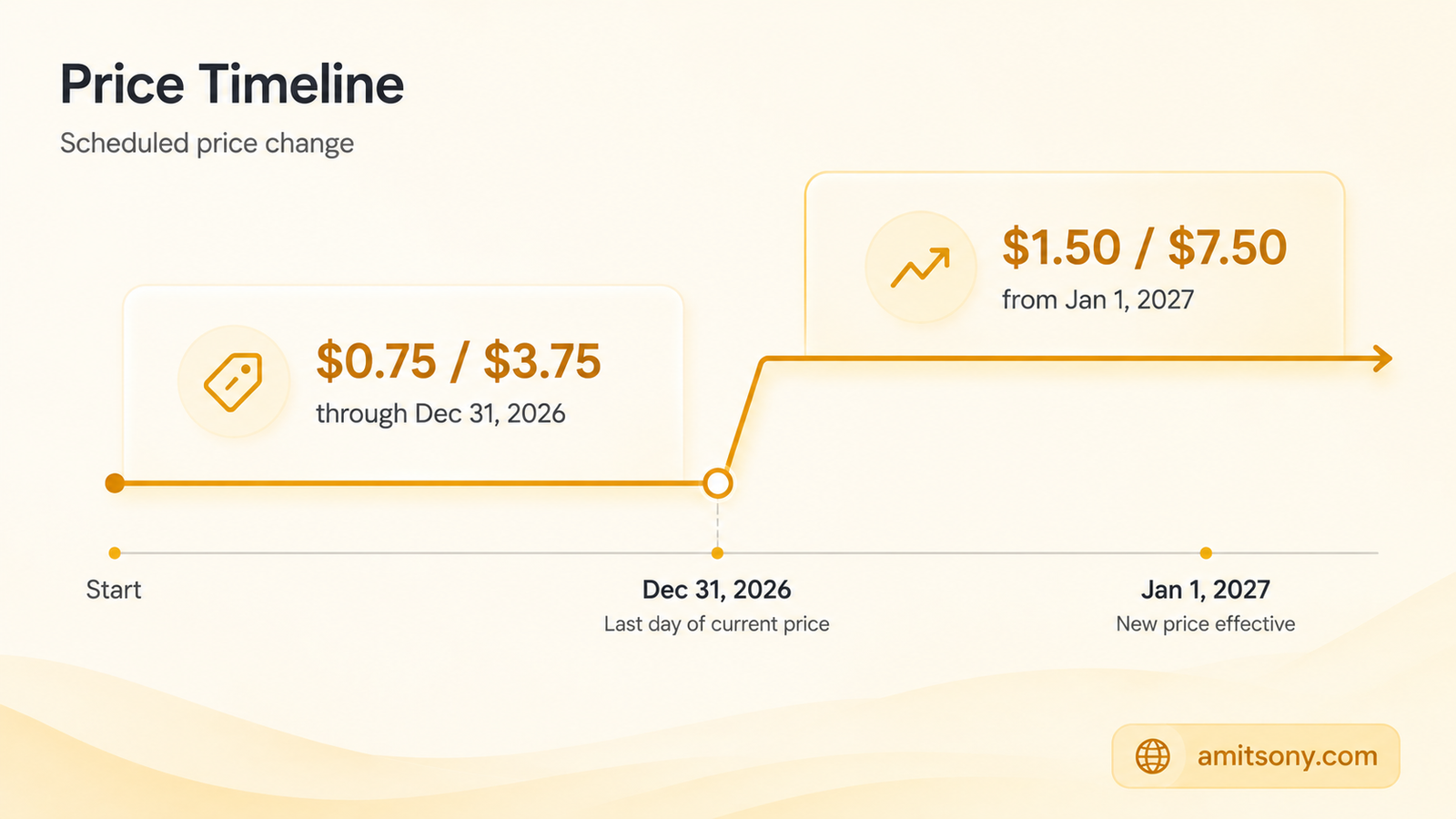
The introductory price looks genuinely good: $0.75 per million input tokens and $3.75 per million output tokens, which Google describes as half of what 3.6 Flash originally cost. That rate holds through December 31, 2026.
On January 1, 2027, it doubles, to $1.50 input and $7.50 output per million tokens. That's not a hidden fee or a rumor, it's Google's own announced pricing schedule, and it's worth planning around if you're building something that depends on this model long term.
Lock in real usage during the introductory window if the economics matter to your project, and budget for the post-January rate before committing to anything that assumes the launch price is permanent.
Where Can You Actually Use It Right Now?
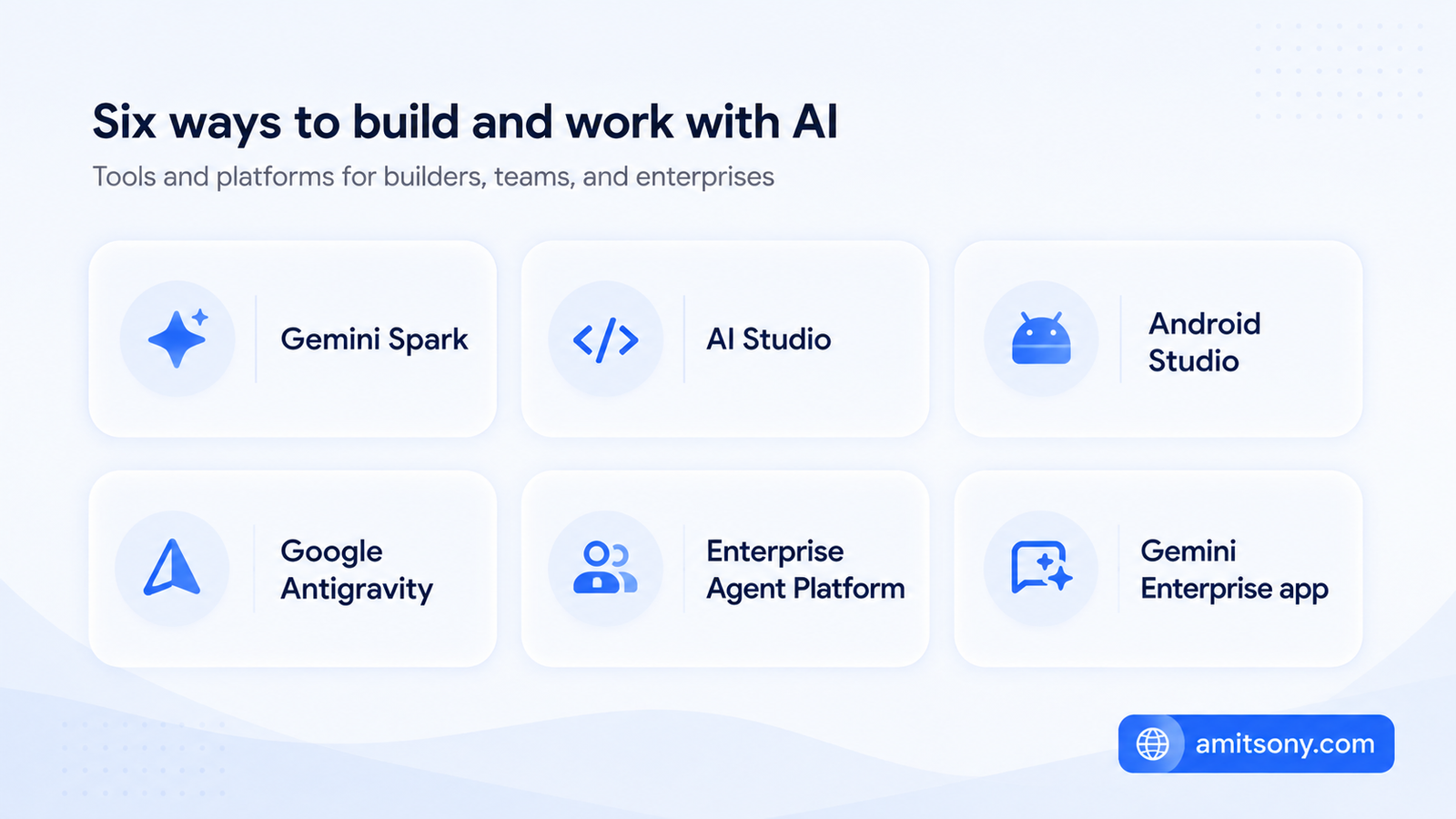
For everyday consumers, 3.7 Flash is live inside Gemini Spark, Google's persistent AI agent, available to AI Pro and Ultra subscribers in over 160 countries. Google specifically says this update makes Spark more efficient for knowledge work, with improved tool use across Google Workspace apps.
For developers, it's available through AI Studio, Android Studio, Google Antigravity, the Gemini Enterprise Agent Platform, and the Gemini Enterprise app, a broad simultaneous rollout rather than a staged one.
What About the Knowledge Cutoff?
Google's own model card includes an unusually candid admission here: the general knowledge cutoff is March 2026, but for some domains the model's knowledge may actually be limited to January 2025, in line with the rest of the Gemini 3 family.
That's a meaningfully wide gap between the best case and worst case, worth remembering before trusting 3.7 Flash on anything time-sensitive without a web search step attached.
What's Actually New Under the Hood?
Thinking levels are configurable: LOW, MEDIUM as the default, and HIGH, letting you trade cost and latency against reasoning depth per request. One specific quirk worth knowing, MINIMAL thinking level, available on some other Gemini models, isn't supported here, setting it returns an API validation error rather than silently falling back.
The model card also mentions support for agentic video understanding as new ground for this release, and Google says it shipped with continued work on Frontier Safety safeguards, specifically improved protections around CBRN and cyber-offense misuse domains.
Is Shipping This Fast Actually a Good Thing?
A three-week release cycle with real, measured benchmark gains is genuinely impressive execution, and it means Flash-tier users get meaningful improvements on a pace no other major lab is currently matching.
It's also worth noting what's missing from this picture: Gemini 3.5 Pro, Google's long-promised next reasoning-tier update, still hadn't shipped as of this release. The Flash line is iterating fast while the Pro tier lags, which says something about where Google's current engineering priority sits.
If your work lives in the Flash tier, coding, agents, high-volume knowledge tasks, this cadence is a genuine advantage. If you're waiting on a frontier-reasoning upgrade specifically, that wait continues.
Verdict
Gemini 3.7 Flash earns its "workhorse" label. The coding and agent benchmark gains are real and specific, not marketing filler, and the introductory pricing is genuinely competitive. The one thing every reviewer should be saying clearly and isn't always: that price doubles in four months, so evaluate this model on its January 2027 rate, not just the launch-week number.
Frequently Asked Questions
When was Gemini 3.7 Flash released?
August 13, 2026, exactly three weeks after Gemini 3.6 Flash, making it one of the fastest release cycles for a major model update from Google.
Is Gemini 3.7 Flash a completely new model?
No. Google's own model card describes it as an algorithmic refinement of Gemini 3.6 Flash, with improvements to the reasoning core rather than a new base model.
Will Gemini 3.7 Flash's pricing change?
Yes. Introductory pricing of $0.75 input and $3.75 output per million tokens holds through December 31, 2026, then doubles to $1.50 and $7.50 on January 1, 2027.
What's Gemini 3.7 Flash's knowledge cutoff?
Google states a general cutoff of March 2026, but notes that for some domains, knowledge may be limited to January 2025, consistent with the rest of the Gemini 3 family.
Where can I use Gemini 3.7 Flash?
It's live in Gemini Spark for AI Pro and Ultra subscribers, plus AI Studio, Android Studio, Google Antigravity, the Gemini Enterprise Agent Platform, and the Gemini Enterprise app.