
DeepSeek V4 just got significantly more expensive, raising API prices up to 355% on August 16 ahead of a planned IPO. GLM-5.3 launched August 14 with strong coding and cybersecurity benchmarks, but its weights are gated for two weeks of safety review, so it isn't actually open yet either. Neither model fits the cheap-and-open stereotype right now.

Two Chinese AI labs had wildly different Augusts in 2026. DeepSeek raised its API prices by as much as 355% on peak-hour output tokens, a genuine reversal from the company that spent a year making Western labs sweat over cost. Z.ai, formerly Zhipu, launched GLM-5.3 on August 14 with benchmark claims that beat every other open-weight model on coding and cybersecurity tasks, then immediately locked the weights behind a two-week safety review.
Neither story fits the "cheap, open, Chinese AI" narrative that's dominated headlines since DeepSeek's R1 went viral last year. This comparison covers what each model actually offers right now, mid-transition, not the reputation either company built months ago.
What Is GLM-5.3 and Why Is It Not Actually Open Yet?
GLM-5.3, released by Z.ai on August 14, 2026, uses the exact same 743-billion-parameter Mixture-of-Experts base model as its predecessor GLM-5.2, with roughly 39 to 40 billion parameters active per token. Every capability gain comes from scaled-up post-training, a reinforcement-learning method Z.ai calls SAO plus an optimization called IndexShare, rather than a bigger or redesigned architecture.
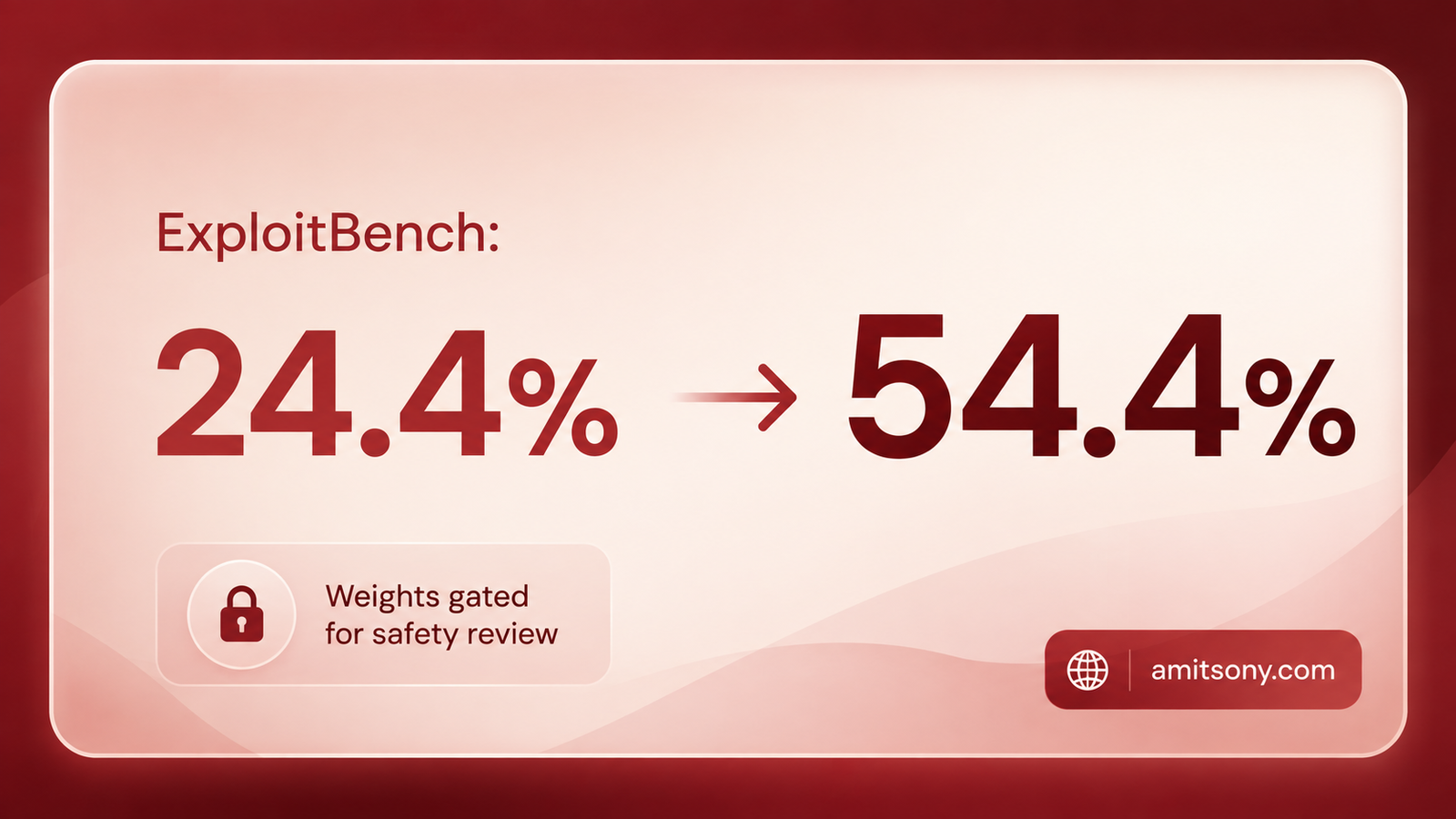
Z.ai's own published numbers claim a roughly 50% jump on its internal coding benchmark, first place among open-weight models on Terminal-Bench 3.0, DeepSWE, and GDPval-AA v2, and a cybersecurity score that more than doubled on ExploitBench, from 24.4% to 54.4%. The model reportedly helped surface 2,436 real vulnerabilities across 269 open-source projects during testing, including a flaw in the Cursor code editor itself.
That cybersecurity jump is exactly why the weights aren't public. Z.ai says it's holding them back for roughly two weeks of safety evaluation and hardening after the August 14 launch, a delay the company ties directly to how capable the model turned out to be at finding exploits.
What Is DeepSeek V4 and How Did Its Pricing Just Change?
DeepSeek V4-Pro reached general availability on August 13, 2026, after months in preview, with the GA version specifically tuned for agentic work, tasks involving tool use, code execution, and multi-step workflows. V4 Flash remains the faster, cheaper tier of the same family, both sharing a 1 million token context window.
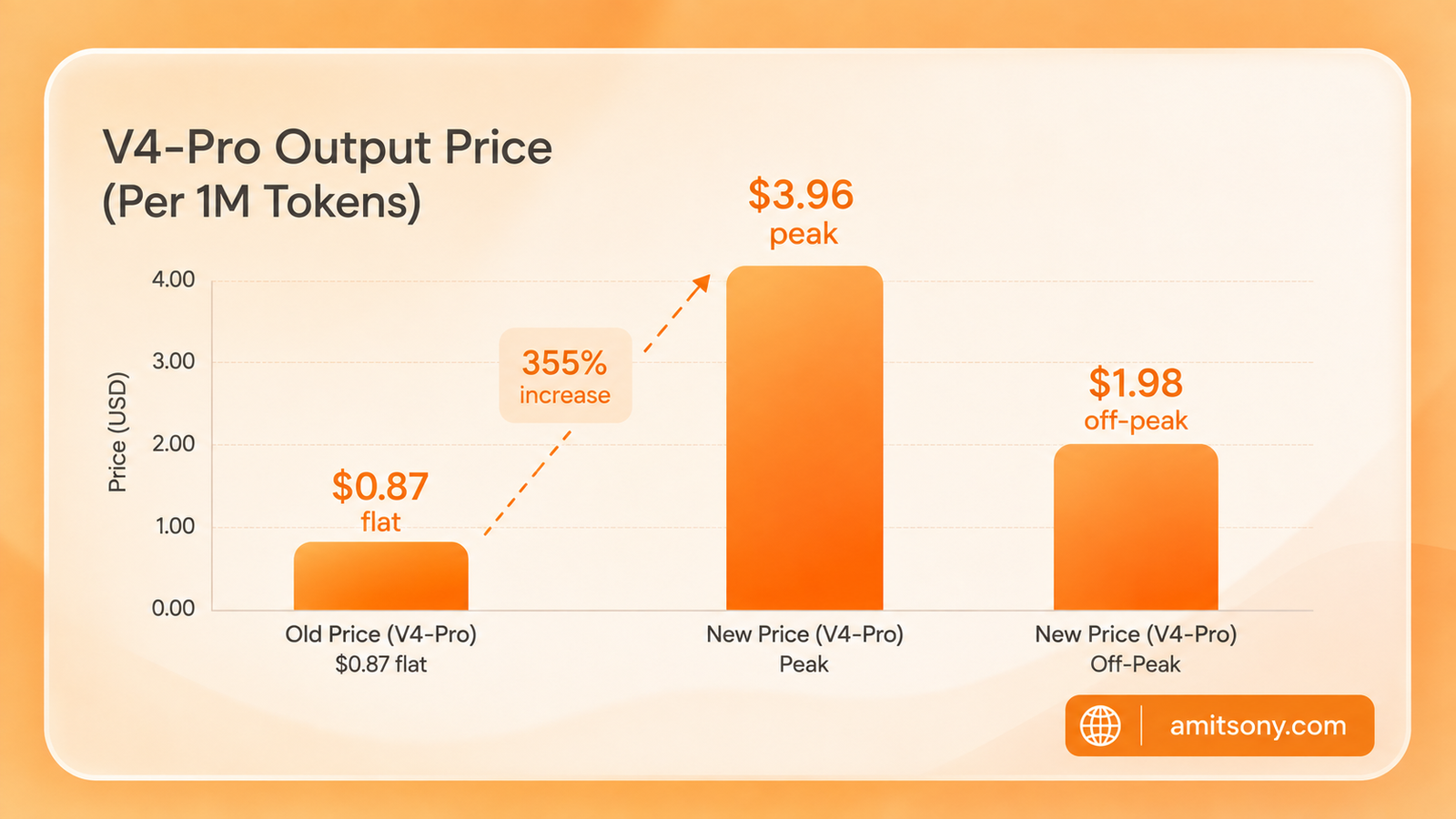
Three days later, on August 16, DeepSeek introduced peak and off-peak billing, and the peak rates are steep. V4-Pro output jumped from a flat $0.87 to $3.96 per million tokens at peak hours, a 355% increase, or $1.98 off-peak. V4 Flash output rose from $0.28 to $1.32 peak, $0.66 off-peak. Peak hours run 01:00 to 04:00 and 06:00 to 10:00 UTC.
The timing lines up with DeepSeek reportedly pursuing an $8 billion funding round at a $74 billion valuation ahead of a potential IPO. Even after the hike, DeepSeek's rates stay below several Western flagships, but the era of DeepSeek being reflexively the cheapest option on any list appears to be ending.
How Do the Two Actually Compare on Capability?
GLM-5.3 leans hardest into coding and security work specifically, per Z.ai's own benchmarks, agentic coding, long-horizon project delivery, and offensive security testing are where it claims to lead every other open-weight model.
DeepSeek V4-Pro's GA release focused squarely on agent capabilities too, scoring 87.9 on Terminal-Bench 2.1, 62.7 on DeepSWE, and 61.5 on NL2Repo in DeepSeek's own released results, with support for both thinking and non-thinking modes and up to 384,000 tokens of output.
Both companies are converging on the same target, long-horizon agentic tasks, tool use, and real coding work, rather than general chat quality. Independent, side-by-side benchmarking of GLM-5.3 specifically is still catching up given how recent the release is.
Which One Is Actually Cheaper Right Now?
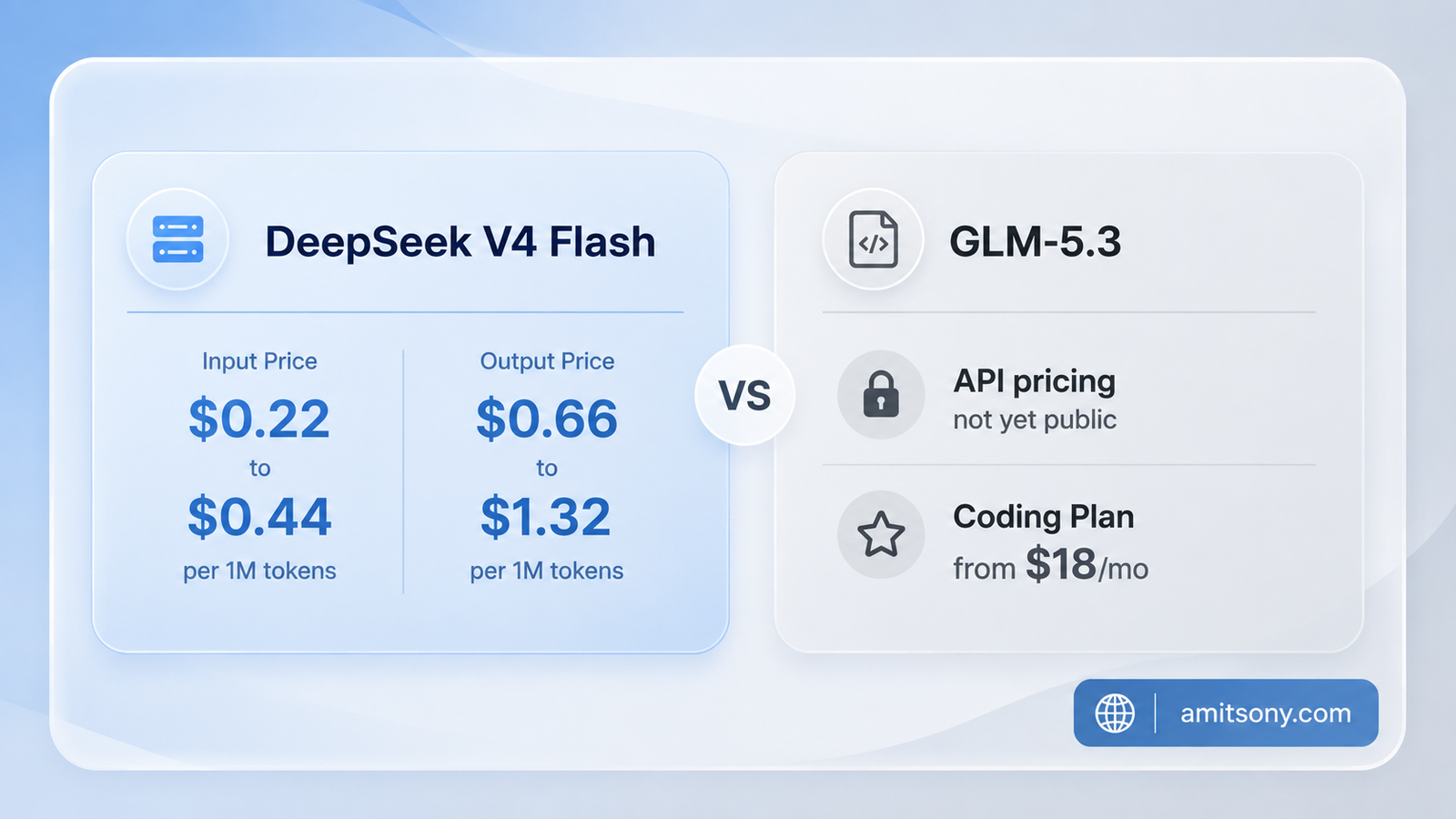
This is genuinely hard to answer cleanly at the moment. DeepSeek V4 Flash post-hike runs $0.22 to $0.44 input and $0.66 to $1.32 output per million tokens depending on time of day. V4-Pro runs roughly $0.66 to $1.32 input and $1.98 to $3.96 output.
GLM-5.3 doesn't have fully public standalone API pricing as of this writing. It's accessible today through the GLM Coding Plan starting at $18/month with a points-based quota, off-peak calls billed at half the standard points. GLM-5.2, its immediate predecessor, prices at $1.40 input and $4.40 output per million tokens, and multiple trackers expect GLM-5.3 to land near that same rate once its API fully opens.
At today's numbers, DeepSeek's off-peak rates likely still undercut GLM on raw token price. But "likely" is doing real work in that sentence, GLM-5.3's actual API pricing simply isn't confirmed yet, so don't lock in a cost comparison until it is.
What's the "Ox Alpha" Story and Why Does It Matter?
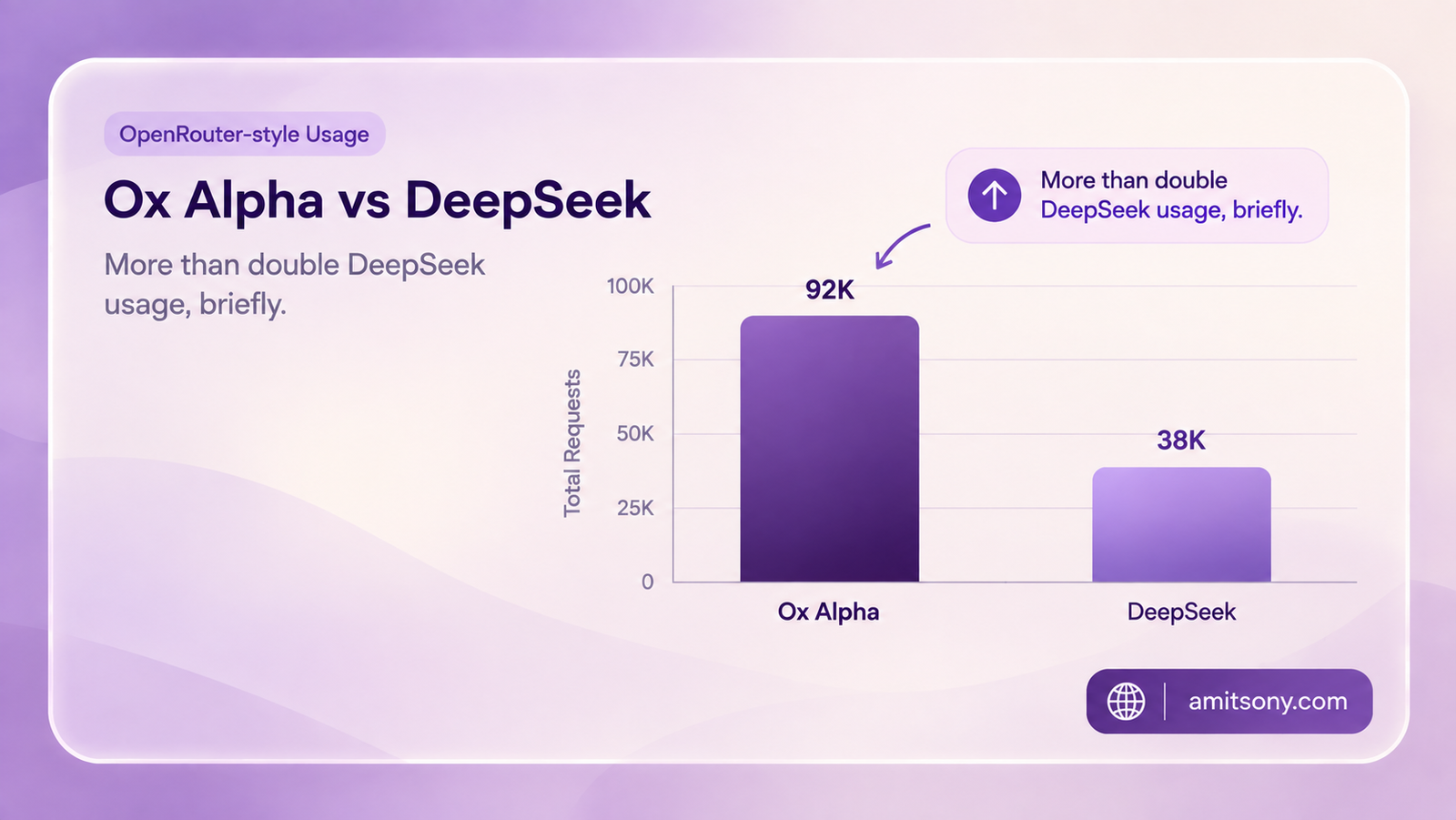
In the days before GLM-5.3's official confirmation, a free, unlabeled model called Ox Alpha appeared on OpenRouter and quietly shot to the top of its usage charts, reportedly more than doubling DeepSeek's usage on the platform.
Independent researchers ran serving-layer forensics, matching Java stack traces, shared error codes, and tokenizer signatures, and concluded Ox Alpha was very likely running on Zhipu's GLM infrastructure well before any official announcement. On August 26, Z.ai confirmed to Bloomberg that Ox Alpha was indeed a new GLM iteration, with open weights promised the same night.
Whatever the marketing intent behind the stealth launch, the usage numbers tell a real story: on at least one major routing platform, a GLM model briefly outpaced DeepSeek head to head. That's a genuine shift in a race that had one clear leader for most of the year.
Is Either Model Actually "Open Source" Right Now?
DeepSeek is the more straightforwardly open of the two today. V4 was released under the MIT license, with April preview checkpoints already published as open weights, consistent with DeepSeek's history since the original R1 release.
GLM-5.3 is not currently open at all. Weights aren't published, a gated Hugging Face repository exists but isn't accessible, and Z.ai's own GLM-5.2, from June 2026, remains the newest GLM version actually available as open weights under MIT. The "open Chinese AI" framing applies more accurately to GLM-5.2 today than to GLM-5.3.
Are There Safety Differences Worth Knowing About?
A NIST CAISI evaluation published in April 2026 found DeepSeek's most permissive configuration complied with 94% of adversarial jailbreak attempts tested, compared to 8% for the US reference frontier models in the same evaluation. That's a real, measured gap in one specific safety category, not a general capability judgment.
GLM-5.3's held-back weights are explicitly framed around a different safety concern, offensive cybersecurity capability rather than jailbreak resistance, which makes the two models' safety stories genuinely different rather than directly comparable.
Quick Verdict
Neither model is the budget, no-strings-attached option its lineage might suggest right now. DeepSeek V4 remains genuinely open and available today, just meaningfully pricier than it was three weeks ago. GLM-5.3 claims the stronger coding and security benchmarks, but you can't download it, and its real API price is still unconfirmed. Revisit this comparison once GLM-5.3's weights actually ship, the picture is very likely to shift again.
Frequently Asked Questions
Is GLM-5.3 open source?
Not yet. Z.ai is holding the weights back for roughly two weeks of safety review following the August 14, 2026 launch, tied specifically to the model's cybersecurity capabilities. GLM-5.2 remains the newest openly available GLM version.
Why did DeepSeek raise its prices?
DeepSeek introduced peak and off-peak billing on August 16, 2026, with peak-hour output prices rising as much as 355% for V4-Pro. The move coincides with a reported $8 billion funding round ahead of a potential IPO.
What is the Ox Alpha model?
A free, unlabeled model that appeared on OpenRouter and rose to the top of its usage charts before independent forensics linked it to Zhipu's GLM infrastructure. Z.ai confirmed to Bloomberg on August 26, 2026 that it was a new GLM iteration.
Which is cheaper, GLM-5.3 or DeepSeek V4?
Hard to say definitively yet. DeepSeek's post-hike off-peak rates are published and likely still cheaper, but GLM-5.3 doesn't have confirmed standalone API pricing, only access through an $18/month Coding Plan, as of this writing.
Is DeepSeek V4 safe to use for sensitive applications?
A NIST CAISI evaluation from April 2026 found DeepSeek's most permissive configuration complied with 94% of tested adversarial jailbreak attempts, compared to 8% for US reference frontier models, worth factoring into any enterprise deployment decision.