
GPT-Live, launched July 8, 2026, replaces ChatGPT's Advanced Voice Mode with a genuinely different architecture: it listens and speaks at the same time instead of waiting for silence to detect your turn. Human testers preferred it clearly. The catch: no video, no screen sharing, and no API access yet, and free users get a smaller model than paid subscribers.
OpenAI's own engineering post about building this system boils down to one line: the voice must flow. GPT Live, which launched July 8, 2026 and replaced ChatGPT's Advanced Voice Mode outright, is built around a genuinely different idea than every voice assistant that came before it, listening and speaking don't have to be separate steps.
This review is built from OpenAI's own technical documentation and launch materials, cross-checked against independent coverage and analysis, to explain what actually changed, what's still missing, and whether the human preference testing OpenAI cites holds up to scrutiny.
What Makes GPT-Live Different From the Old Advanced Voice Mode?
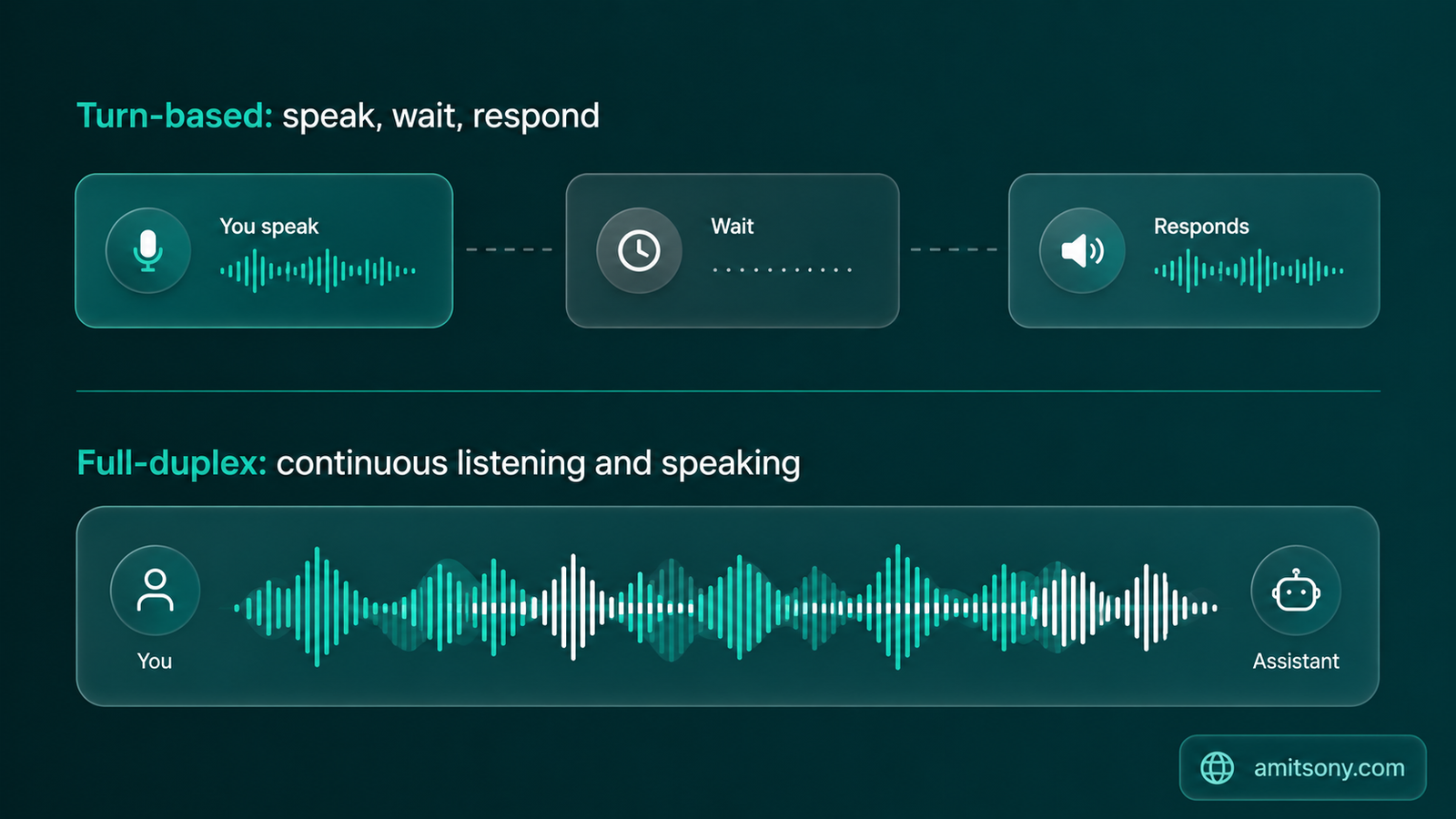
Every voice assistant before this, including ChatGPT's own Advanced Voice Mode, worked in discrete turns: you speak, a turn detector waits for silence, decides you're finished, then the model responds. A pause to think or a burst of background noise could get misread as the end of your turn, causing the AI to jump in at the wrong moment.
GPT-Live removes that turn detector from the audio path entirely. It's full-duplex, meaning the model listens and generates speech simultaneously, making a decision many times per second about whether to keep talking, go quiet, interrupt, or wait. That's the architectural shift the whole product is built around.
In practice, OpenAI says this lets it backchannel naturally, small verbal cues like "mhmm" while you're still talking, stay silent while you're visibly still thinking, and handle a genuine interruption mid-sentence instead of talking over you or freezing.
What's the Difference Between GPT-Live-1 and GPT-Live-1 Mini?
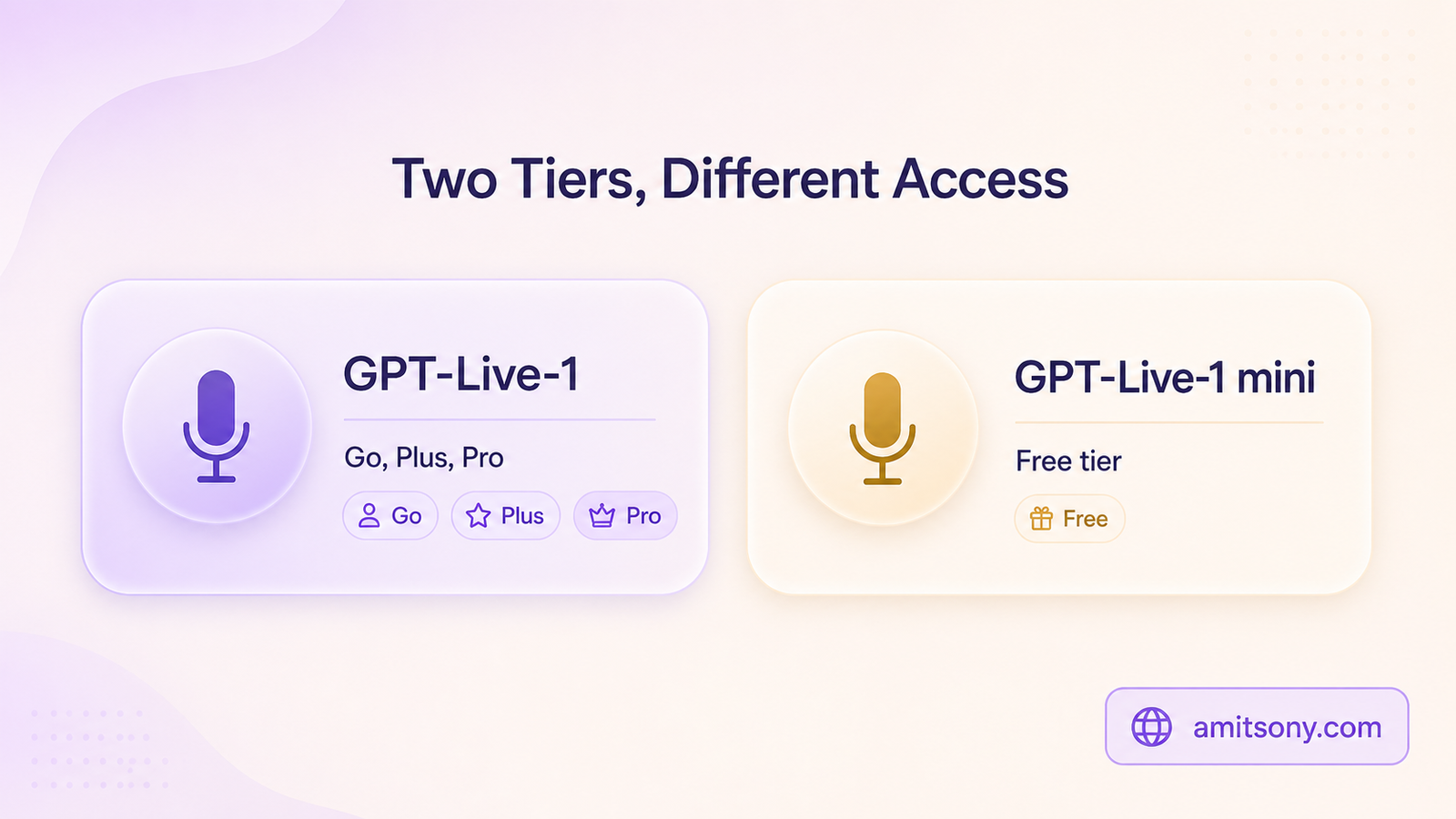
Two versions shipped on day one. GPT-Live-1 became the default voice model for Go, Plus, and Pro subscribers. GPT-Live-1 mini became the default for Free-tier users, replacing Advanced Voice Mode across the board.
OpenAI hasn't published a detailed spec comparison between the two, but the split itself is the notable part: free users get a smaller, presumably faster and cheaper model, while paid subscribers get the fuller version. Latency and voice quality, not just intelligence, are now something you can pay to upgrade.
How Does the "Delegation" Architecture Actually Work?
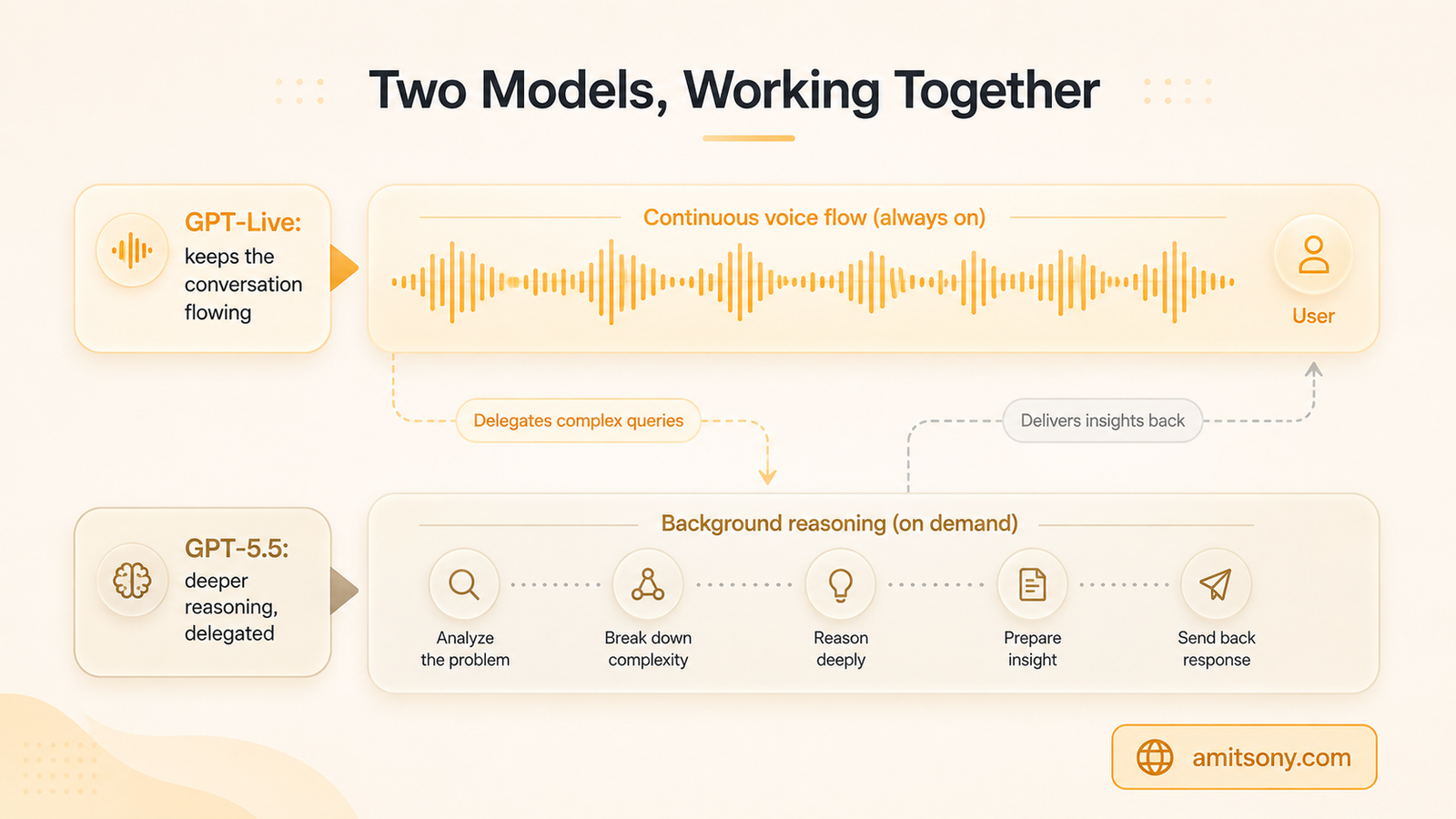
GPT-Live itself isn't the model doing your hardest thinking. It's specifically built for the continuous audio flow, while deeper reasoning, web search, and agentic tool use get delegated to GPT-5.5 through a separate asynchronous path running in parallel.
The practical effect: the voice keeps flowing, natural pacing, no dead air, while a harder question gets handed off in the background and the answer gets woven back into the conversation once it's ready, rather than the whole conversation freezing while the model thinks.
This split is the clever part of the design. Most competitors either sacrifice reasoning depth for speed, or sacrifice responsiveness for depth. Delegating the two separately is a genuinely different approach worth watching.
What Can It Actually Do That the Old Voice Mode Couldn't?
Real-time translation is the standout new capability, live, in the flow of conversation, rather than a separate mode you have to switch into. Natural interruption handling is the other headline feature, cutting off mid-sentence and picking up on what you actually said instead of restarting or ignoring you.
The rollout was broad rather than staged, live across iOS, Android, and web globally starting day one, reaching more than 150 million people who already use ChatGPT's voice and dictation features weekly.
What's Missing at Launch?
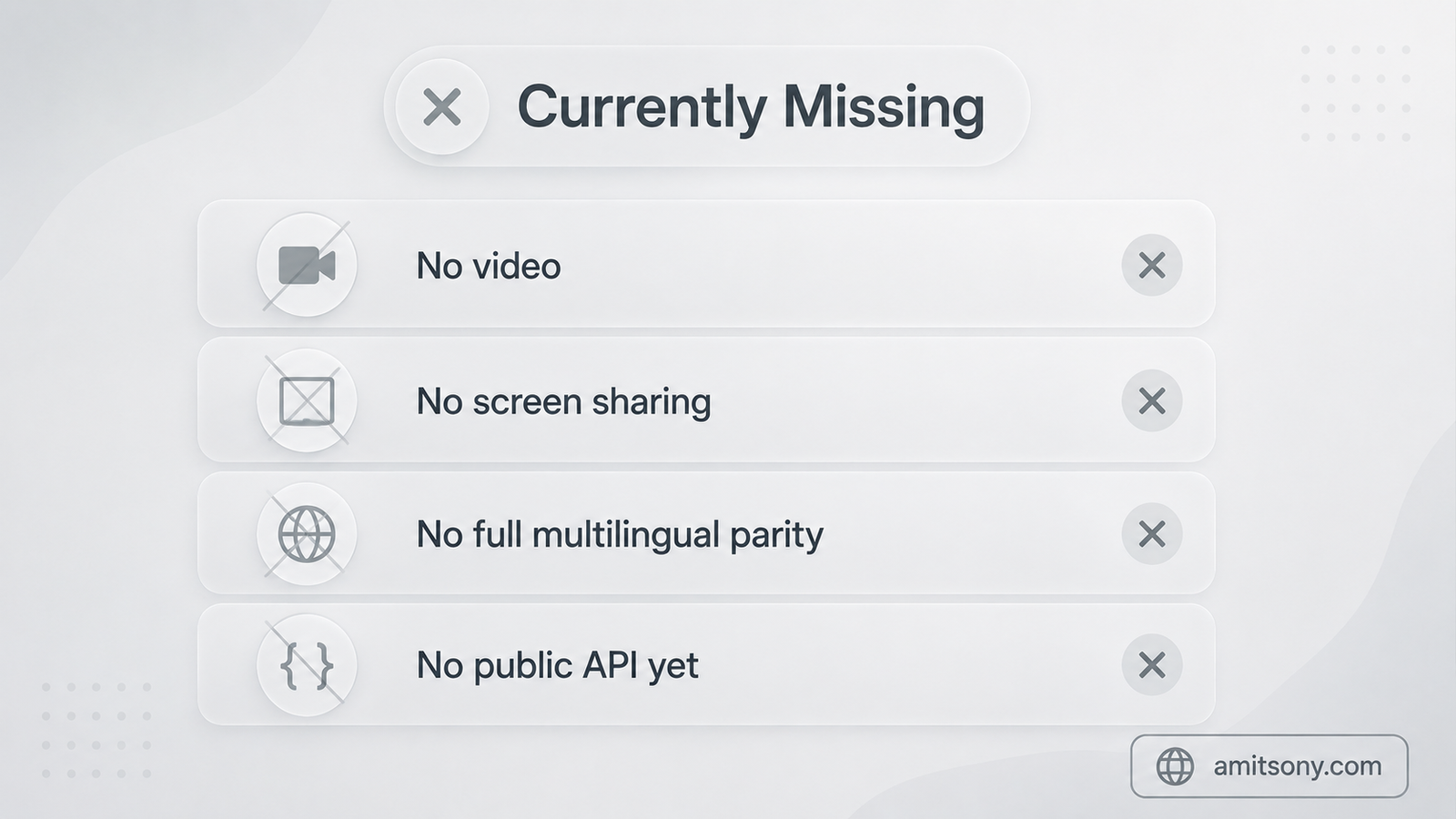
No video and no screen sharing, both of which existed in some form under the previous voice system, are absent here. Full multilingual parity isn't there yet either, an odd gap for a product headlining real-time translation as a feature.
The bigger gap for developers: no API access on day one. OpenAI is only collecting signups with no firm timeline, while competitors including Google, ElevenLabs, and Deepgram already offer developer-facing realtime voice APIs today. That's real runway handed to rivals in the voice-agent infrastructure market specifically.
For everyday ChatGPT users this barely matters. For anyone building a voice product on top of OpenAI's stack, this is the detail that actually changes near-term plans.
Is GPT-Live Actually Better, According to Real Testing?
OpenAI states that GPT-Live-1 and mini were strongly preferred over Advanced Voice Mode in human testing. That's a real, positive signal, but it's also OpenAI's own internal testing of its own product replacing its own previous product, not an independent, blinded, third-party study.
Independent coverage since launch has been consistently positive on the core interaction feel, and the architectural reasoning for why turn-based systems misfire holds up on its own logic, even without OpenAI's specific numbers attached to it.
Treat "strongly preferred" as a real, meaningful improvement, not as a marketing throwaway line, given how clearly the underlying architecture actually addresses the specific failure mode of the previous system. Just don't treat it as neutral, independently verified data either.
Is This Actually a Pricing Strategy in Disguise?
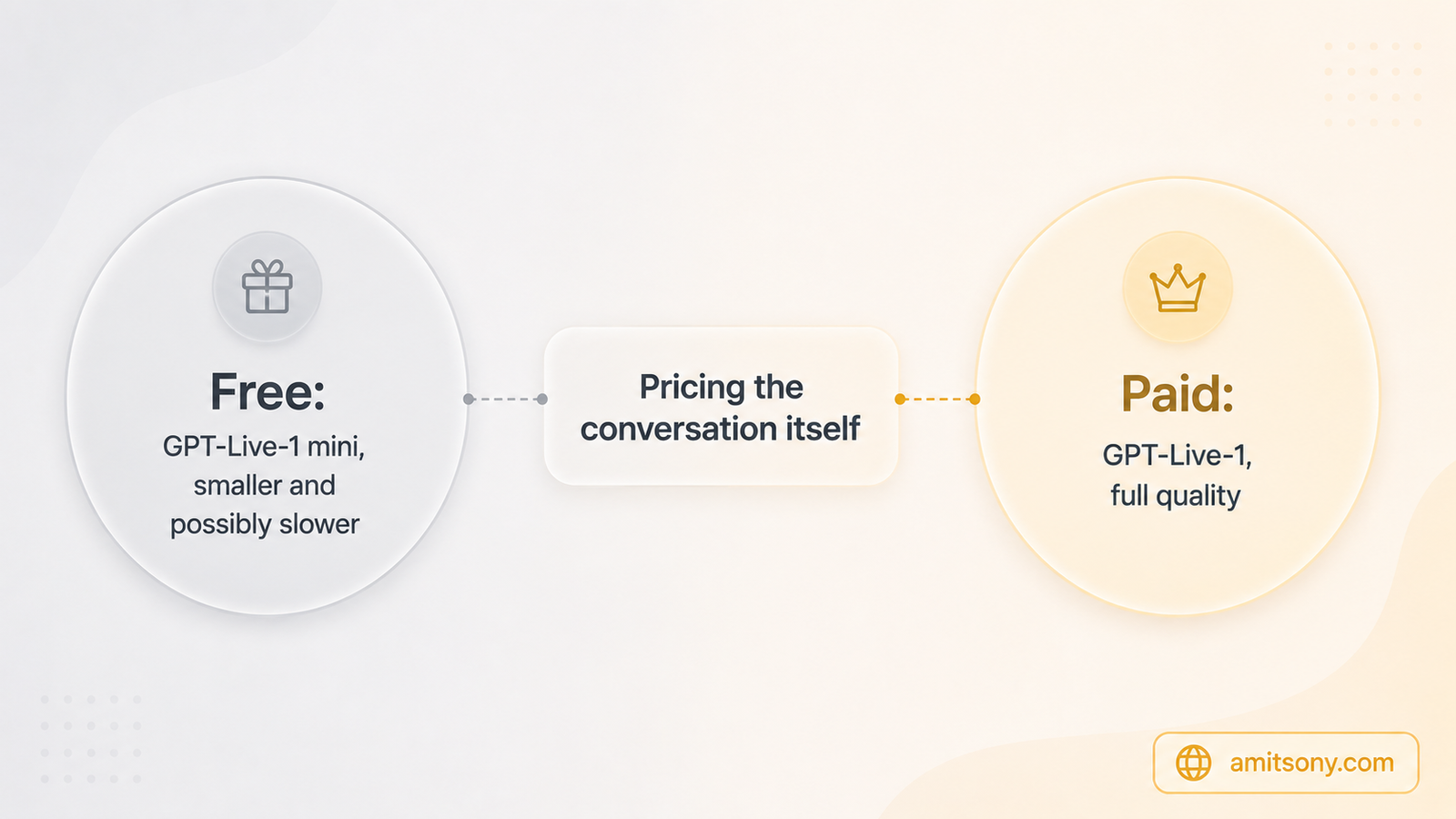
One sharp piece of independent analysis flagged something worth repeating here: splitting a smaller free model from a fuller paid one means OpenAI is now effectively pricing the conversation experience itself, not just raw intelligence. Free users aren't just getting a dumber model, they may be getting a less responsive, lower-latency-quality one too.
That's a meaningful shift in how voice AI gets sold. Latency and naturalness, the very things that make full-duplex voice feel human in the first place, are becoming a subscription feature rather than a baseline experience everyone gets equally.
Verdict
GPT-Live is a genuine architectural improvement, not a marketing refresh. Removing the turn detector and letting the model listen and speak at once solves a real, specific problem that's frustrated every voice assistant before it. The gaps, no video, no API, incomplete multilingual support, are launch-week gaps rather than fundamental flaws, and OpenAI has a track record of closing these within months rather than years. Worth using today if natural conversation matters to you, worth waiting on if you're building a product that needs the API.
Frequently Asked Questions
What is GPT-Live?
OpenAI's new full-duplex voice model family, launched July 8, 2026, replacing ChatGPT's Advanced Voice Mode. It can listen and speak at the same time instead of waiting for you to finish talking.
What's the difference between GPT-Live-1 and GPT-Live-1 mini?
GPT-Live-1 is the default for Go, Plus, and Pro subscribers. GPT-Live-1 mini is the default for Free-tier users. OpenAI hasn't published detailed specs, but the paid version is understood to be the fuller, higher-quality model.
Does GPT-Live have an API for developers?
Not at launch. OpenAI is only collecting signups with no firm release timeline, while competitors like Google, ElevenLabs, and Deepgram already offer developer-facing realtime voice APIs.
Can GPT-Live handle video or screen sharing?
No, not at launch. Both were missing from the initial rollout, along with full multilingual parity, despite real-time translation being a headline feature.
Is GPT-Live actually better than the old Advanced Voice Mode?
OpenAI's own human testing found it strongly preferred over Advanced Voice Mode, and the underlying architecture genuinely solves a specific problem, turn-detection misfires, that affected every prior voice assistant.