
Vibe coding means describing an app in plain English and letting AI write the code, often without reading every line. Andrej Karpathy coined the term in February 2025, then walked it back a year later, saying his own workflow now involves far more review. Great for prototypes, risky for anything touching real user data or payments.
In February 2025, Andrej Karpathy, former Tesla AI director and OpenAI co-founder, posted a tweet describing a new way of building software: "I just see stuff, say stuff, run stuff, and copy stuff. I call it vibe coding." The term spread fast enough to become Collins Dictionary's Word of the Year in 2025. A year later, in February 2026, Karpathy posted a follow-up distancing himself from his own term, describing his current workflow as far more structured, with heavy review, and suggesting "agentic engineering" as a more accurate label for how professionals actually build software now.
That reversal is the most important thing to understand about vibe coding in 2026. It's not one thing anymore, it's a fast, low-stakes way to prototype, and a completely different, review-heavy discipline for anything real. This guide covers both halves honestly.
What Does Vibe Coding Actually Mean?
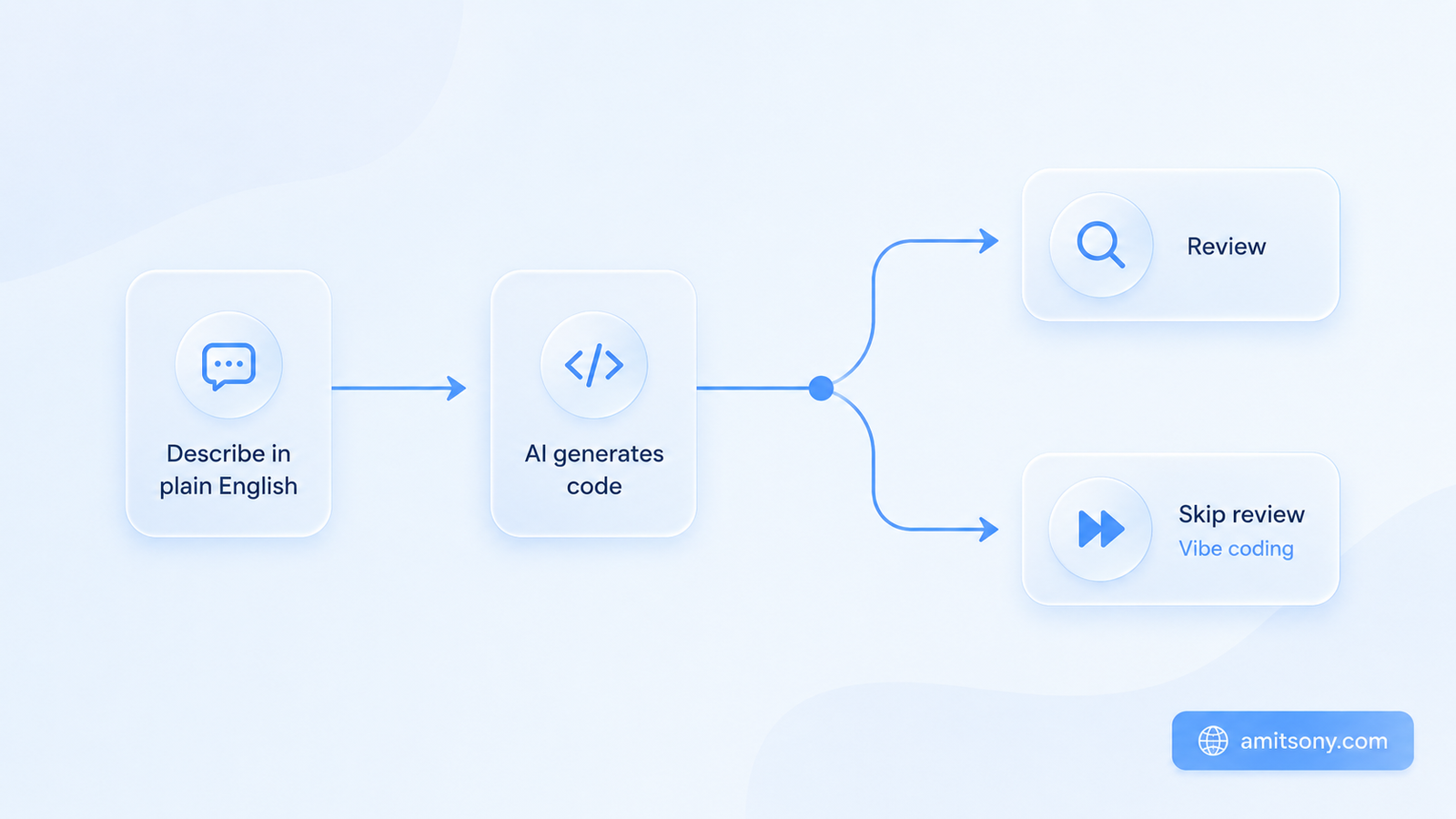
The basic idea is simple: you describe what you want an app to do in plain English, an AI tool generates the actual code, and you steer with follow-up prompts instead of typing syntax yourself. "Build a booking site for my salon with online payments" becomes a working prototype in minutes instead of weeks.
Writer Simon Willison made the sharpest distinction in the term's definition: the load-bearing part isn't using AI to write code, plenty of professional developers do that every day. It's choosing not to review the output. That's what separates vibe coding from ordinary AI-assisted development, one skips the check, the other doesn't.
The numbers back up how far this has gone. Y Combinator reported roughly a quarter of its Winter 2025 batch had codebases that were 95% or more AI-generated. GitHub now reports close to half of all newly committed code across its entire platform is AI-generated.
Why Did the Person Who Coined the Term Just Walk It Back?
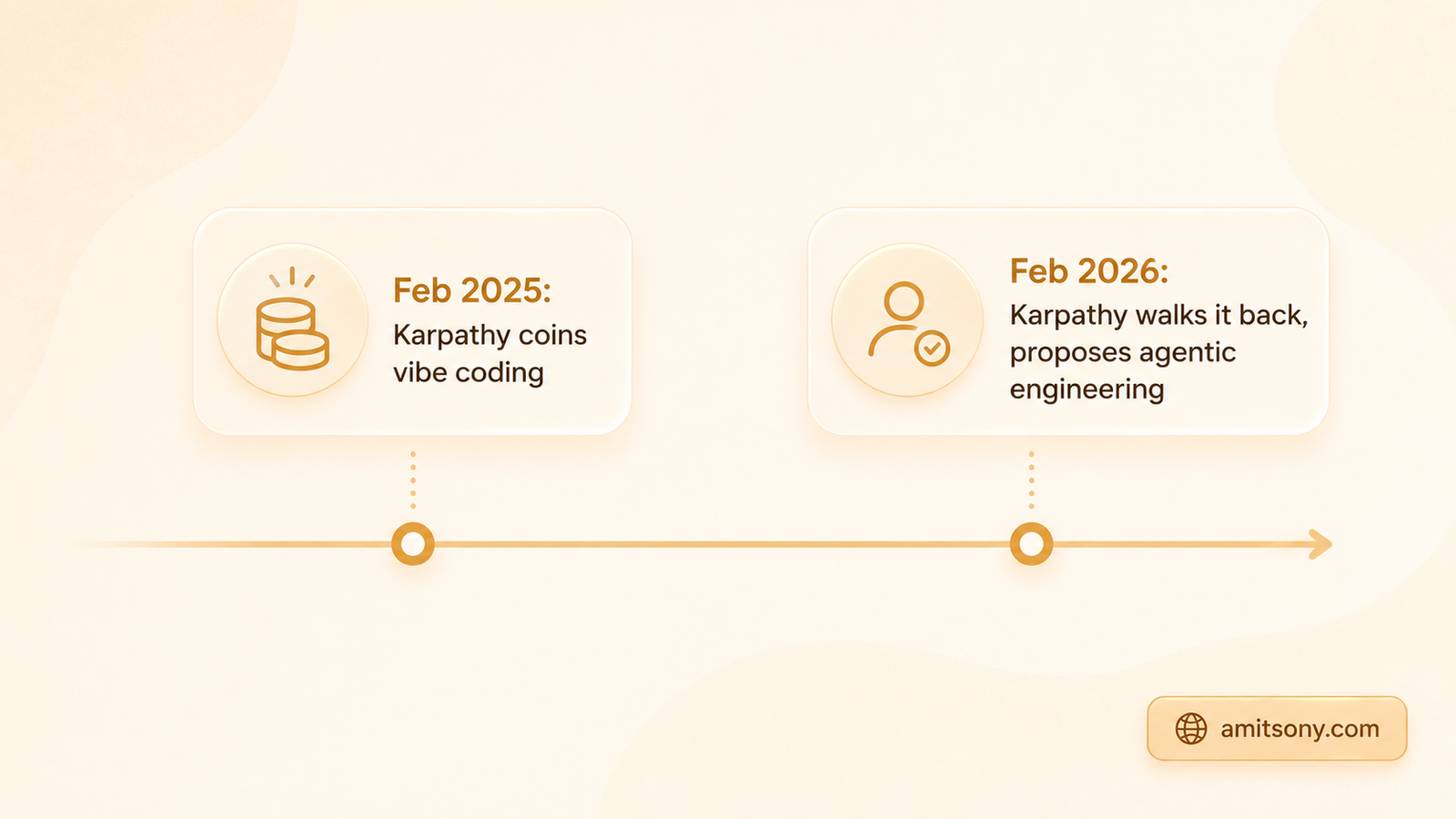
This is the part most explainers published earlier in 2026 miss entirely. In February 2026, a year almost to the day after his original tweet, Karpathy posted again, this time describing his own actual workflow as far more structured than "giving in to the vibes and forgetting the code even exists," his original framing.
He proposed "agentic engineering" as the more accurate term for how serious builders work now, prompt-driven, yes, but with real review, testing, and architectural planning layered on top. The original, careless version of vibe coding didn't disappear, it just got demoted to what you do for a weekend prototype, not what you ship to real users.
If a piece of content still describes vibe coding as purely "forget the code exists," it's describing 2025, not how anyone serious is actually working in 2026.
How Many Developers Actually Use This, and Do They Trust It?
Adoption is no longer a fringe statistic. Industry surveys put daily use of AI coding tools somewhere between 72% and 92% of developers, depending on which report you read and how it defines daily use.
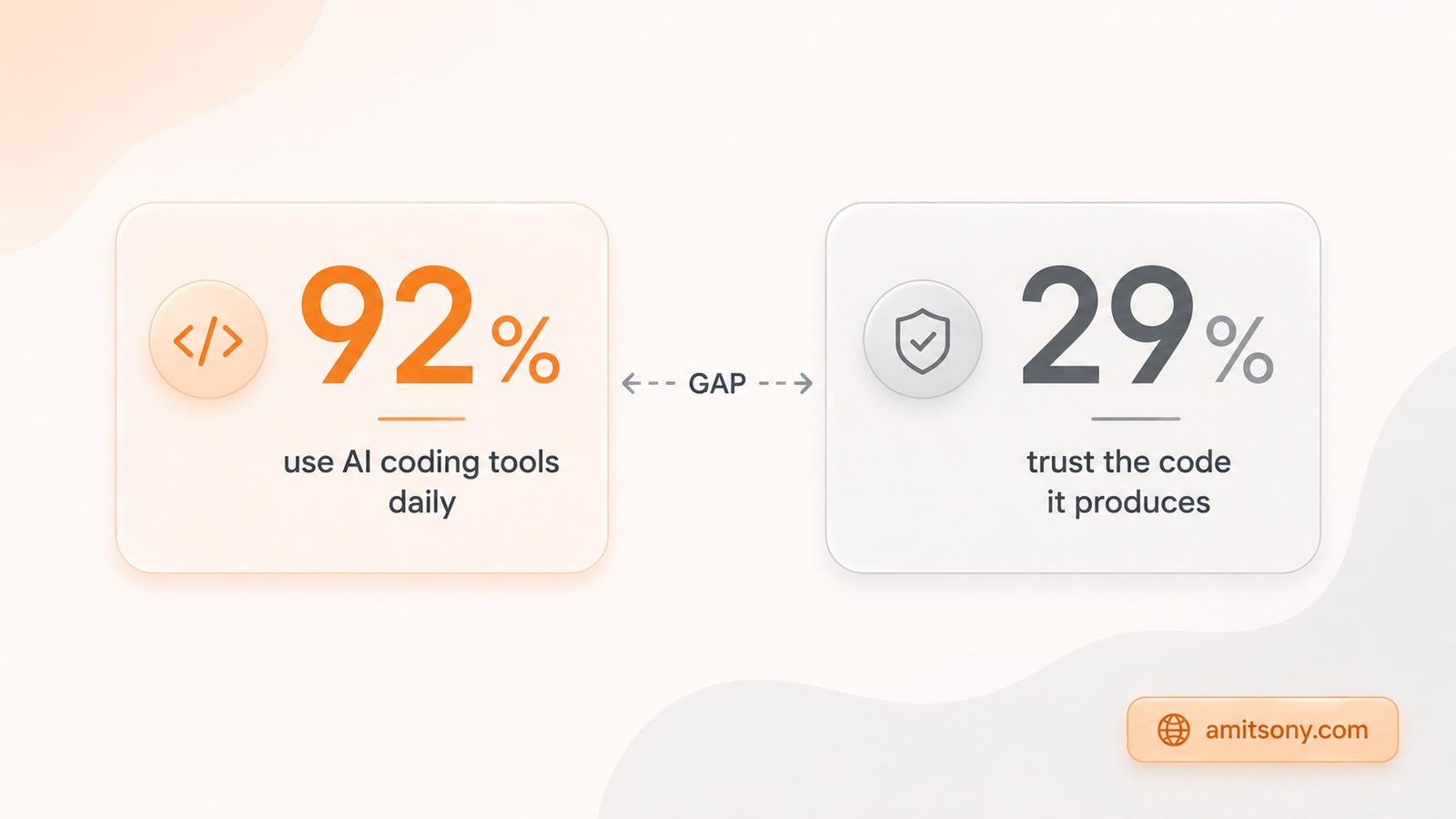
The more revealing number comes from Keyhole Software's aggregated analysis of 14 industry reports between January and April 2026: 92% of U.S. developers use AI coding tools daily, but only 29% actually trust the code those tools produce. That gap, near-universal use paired with widespread distrust, is the real state of this category, not the smooth marketing version.
McKinsey's own research found developers using AI assistants complete tasks up to 56% faster. Speed and trust are apparently two completely separate metrics, and most of the industry is optimizing hard for the first one while quietly worrying about the second.
Which Tools Should You Actually Use to Vibe Code?
Cursor leads the market among professional developers, reportedly reaching $2 billion in annualized revenue by early 2026. Its Composer and Agent Mode features let the AI edit multiple files across a codebase from a single prompt, built for people who already know what a codebase is.
For pure prototyping with zero coding background, browser-based tools like Bolt.new and Lovable are the more common starting point, describe an app, get a working version hosted and ready to click around in minutes, no local setup at all.
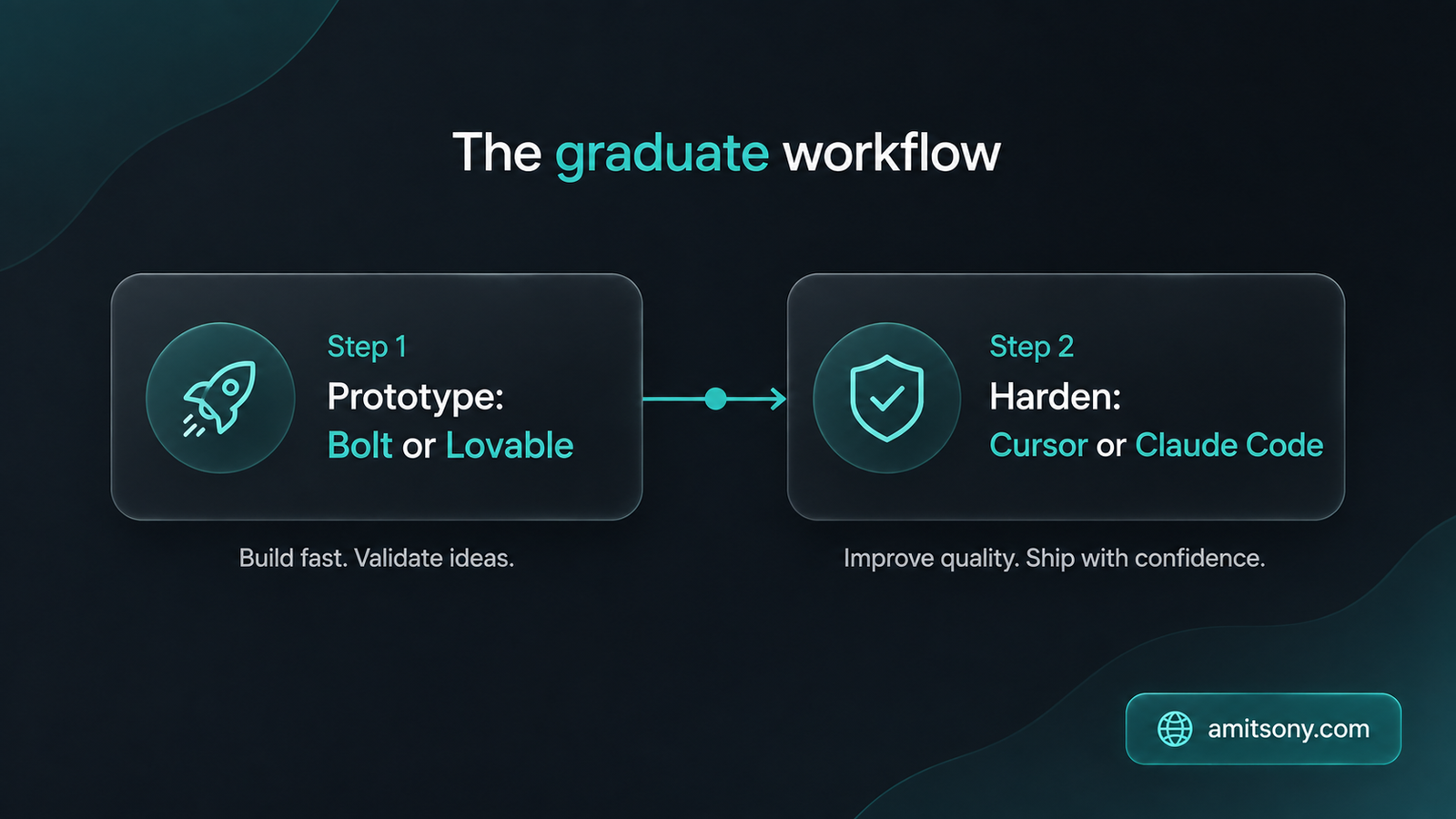
A "graduate workflow" has become the standard pattern in 2026: prototype fast in a browser tool like Bolt or Lovable, validate that the idea actually works, then move the codebase into a tool like Cursor or Claude Code for the harder, more careful work of production hardening. Claude Code works from the terminal, an IDE, or a desktop app, reads your entire codebase, and can run tests, fix bugs, and open pull requests directly rather than just suggesting snippets.
Don't pick one tool and stay there through the whole project. The tools that are best for a five-minute prototype are rarely the same ones you want handling a payment system.
Can You Really Build an App With Zero Coding Knowledge?
For a prototype or personal tool, yes, genuinely. AI now handles framework selection, backend logic, and database setup automatically, without you touching configuration files.
The line gets real the moment money, private user data, or real traffic gets involved. A database, user accounts, and payments generated purely from a prompt is technically possible now, and that's exactly where skipping the review step stops being optional. Security vulnerabilities in AI-generated code are a documented, ongoing problem, not a hypothetical one.
The honest rule: vibe code the first 80% fast to prove the idea works, then slow down and have someone who actually reads code harden the parts that touch anything real.
What's the Right Way to Vibe Code Without Getting Burned?
Treat the first version as a prototype, not a finished product, even if it looks polished. A working demo and a secure, production-ready app are not the same thing, no matter how clean the generated UI looks.
Before anything goes live with real users, get a human review pass specifically on authentication, payment handling, and anywhere user input touches your database. These are the exact areas where AI-generated code most often ships with quiet vulnerabilities.
Keep prompts specific and iterative rather than one giant request. "Add email and password login," reviewed before moving on, works better than "build the entire backend" in one shot you then have to untangle afterward.
Quick Verdict
Vibe coding is real and it's genuinely useful, but the term itself has already outgrown its original, careless meaning. Use it to prototype fast, then treat the review step as mandatory the moment anything real is on the line, which is exactly what the person who coined the term now says he does himself.
Frequently Asked Questions
Who coined the term vibe coding?
Andrej Karpathy, former Tesla AI director and OpenAI co-founder, in a February 2025 tweet. He posted a follow-up in February 2026 distancing himself from the term's original, review-free meaning.
Is vibe coding the same as using AI to help write code?
Not quite. Writer Simon Willison's distinction is the sharpest one: vibe coding specifically means choosing not to review the AI's output, while AI-assisted development still involves checking the code.
Can beginners actually build a real app with vibe coding?
Yes for prototypes and personal tools. For anything touching payments, private data, or real users, a human review step becomes necessary, not optional.
What tools do people actually use for vibe coding?
Bolt.new and Lovable are common for zero-code prototyping, while Cursor and Claude Code are used for more advanced, production-level work once an idea is validated.
Do developers actually trust AI-generated code?
Not fully. Aggregated 2026 industry research found 92% of U.S. developers use AI coding tools daily, but only 29% trust the code those tools produce.