
You build a simple AI chatbot using no-code tools like Botpress or Tidio, train it on a local business's FAQs and services, then sell it as a managed monthly service. Setup fees range from $1,000 to $5,000, with recurring retainers of $300 to $2,500 per month per client.
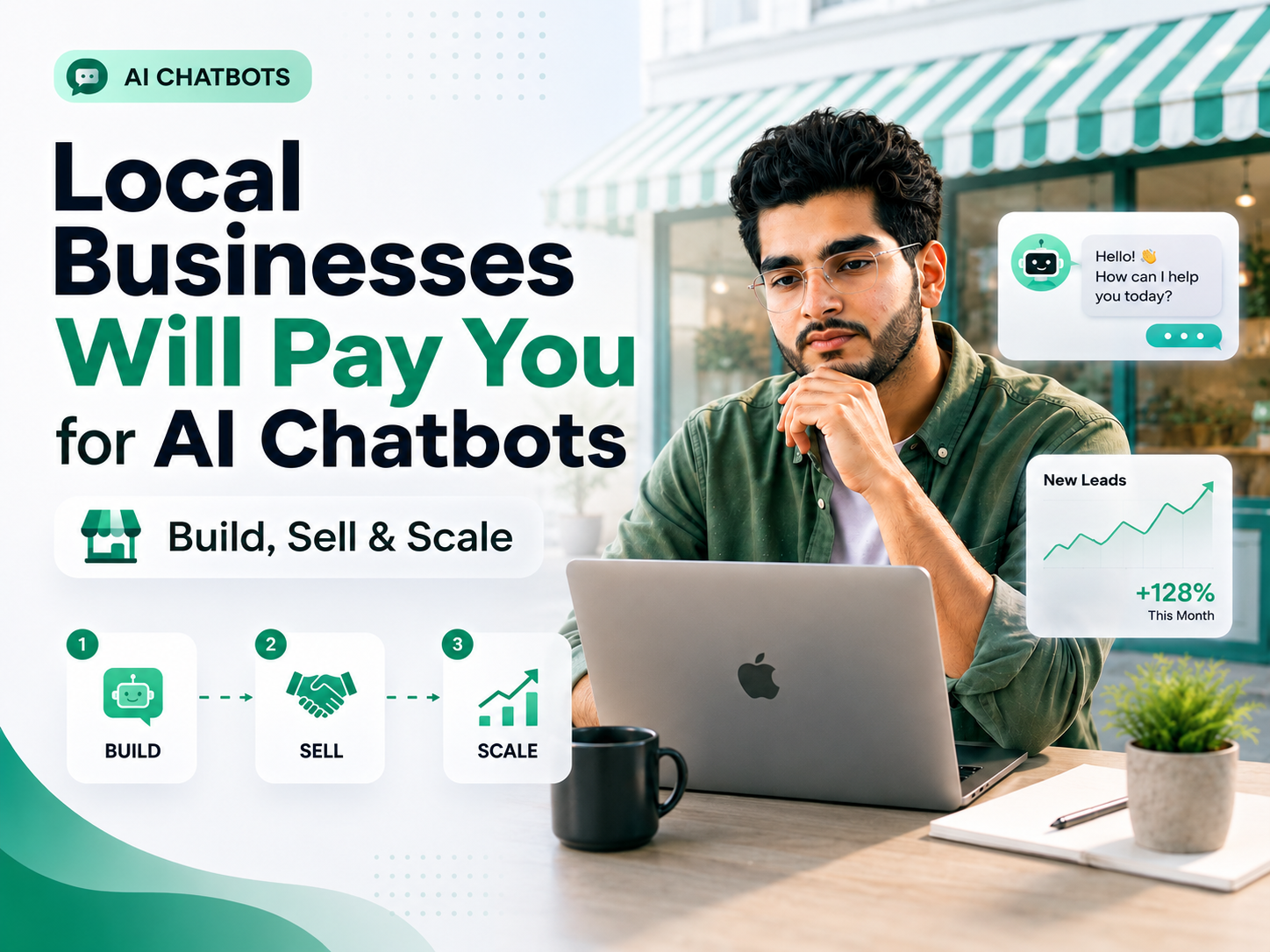
Most local businesses — dentists, salons, gyms, plumbers — are losing leads every single day. Not because they have a bad service, but because nobody is answering the phone at 9 PM or replying to the website chat at 2 AM.
That gap is a business opportunity for you. You don't need to code. You don't need a tech degree. What you need is the right no-code tool, a repeatable process, and this guide.
Why Is Selling AI Chatbots to Local Businesses Such a Big Opportunity Right Now?
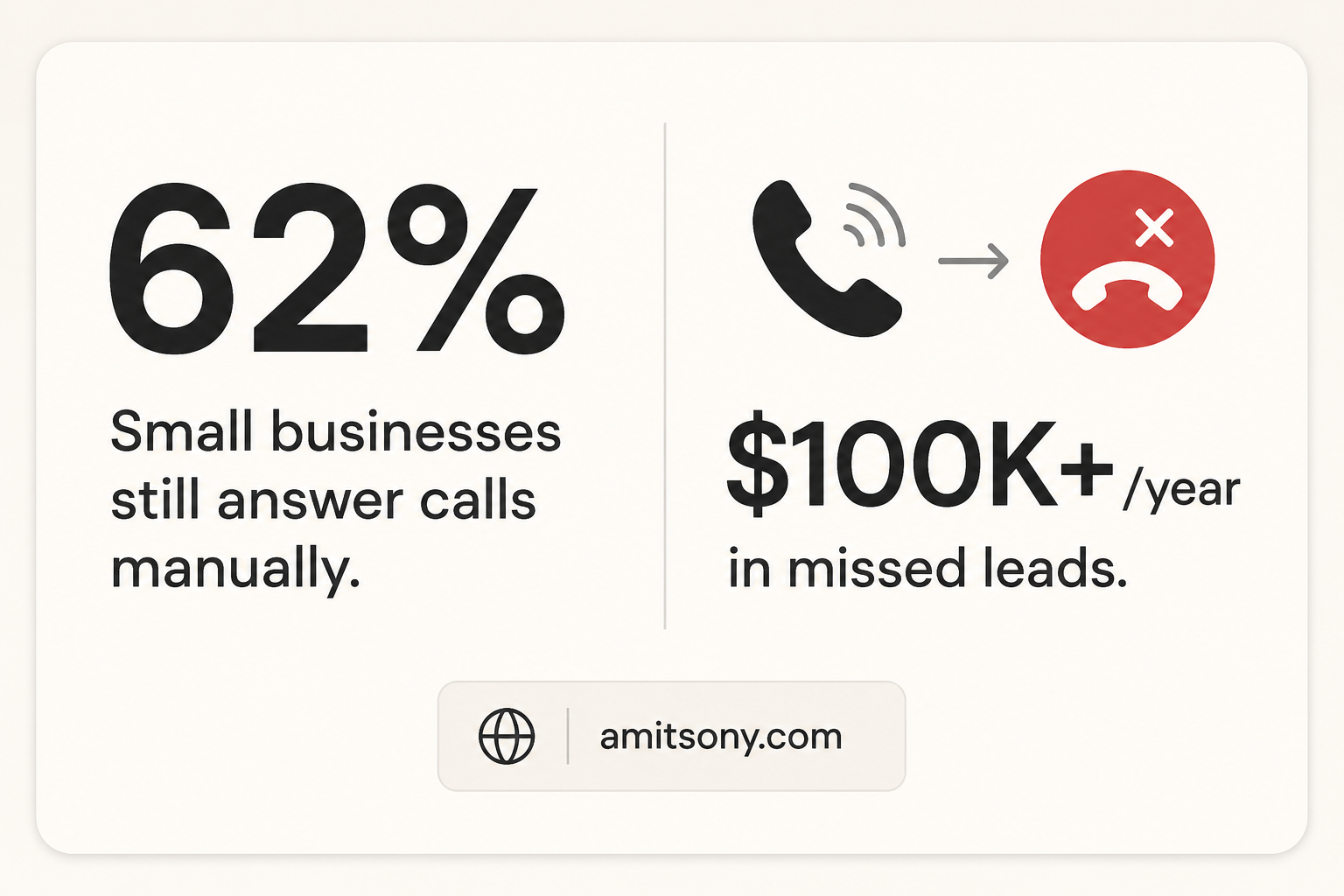
The timing right now is exceptional. AI awareness has hit mainstream. Business owners have heard of ChatGPT, they know AI exists, and many are actively looking for ways to use it. You no longer have to convince them that AI is real.
Local businesses have a very specific pain: they can't respond fast enough. A plumber is under a house. A dentist is with a patient. A real estate agent is at a showing. Every unanswered call or ignored website message is a lost customer.
The math is stark. A roofing company that misses just 10 calls a week during busy season can lose over $100,000 in annual revenue. When you show a business owner that number, a $500/month chatbot retainer becomes an obvious investment.
And the market is wide open. The majority of local businesses in the US have still not been approached with a proper AI chatbot offer. That window won't stay open forever.
Which Local Business Verticals Are Best to Target First?
Not all verticals are equal. Some close faster, pay more, and retain longer. Picking the right starting vertical saves you months of wasted outreach.
Dental practices are widely considered the single best entry point. There are over 200,000 dental practices in the US alone. They all deal with the same problem: phone lines jammed with questions like "Do you accept Delta Dental?" or "How do I reschedule?" A chatbot on their website and connected to their scheduling system handles all of that automatically.
Real estate agents and brokerages are another strong vertical. They get inquiries at all hours, especially on weekends. A chatbot that qualifies leads, captures contact details, and books viewings pays for itself in a single closed sale.
Salons and spas have high appointment volume and repetitive booking questions. They also tend to operate lean with small teams, making automation a practical relief, not just a nice-to-have.
Gyms, fitness studios, and wellness centers get constant membership and class schedule inquiries. A bot that answers these 24/7 and captures leads during off-hours is an easy sell.
HVAC, plumbing, and electrical contractors are highly lucrative because every missed call is a direct lost job. Urgency is built into the client's situation, which makes closing faster.
Start with one vertical, build one great case study, and let referrals do the rest. Trying to sell every industry at once is the fastest way to burn out.
What Tools Do You Actually Need to Build These Chatbots?
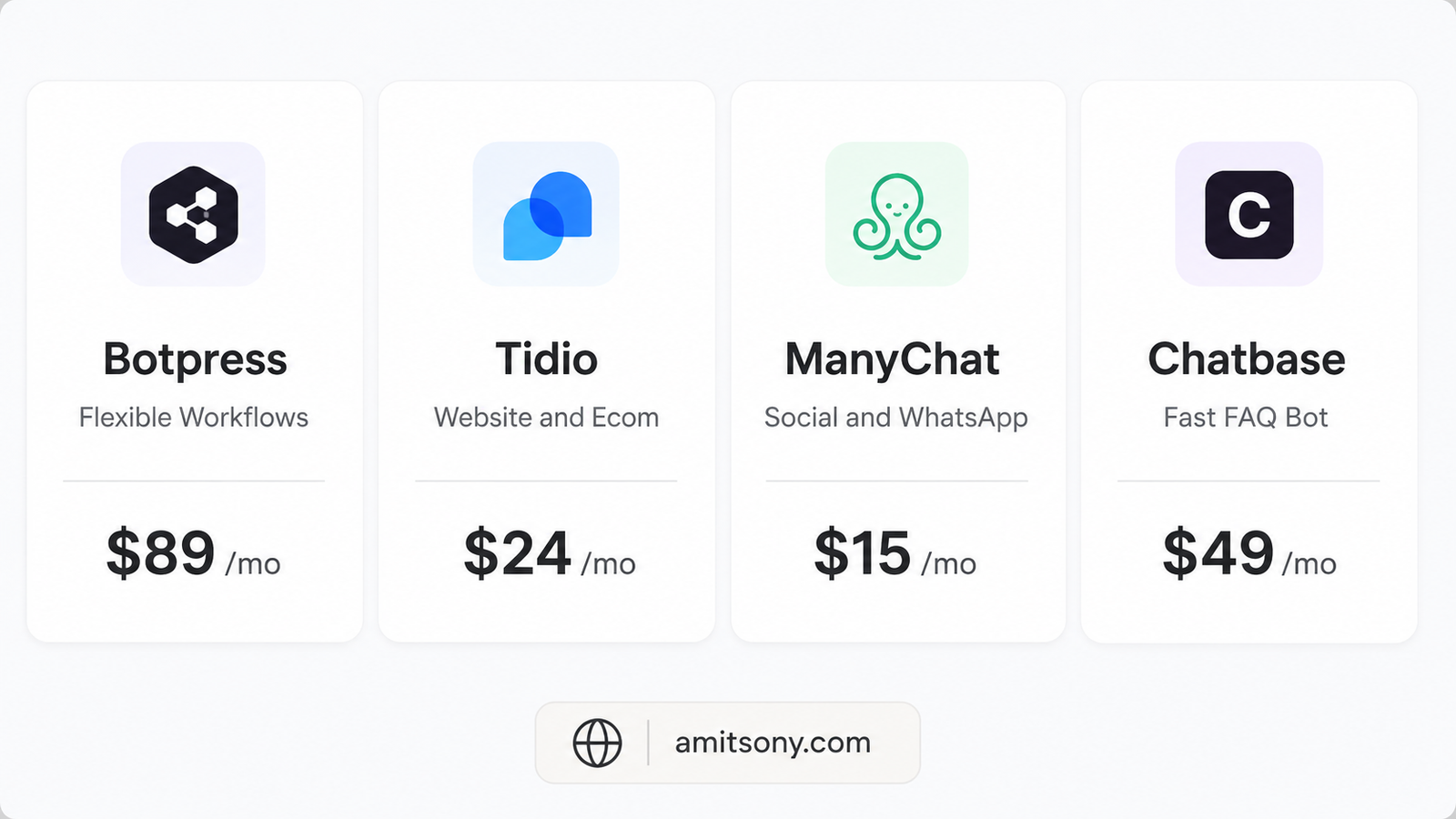
You do not need to write a single line of code. The tools available in 2026 are good enough that a non-technical person can build a production-ready chatbot for a local business in under two weeks.
Botpress is the strongest option for builders who want flexibility without full code. It has a free tier with 500 messages per month, a visual drag-and-drop flow builder, and native support for connecting to your client's knowledge base, FAQs, and booking systems. Paid plans start around $89/month.
Tidiois the best pick for businesses with websites and e-commerce, especially Shopify stores. Its Lyro AI add-on handles FAQ automation cleanly. Starter plans begin at roughly $24/month.
ManyChat dominates if your client's audience lives on Instagram, Facebook, or WhatsApp. For restaurants, salons, or any business running Meta ads, ManyChat is the obvious choice. Paid plans start at $15/month.
Chatbase is the fastest way to get a knowledge-base chatbot live. You feed it a business's website URL or PDF of FAQs, and it's answering questions in minutes. Mid-range plans run around $49 to $99/month.
For most beginners, start with Botpress or Chatbase. They give you the most control and the cleanest output for a local business use case.
How Do You Price and Package Your AI Chatbot Service?
Pricing is where most beginners overthink things. Keep it simple: a one-time setup fee plus a monthly retainer.
A standard entry-level package looks like this. You charge a setup fee of $1,000 to $2,500 covering discovery, build, training, and deployment. Then a monthly retainer of $300 to $700 that covers updates, monitoring, FAQ refreshes, and a monthly performance report.
Once you have a few clients and a strong case study, you move up. A mid-tier package targets slightly larger businesses like multi-location dental groups or active real estate agencies. Setup fees here sit at $2,500 to $5,000. Monthly retainers run $700 to $2,500 depending on how many channels the bot covers.
The economics are genuinely excellent on your side. The actual cost to run a basic AI chatbot is roughly $0.10 to $0.50 per conversation. A local business with 300 conversations per month costs you around $50 to $150 to operate. Charging $500/month means your gross margin is above 70 percent from day one.
Do not race to the bottom on price. Your offer isn't just a chatbot. It's faster response times, fewer missed leads, and fewer hours the business owner spends answering the same questions over and over. Price around that value.
How Do You Find and Approach Your First Clients?
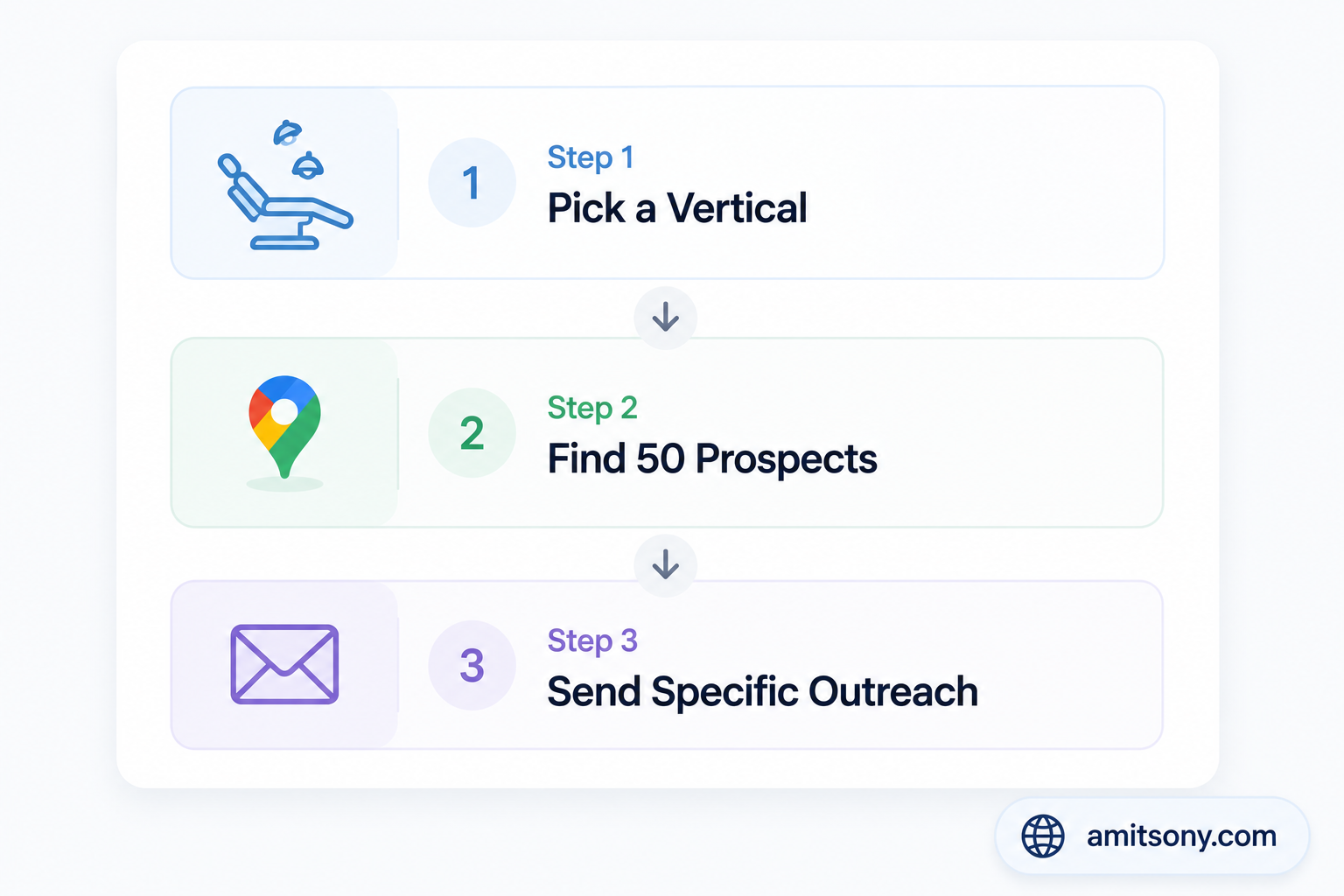
The fastest way to find clients is to think about who in your immediate network owns a local business. A family dentist, a cousin who runs a gym, a friend who does HVAC work. Start there.
Beyond your network, pick one vertical and find 50 prospects in your city. Google "dentist [your city]", open each website, and look for two things: a busy practice with no live chat, and a contact page that says "we'll get back to you within 24-48 hours." That delay is your pitch.
Cold outreach works best when it's specific. Don't send a generic "AI can help your business" email. Instead, say something like: "I noticed your website doesn't have a way for patients to ask questions after hours. I built a chatbot for a dental practice in [City] that now handles appointment questions overnight without any staff. Happy to show you a quick 5-minute demo."
That message works because it references their actual business, their actual problem, and it offers something concrete to look at.
How Do You Close the Deal With a Local Business Owner?
Live demos close three times more deals than any pitch deck or case study. Build a demo chatbot trained on the prospect's own website before you walk into the meeting. It takes under 30 minutes with a tool like Chatbase.
When the business owner hears their own service offerings, pricing, and FAQs answered correctly by an AI, objections disappear. This is the single most effective closing move you have.
Handle the common objections calmly and with data.
"My customers want to talk to a real person." Counter with this: a well-designed bot never replaces humans. It handles the routine questions so your staff can focus on the nuanced, high-value conversations. Also, 78% of callers don't leave voicemails when calls go unanswered. The real choice isn't bot vs. human. It's bot vs. missed call.
"I tried AI before and it didn't work." Acknowledge it. AI quality in 2023 was genuinely inconsistent. What you're deploying in 2026 is trained specifically on their business content, not a generic tool. Offer a 30-day pilot with a clear refund policy to remove risk.
"It's too expensive." Go back to the math. If they're losing $50,000 a year to missed leads, your $500/month service costs $6,000 annually and delivers over 8x ROI.
How Do You Deliver and Retain Clients After the Sale?
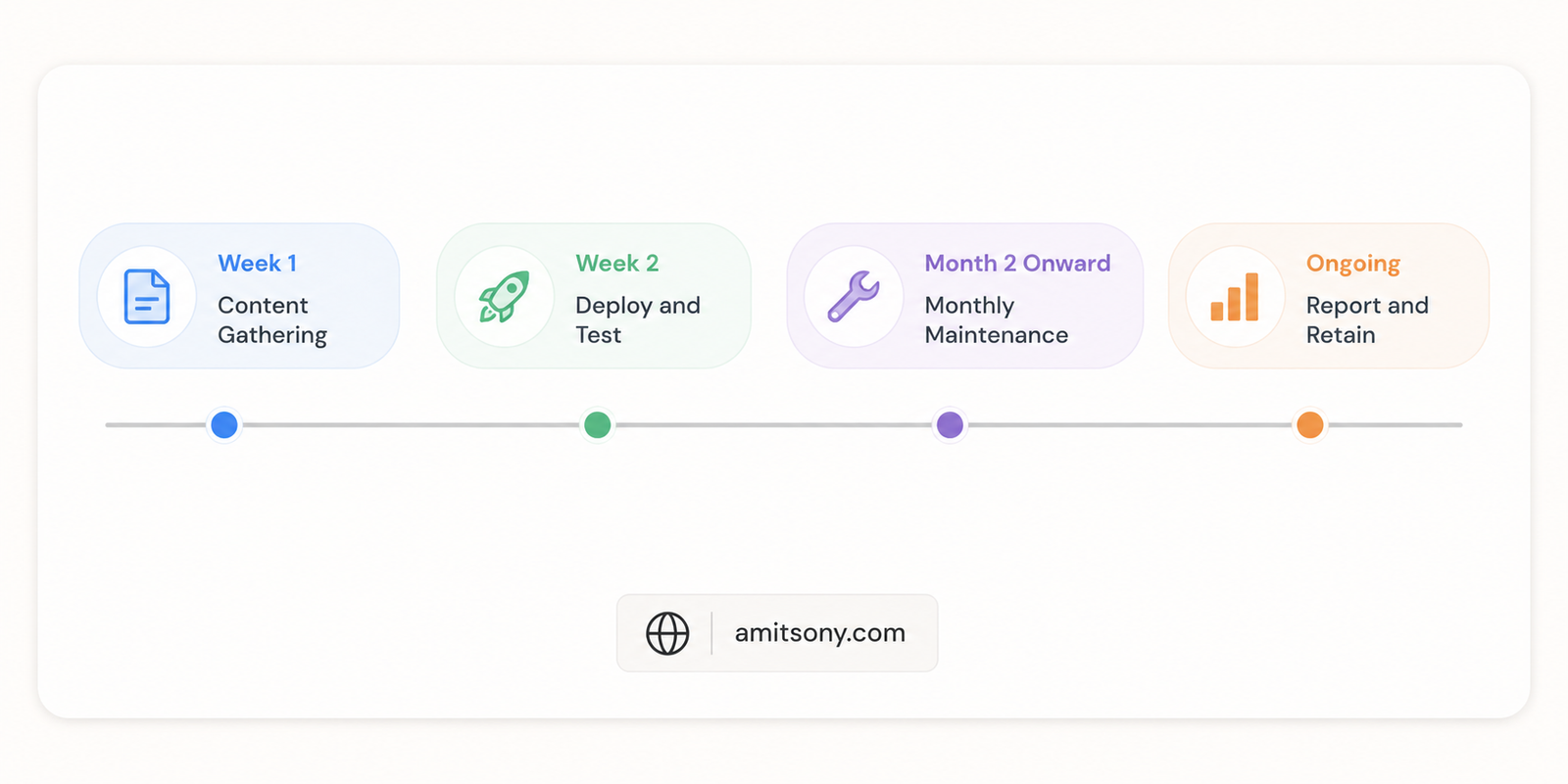
Delivery is where your reputation gets built. The first two weeks matter most.
Week 1: Gather all their content. Pull their website, menu or service list, FAQs, hours, pricing, and booking process. Feed all of it into your chosen chatbot builder. Test it hard before showing the client.
Week 2: Deploy on their website and any agreed channels. Train their staff on the human handoff, meaning what happens when the bot doesn't know the answer. Make sure escalation to a real person works smoothly.
From month 2 onward, your retainer earns its keep through monthly maintenance. Update the bot when prices or services change. Review conversation transcripts monthly to catch questions the bot is getting wrong. Send the client a one-page report showing how many conversations it handled, how many leads it captured, and how many hours it saved.
That monthly report is your retention tool. It makes the ROI visible. Clients who can see results in black and white don't cancel.
How Much Can You Actually Earn Selling AI Chatbots?
The income potential is real, and the math compounds quickly.
A realistic first 6 months looks like this. You land 3 clients in months 1 and 2, each paying $1,500 setup and $500/month. That's $4,500 upfront and $1,500/month recurring. By month 6, you have 6 clients bringing in $3,000/month with minimal ongoing work.
By month 12 to 18, freelancers running this model solo are regularly reporting $10,000 to $15,000 per month in recurring revenue from 15 to 25 clients. At that scale, the actual time spent on maintenance is roughly 3 to 5 hours per client per month.
Referrals accelerate everything. A dental practice that sees results will tell their colleague at another practice. One good vertical case study can generate 4 to 6 referral clients without any cold outreach.
The ceiling goes higher if you hire a part-time assistant to handle delivery and shift your time entirely to sales. Agencies running a team of 3 to 4 people on this model are hitting $30,000 to $50,000 per month within 18 months.
Frequently Asked Questions
Do I need coding skills to sell AI chatbots?
No. Tools like Botpress, Chatbase, and Tidio are fully no-code. You build by uploading documents, setting up flows visually, and testing conversations.
How long does it take to build a chatbot for a local business?
A solid basic chatbot takes 5 to 10 hours to build and test. Complex builds with booking integrations take 2 weeks.
What if my client already tried a chatbot and hated it?
Acknowledge it, then show them the difference. The chatbot you're building is trained on their specific content, not generic responses. Offer a risk-free 30-day pilot.
Should I build chatbots on one platform or use different tools per client?
Pick one or two platforms and master them. Specializing in Botpress or Chatbase makes you faster and more confident on every project.
What is the most important thing to include in a monthly retainer?
A one-page performance report. It shows conversations handled, leads captured, and time saved. This is what prevents cancellations.
How do I handle clients who want to own the chatbot and stop paying?
Price your offer as a managed service, not a software license. The chatbot needs ongoing updates, monitoring, and optimization. That's what the retainer covers.