
Building a consistent AI influencer now takes a character tool like Higgsfield's Soul ID or Gemini, a voice tool like ElevenLabs, and a posting schedule on Instagram or TikTok. Real money comes from brand deals, affiliate links, and sponsorships once you build a following. Just disclose the persona is AI, the FTC can fine undisclosed AI endorsements heavily.
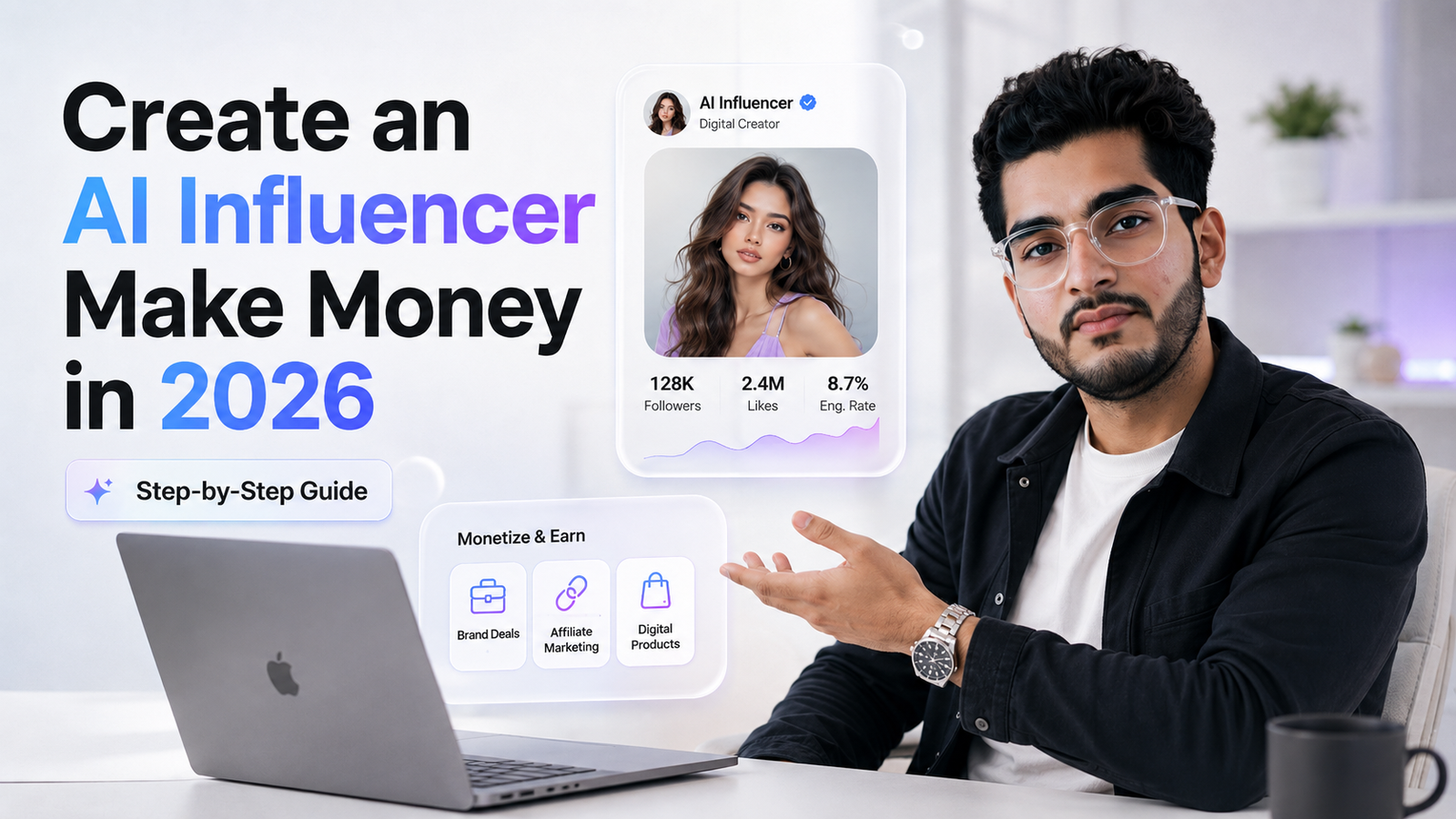
Lil Miquela, a computer-generated Instagram model who doesn't exist, has earned an estimated $11 million across brand deals with Prada, Calvin Klein, and Samsung since she launched. Aitana Lopez, a fully AI-generated influencer built by a Spanish agency, now works with real brands as an official ambassador. Neither of them is a person, and both of them make more money than most human creators ever will.
The tools to build something like this used to require a 3D animation studio and a six-figure budget. In 2026, character consistency, video generation, and voice cloning all fit inside a laptop and a sub-$100 monthly tool budget. This guide walks through what actually works, the tools, the platforms, and the money.
What Exactly Is an AI Influencer in 2026?
An AI influencer is a fictional persona, a face, a personality, a content style, that exists entirely through generated images and video. No camera, no studio, no single human face behind every post.
The category has moved past novelty. The virtual influencer market was valued around $6 billion in 2024 and is forecast to reach $45.88 billion by 2030. That growth is why solo creators, not just agencies, are now building these accounts.
The hard part was never the concept, it was consistency. A generic AI image generator gives you a beautiful face that looks slightly different in every single image, different eyes, a different jawline. To an audience scrolling fast, that reads as fake instantly, and the account never builds the recognition that growth actually depends on.
Which Tool Should You Use to Create a Consistent AI Character?
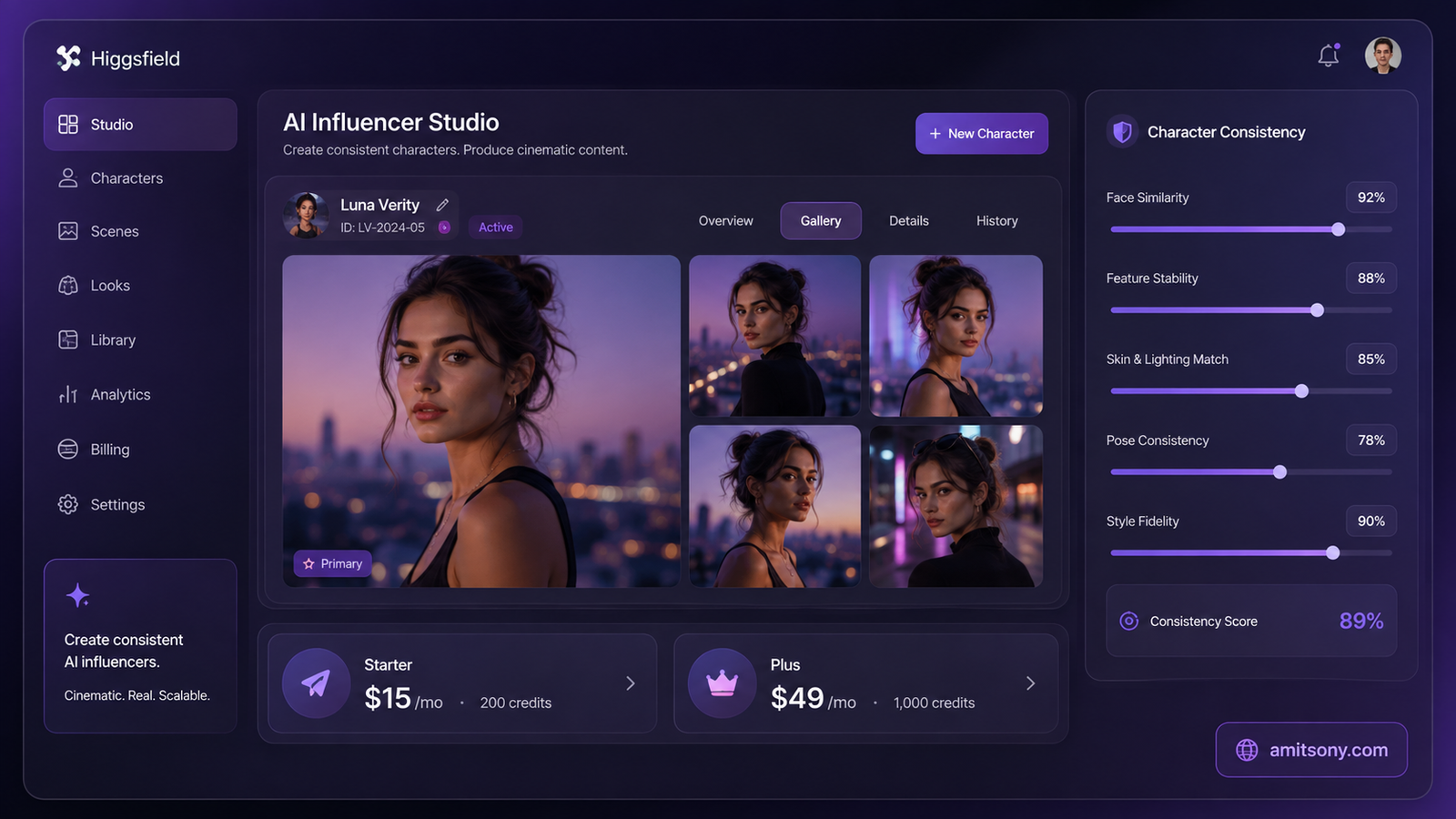
Higgsfield AI Influencer Studio, launched in January 2026, is built specifically for this problem. Its Soul ID feature locks a character's face, then maintains it across outfits, lighting, poses, and even video, instead of regenerating a new face every time.
You build the character visually with sliders and detail controls, heterochromia, scars, skin texture, rather than fighting with text prompts. The company was founded by former Google Brain engineers and has scaled to tens of millions of registered accounts.
Pricing starts at Starter for $15/month with 200 credits, enough to test a character. Real output needs Plus at $49/month for 1,000 credits, since video clips burn anywhere from 6 to 58 credits depending on the model used.
Worth knowing before you pay: independent reviewers consistently note that character consistency here sits around 90%, not perfect. Expect the occasional off-model frame, and plan to regenerate rather than expecting flawless output every time.
Is There a Cheaper Way to Generate a Consistent Face?
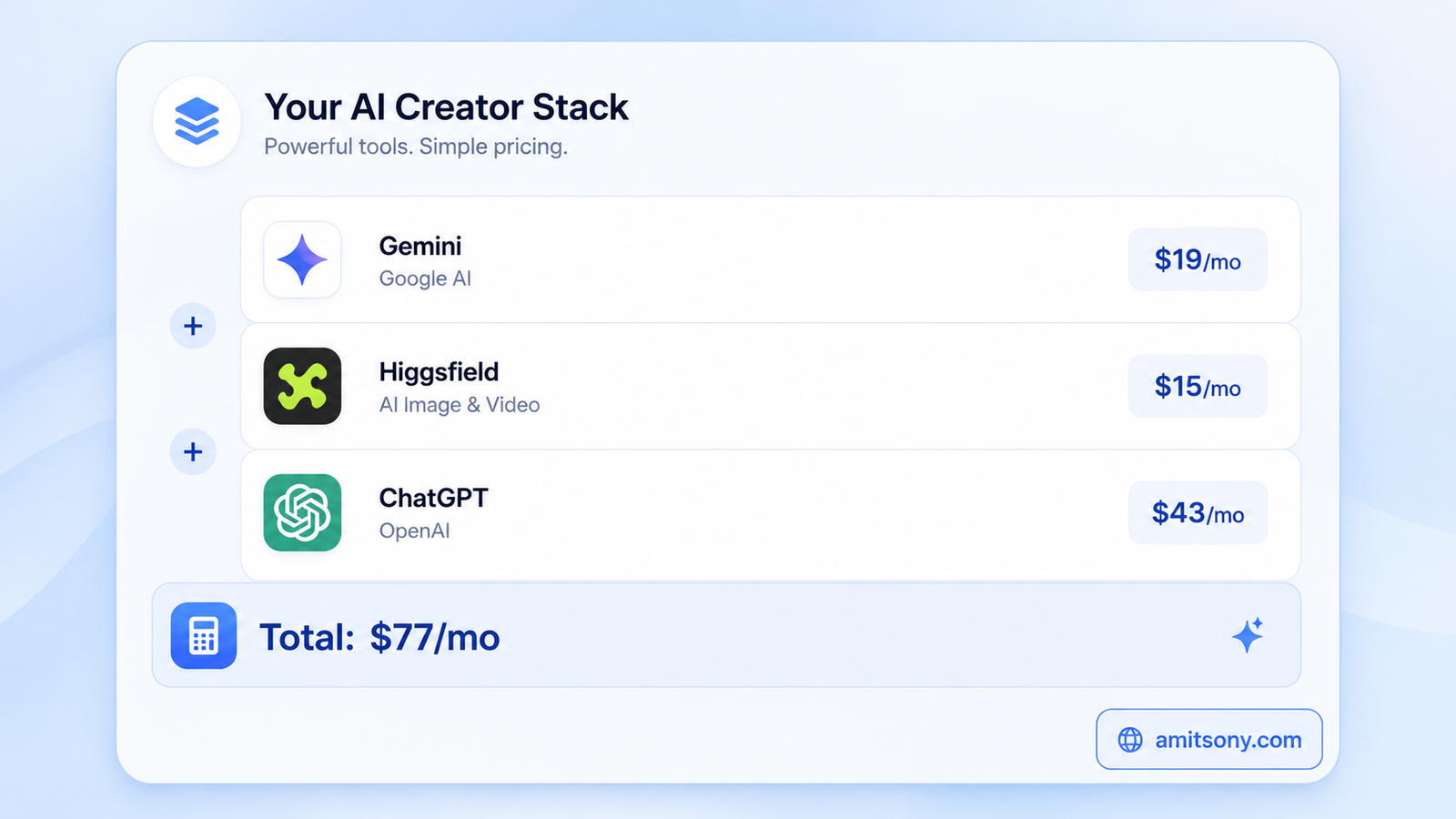
One operator profiled by The AI Journal built a lifestyle AI influencer using Gemini specifically for images, chosen over other generators for the consistency it produced across repeated prompts, alongside Higgsfield for video and ChatGPT for captions. Total tool spend: about $77 a month.
That stack cleared $14,500 a month within three months, according to the operator's own reporting. That's one documented case, not a guarantee, but it shows the entry cost is genuinely low compared to what this required even two years ago.
If budget is the main constraint, start with whatever image tool you already have access to and get the character bible right before spending on anything specialized. The tool matters less than getting one consistent face locked early.
How Do You Give an AI Influencer a Voice?
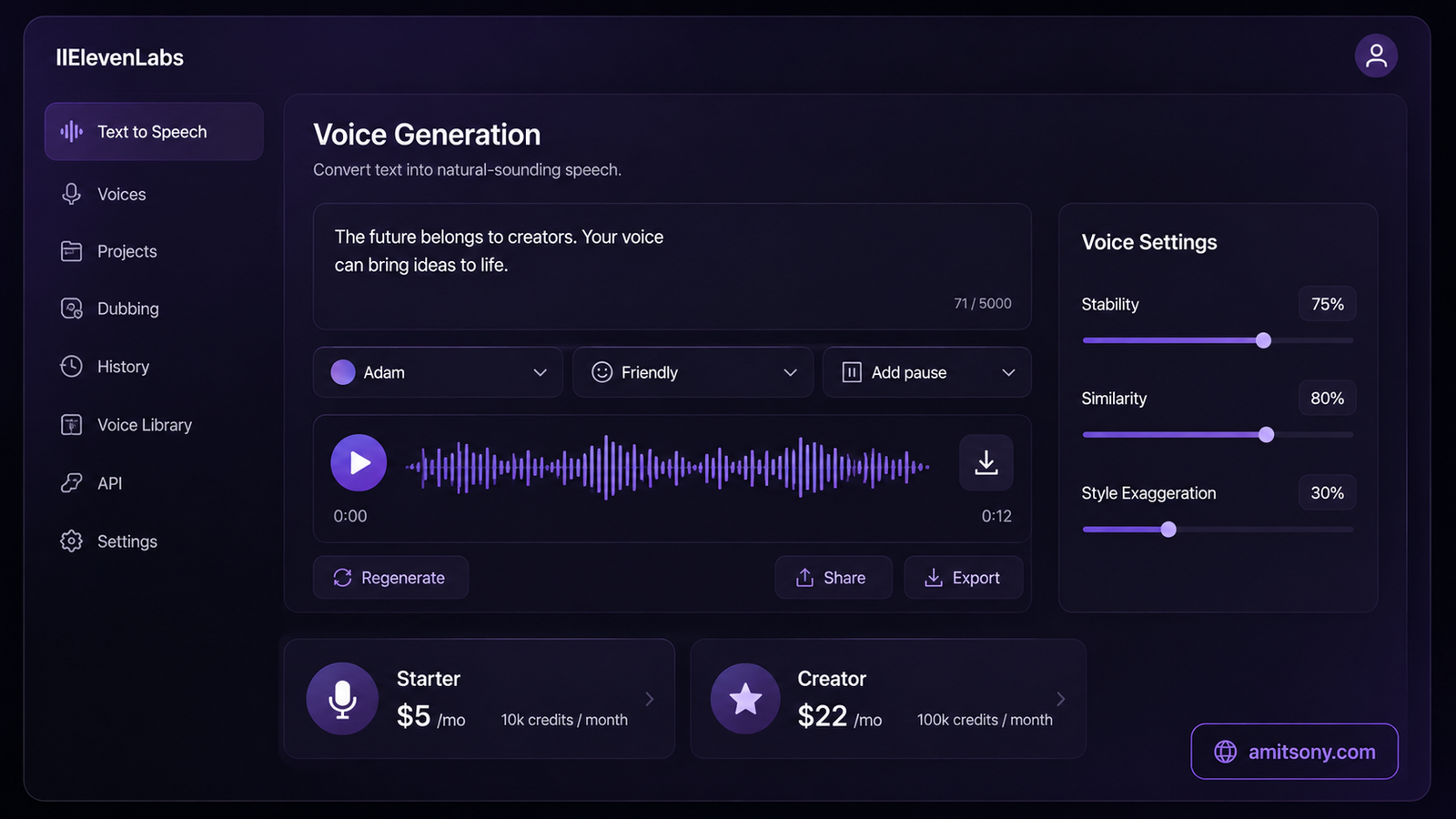
If your influencer talks in videos or replies to fans, voice consistency matters as much as facial consistency. ElevenLabs remains the standard here for cloned or generated voices that don't sound robotic.
The free tier gives 10,000 shared credits a month, enough for testing. Commercial use for a real persona needs the Starter plan at $5/month, or Creator at $22/month for heavier posting schedules.
Where Should You Actually Post the Content?
Instagram and TikTok are the discovery layer for nearly every AI influencer account. Both are visual-first and short-video-first, which happens to be exactly what current AI tools produce well.
Treat the public account like a storefront, not the whole business. Post consistently, keep the design realistic and platform-safe, and build a content library of portraits, outfits, and settings you can pull from instead of scrambling before every post.
Aspirational and tasteful content outperforms shock value here, mostly because brand deals and platform stability both depend on staying account-safe long term.
Do You Have to Disclose That Your Influencer Is AI?
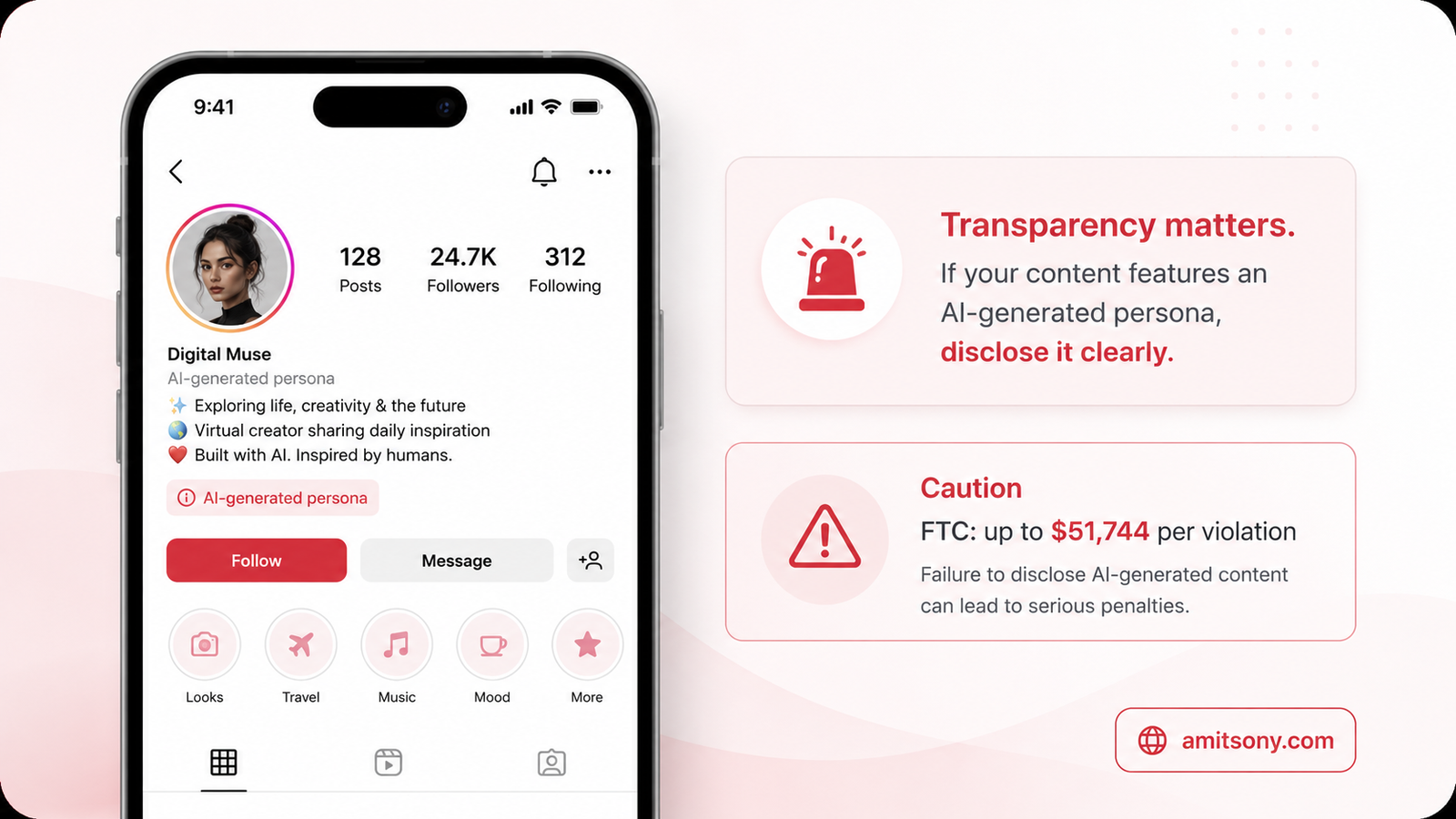
Yes, and this isn't optional anymore. The FTC's rule on AI-generated endorsements, effective since October 2024, requires clear disclosure of AI-generated content, with penalties running up to $51,744 per violation.
TikTok and Instagram both require labeling for realistic synthetic media at the platform level too, separate from FTC rules. Build the disclosure into your persona's bio and captions from day one, retrofitting it after the account already has an audience looks worse and invites more scrutiny.
This isn't just a legal box to check. Audiences that discover an undisclosed AI account after the fact usually leave for good, and brands doing due diligence before a sponsorship deal will find it anyway.
How Do AI Influencers Actually Make Money?
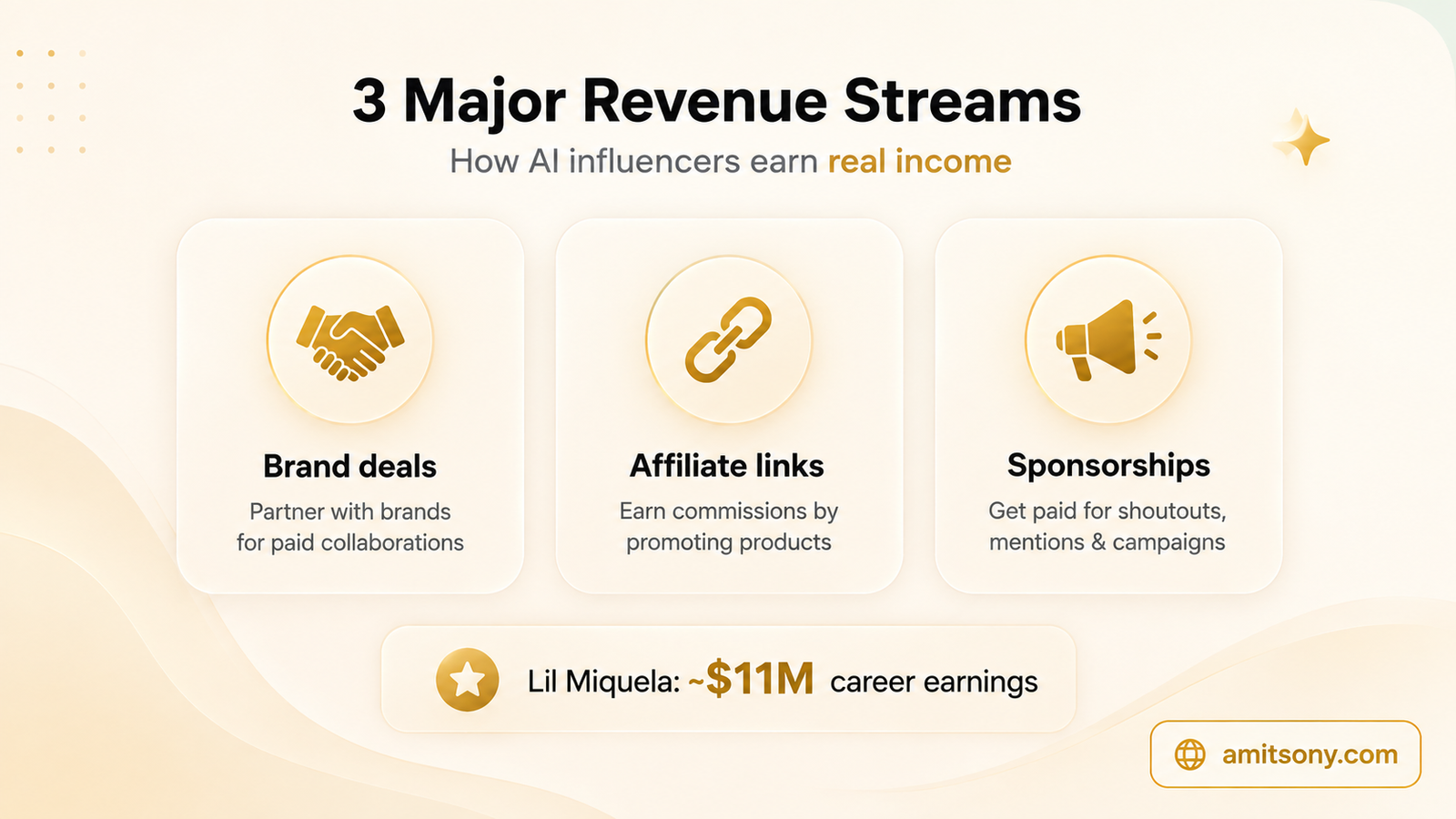
Brand deals are the biggest number for established accounts. Lil Miquela's roughly $11 million in career earnings came almost entirely from partnerships with Prada, Calvin Klein, Samsung, and Liquid IV, the same model real influencers use, just without a human face attached.
Affiliate links and sponsored posts work at a smaller scale for newer accounts, the same way they do for human creators, paid per post or on a commission basis once you have real engagement numbers to show.
Subscription and fan platforms are another path some AI creators use for recurring revenue, though this route leans toward mature content categories on several major platforms, so it's worth deciding early which direction fits the persona and audience you're actually building.
Brand deals and affiliate income are the more sustainable, brand-safe path for most new accounts. Don't chase every revenue stream at once, pick one and prove it works before adding a second.
How Long Does It Actually Take to Make Real Money?
Realistically, expect months before meaningful income, not weeks. The documented case from earlier in this guide took about two weeks to build the character and roughly three months to reach five figures monthly, and that's a genuinely fast outcome, not the average.
A more typical timeline looks like 30 to 40 pieces of consistent content before an account has enough of a track record to approach brands at all, then months more of steady posting before sponsorship inquiries start coming in unprompted.
Frequently Asked Questions
Do I need coding skills to create an AI influencer?
No. Tools like Higgsfield use visual sliders instead of prompts, and platforms like Gemini or Midjourney work through plain text descriptions.
How much does it cost to start an AI influencer?
A basic tool stack runs under **$100/month**, roughly $15 to $49 for character and video generation, plus $5 to $22 for voice if the persona talks.
Is it legal to create an AI influencer?
Yes, as long as you're not impersonating a real person without consent and you disclose the AI nature of the account where the FTC and platform rules require it.
How much can an AI influencer actually earn?
It varies enormously. Established accounts like Lil Miquela have earned millions in career brand deals, while most new accounts take months to reach even a few hundred dollars monthly.
What's the hardest part of building an AI influencer?
Character consistency, keeping the same face recognizable across every post and video. Most abandoned accounts fail here before they ever reach the monetization stage.