
A faceless YouTube channel uses AI for scripting, voiceover, and visuals instead of an on-camera presenter. In 2026, you can launch one for as little as $1 to $3 per video, and well-run channels in finance, education, or tech routinely earn $3,000 to $15,000 a month once monetized.
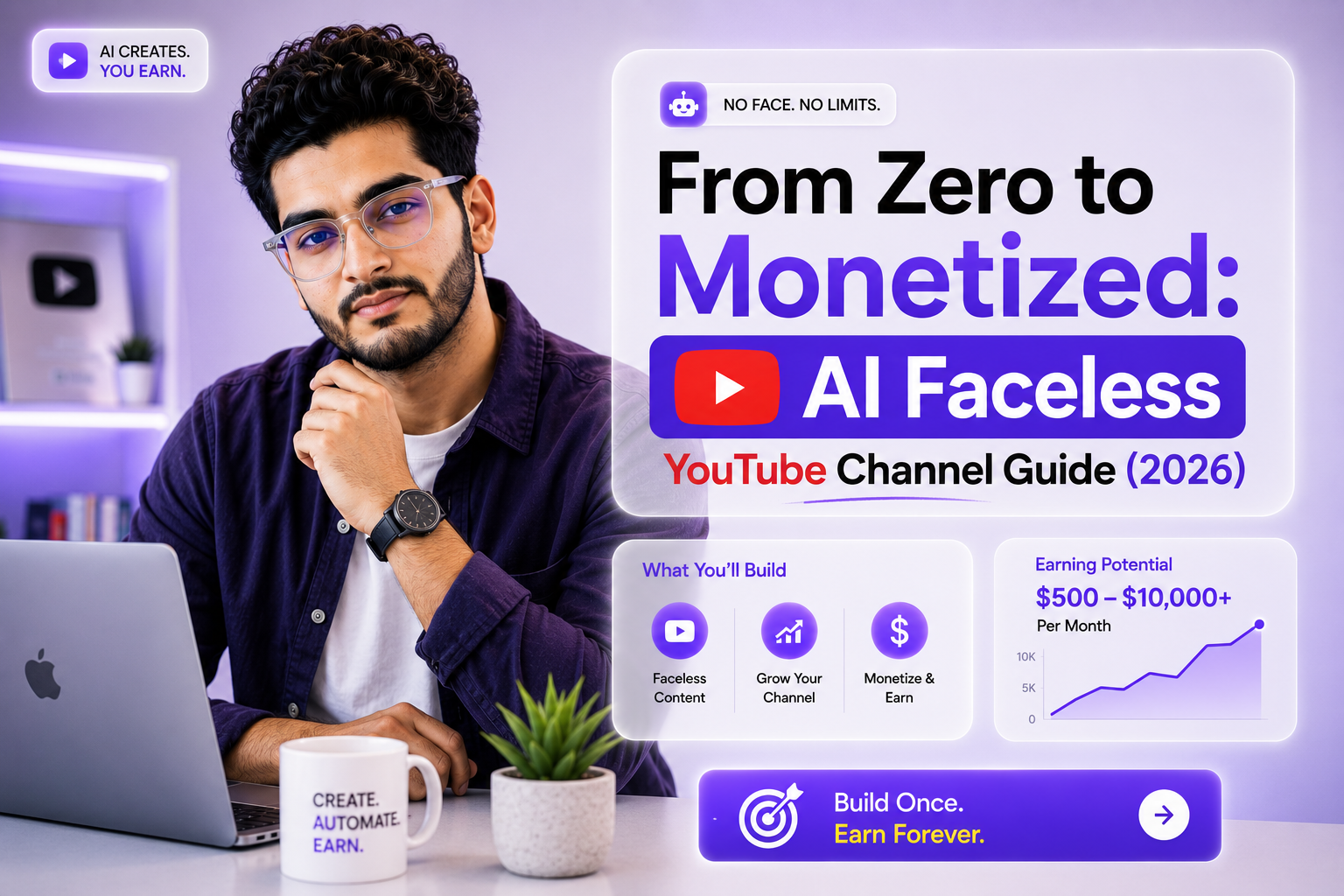
You don't need a camera, a studio, or even your own voice anymore. That sentence alone explains why faceless channels have quietly become one of the most realistic ways to build a YouTube income in 2026.
Bright Side has over 44 million subscribers and has never shown a single person on screen. Kurzgesagt has more than 23 million. Behind these giants sit thousands of mid-tier faceless channels pulling in $3,000 to $20,000 a month, run by one person with a laptop and a handful of AI tools. The barrier that used to stop most people, needing to write, narrate, film, and edit everything yourself, has genuinely collapsed.
What exactly is a faceless YouTube channel and why does AI make it easier now?
A faceless YouTube channel is one where the creator never appears on camera. Instead of a presenter, the video relies on voiceover narration, stock footage, screen recordings, motion graphics, or AI-generated visuals to carry the content.
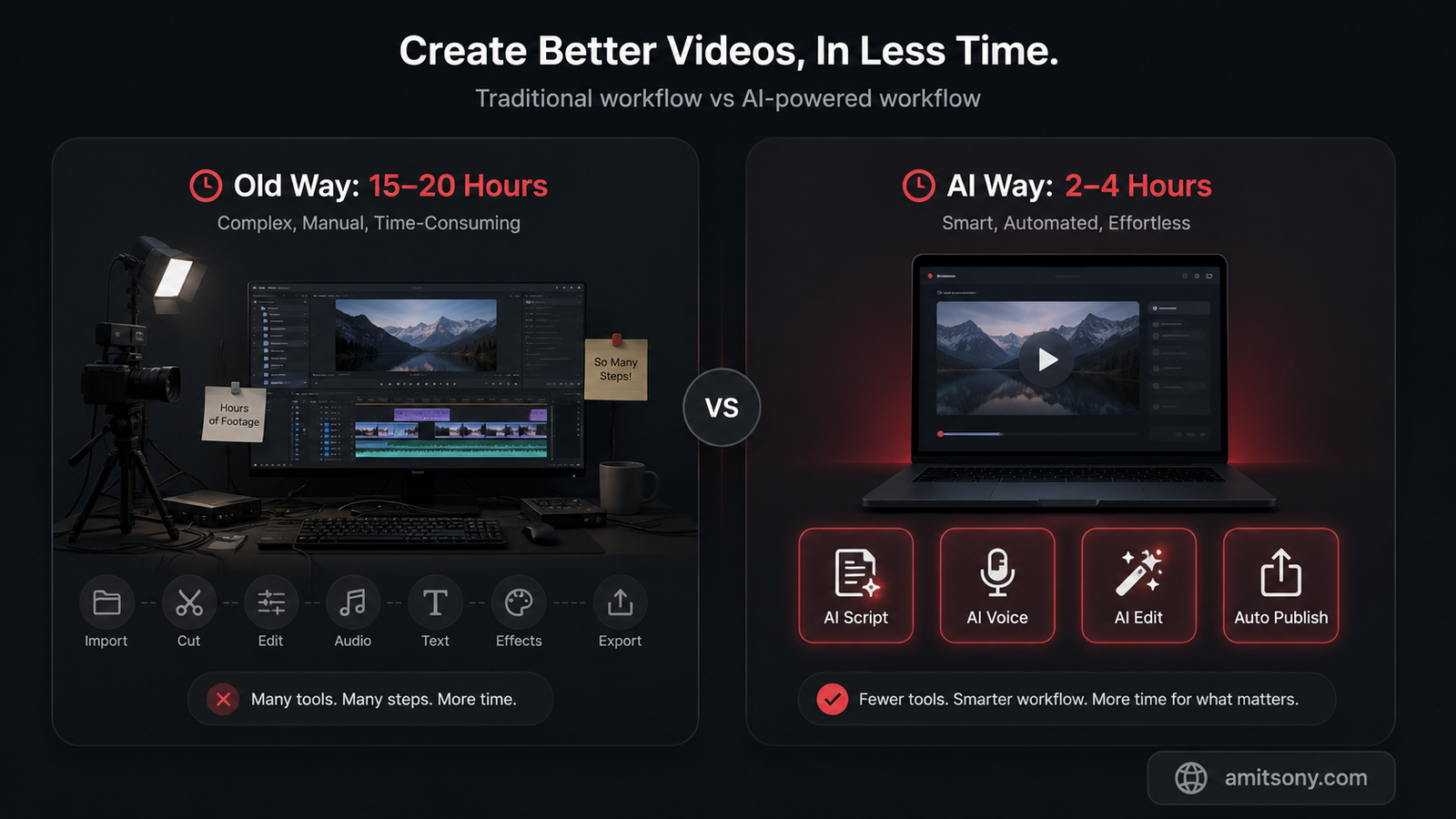
This format has existed for years, but it used to require real production skill. Someone still had to write a script, record a voiceover, source footage, and edit everything into a finished video, which meant 15 to 20 hours of work for a single upload.
AI collapsed that timeline. Tools like ChatGPT and Claude draft full scripts in minutes. ElevenLabs generates narration that's now genuinely difficult to distinguish from a professional voice actor. Pictory and InVideo turn a script into a fully edited video with matched visuals automatically. What once needed a small production team now takes one person about two to four hours per video.
The most important thing to understand going in is this: YouTube's algorithm doesn't care whether a human or an AI made your video. It only cares about two things, the click-through rate on your thumbnail and how long people actually watch. Both of those are fully controllable without a camera.
How do you choose a profitable niche for a faceless channel?
Niche choice matters more than your tool stack, full stop. Two channels using identical AI tools will see completely different results depending solely on what topic they cover.
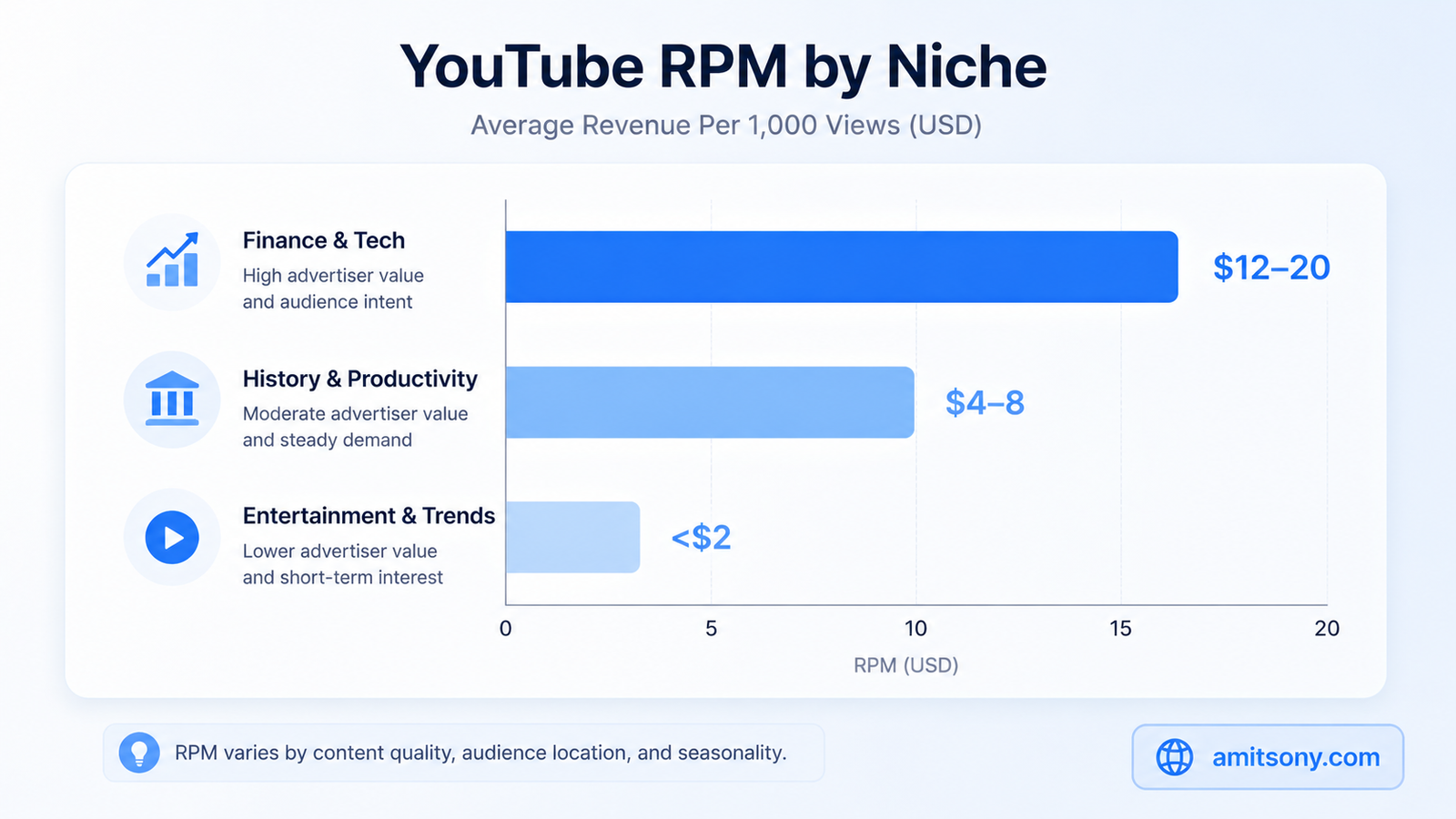
High CPM niches like personal finance, investing, tech reviews, and business deliver the strongest ad revenue per view, often in the $12 to $20 RPM range per 1,000 views. These topics attract advertisers willing to pay more because the audience tends to have real purchasing intent.
Mid-tier niches like history, productivity, true crime, and wellness see lower per-view payouts but often pull in larger, more loyal audiences. For a first channel, these tend to be the sweet spot, since competition is lower and the content is genuinely easier to produce consistently.
Entertainment and trend-driven niches get the most raw views but the lowest RPM, sometimes under $2 per 1,000 views. They can still work, especially for Shorts-driven growth, but they're a harder path to meaningful ad income alone.
Before committing, search your topic on YouTube directly and study the top 10 results. Count how many are faceless. If most channels there are personality-driven, you're entering a harder fight. Check upload frequency too, since matching a niche that demands daily uploads is a real commitment, not just a content plan.
Which AI tools do you actually need to produce a faceless video?
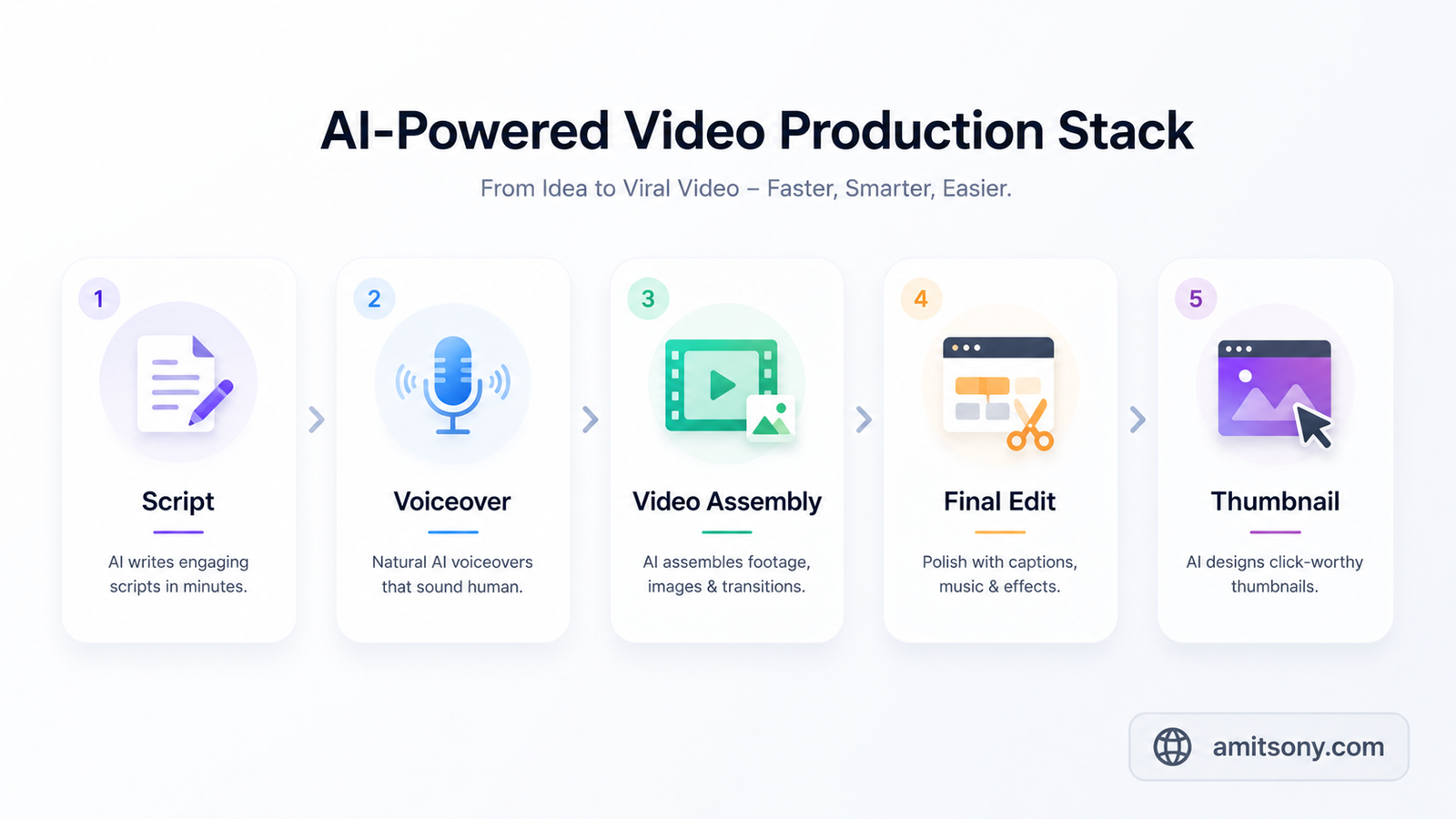
You don't need ten tools. Most successful solo creators run their entire workflow on four or five.
ChatGPT or Claude handle scriptwriting. The script is the foundation everything else builds on, so this step deserves the most of your actual time and editing, even though the AI drafts it fast. A good prompt framework matters more here than tool choice, since a vague prompt produces a flat, low-retention script no matter which model you use.
ElevenLabs is the standard for voiceover. Its AI voices have crossed a real quality threshold, sounding close enough to human narration that most viewers won't notice the difference. Pricing starts with a usable free tier, with paid plans typically running $5 to $22 a month depending on monthly character volume.
Pictory or InVideo turn your finished script into a complete video. Paste the script in, and the tool matches stock footage, adds captions, and assembles a rough cut automatically, which is the single biggest time-saver in the entire workflow.
CapCut handles final editing and polish. It's free, has strong auto-caption features, and lets you add your channel branding and watermark before export. Most creators do their final 20 percent of editing here even after using an all-in-one tool upstream.
Canva covers thumbnails. Your thumbnail is arguably more important than the video itself for getting the click, so this isn't a step to rush even though it's the fastest one in the stack.
Total monthly tool cost on a lean setup runs $1 to $3 per video using mostly free tiers, or under $50 a month total once you add a couple of paid subscriptions for higher output volume.
How do you actually write a script that keeps people watching?
A flat AI-generated script is the single biggest reason faceless channels fail to retain viewers. The fix isn't a better tool, it's a better structure.
The hook is everything. Your first 10 to 15 seconds need a surprising fact, a bold claim, or a curiosity gap that makes someone choose to keep watching instead of scrolling away. This single section determines more of your video's performance than anything else you'll produce.
Give context fast, then get to substance. Spend 30 to 60 seconds giving viewers just enough background to care, then move into your core content broken into three to five clear sections, each delivering one specific insight rather than meandering through loosely related points.
Add pattern interrupts every two to three minutes. Change the visual pace, introduce a new angle, or pose a direct question to the viewer. Retention graphs consistently show steep drop-offs in videos that maintain one flat tone for too long without a shift.
Aim for 40 to 60 percent average view duration. If your retention is dropping below 30 percent early on, your intro is almost certainly too slow. Tightening that hook is usually the single highest-leverage edit you can make to an underperforming video.
A useful test before publishing: read your script out loud once. AI-written scripts often contain small logical gaps or repeated phrasing that's easy to miss on screen but obvious the moment you hear it spoken.
Do you need to disclose AI use on YouTube in 2026?
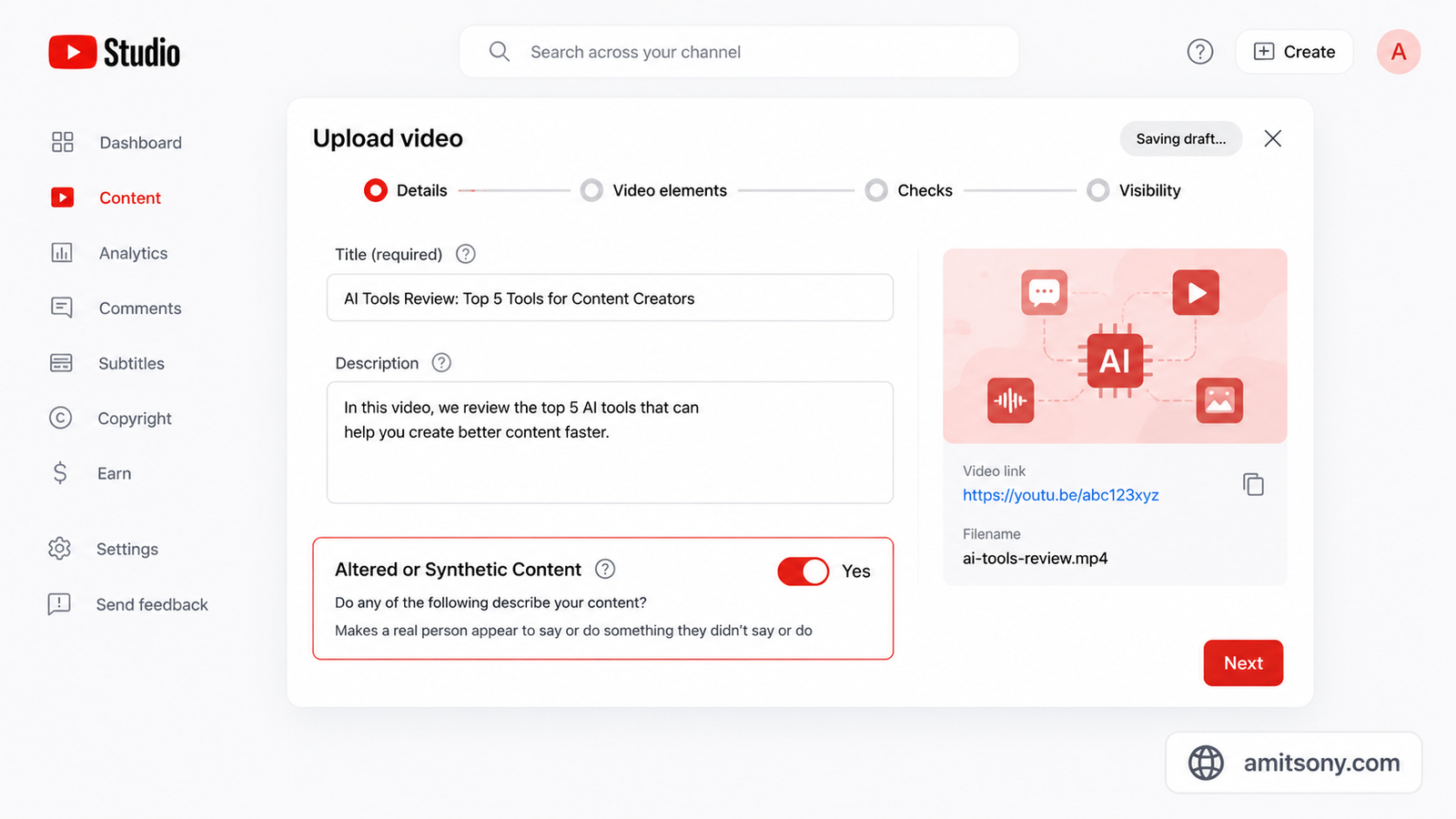
This is where a lot of new creators get nervous, and the actual rule is more forgiving than most people assume.
Production assistance never requires disclosure. Using AI to write your script, brainstorm ideas, generate titles, descriptions, or captions falls entirely outside YouTube's disclosure requirement. This covers the majority of what most faceless creators actually use AI for day to day.
Disclosure is required for realistic synthetic media only. This means content depicting a real, identifiable person doing or saying something they didn't actually do, cloned voices of real people, or fabricated realistic footage of real places and events. If a viewer could reasonably mistake it for genuine footage, it needs the label.
Most faceless formats, like AI narration over stock footage, motion graphics, or animated explainer visuals, don't trigger this requirement at all, since they aren't attempting to pass as real footage of real people or places.
When disclosure is required, the process is simple. In YouTube Studio's upload flow, under the Altered or Synthetic Content toggle, select yes. YouTube adds a label automatically to the description, and for sensitive topics like health, news, or finance, a more visible label may appear directly on the video player.
Skipping disclosure when it's actually required carries real risk. As of mid 2026, YouTube runs automatic detection that can apply the label itself, and the enforcement ladder escalates from a policy notification to forced labeling, demonetization, and in repeat cases, suspension from the Partner Program.
A separate, equally important rule sits alongside this: YouTube's inauthentic content policy. This one isn't about disclosure, it's about quality. In January 2026, YouTube ran its largest enforcement wave yet against faceless channels, removing thousands that shared the same pattern: flat synthetic voiceover, recycled templated scripts, and stock footage with no original editing. You can be fully compliant on disclosure and still get penalized here if your content has no genuine creative input.
How do you reach monetization and what should you expect along the way?
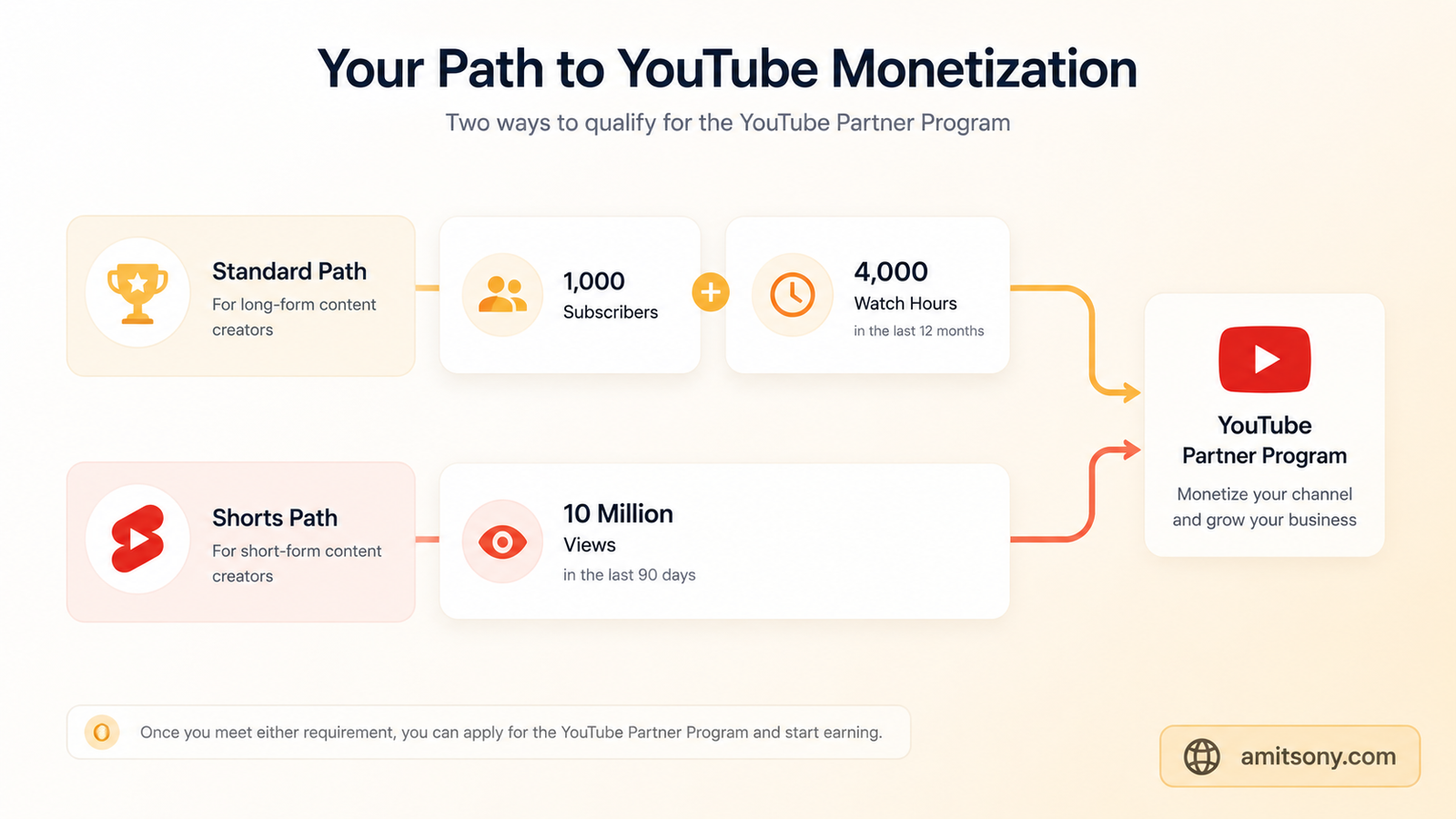
YouTube's Partner Program has two distinct monetization paths in 2026, and faceless channels are genuinely well-suited to hitting either one.
The traditional path requires 1,000 subscribers and 4,000 valid public watch hours within the last 12 months. The newer Shorts path requires 10 million public Shorts views within 90 days, which has made Shorts-first faceless channels significantly more viable than they used to be.
Realistically, most channels take six to twelve months to reach monetization. Channels that post consistently, two to four times a week without skipping, hit these thresholds two to three times faster than channels that post sporadically. Consistency outperforms perfection by a wide margin here.
Expect your first 20 to 40 videos to mostly underperform. This isn't a sign you're doing something wrong, it's the normal cost of finding the format, pacing, and topic angle that actually works for your specific audience. Each flop genuinely tells you something useful about what to fix next.
Once monetized, ad revenue is rarely the biggest income stream. Affiliate links in your description, especially in finance, software, or tool-review niches, often outearn AdSense entirely. Sponsorships, typically paying $20 to $30 per thousand views, become accessible once you cross roughly 50,000 subscribers. Digital products, like a $27 to $97 template or mini course sold to your audience, add a third income layer that doesn't depend on view count at all.
What mistakes cause most faceless AI channels to fail?
Relying entirely on AI with zero editing is the single most common failure pattern. Generating a script, voiceover, and video without reviewing or improving any of it produces flat, forgettable content. AI should accelerate your workflow, not replace your judgment about what's actually good.
Posting daily with no quality control burns out creators fast and rarely pays off. Two to three solid, well-edited videos a week consistently outperform seven rushed uploads with no retention strategy behind them.
Chasing every trending topic instead of building a consistent identity confuses the algorithm and your audience both. Pick a problem you can talk about for years, even during weeks when nothing is trending, since that's what actually compounds subscriber growth over time.
Ignoring the inauthentic content policy while focusing only on disclosure rules is a blind spot that's already cost thousands of channels their monetization status. Original structure, genuine editing decisions, and varied tone matter as much as compliance.
Giving up before 20 to 40 videos is the final, quietly common mistake. Most channels that eventually break through went through a real stretch of low views first. The gap between someone who builds a channel and someone who just talks about building one usually comes down to whether they shipped video one and kept going.
Frequently Asked Questions
Do I need to show my face at all for a faceless YouTube channel?
No. Faceless channels rely entirely on voiceover, stock footage, screen recordings, or AI visuals. Some creators use an AI avatar if they want a presenter-style format without appearing on camera themselves.
How much does it cost to start a faceless YouTube channel with AI?
A lean setup using mostly free tiers costs $1 to $3 per video. A more comfortable monthly tool budget for regular output runs under $50 a month.
Does using ChatGPT to write my script require AI disclosure on YouTube?
No. YouTube explicitly exempts production assistance, including scripts, outlines, titles, and captions, from its disclosure requirement.
How long does it take to make money from a faceless channel?
Most channels reach monetization in six to twelve months with consistent uploads. Income beyond that point varies widely based on niche and consistency, with established channels earning $3,000 to $15,000 a month.
What's the best niche for a beginner starting a faceless channel?
Mid-tier niches like history, productivity, or wellness tend to be the easiest entry point, offering lower competition and more accessible production than high-CPM niches like finance.
Can YouTube remove my videos for using AI-generated voiceover?
Not for the voiceover itself. Removal risk comes from undisclosed realistic synthetic media depicting real people, or from low-effort, templated content under YouTube's inauthentic content policy. ---