
The best AI tools for real estate agents are ChatGPT or Claude for listing copy, Virtual Staging AI for empty rooms, Follow Up Boss for lead follow-up and an AI receptionist for missed calls. A solo agent can run this stack for roughly $100 to $120 per month, but should disclose AI-staged photos.

Most agents lose deals in the gaps. A lead waits an hour for a reply. A listing goes live a day late. A call gets missed during a showing. AI is good at exactly these gaps.
This guide picks tools by job, with current prices, honest verdicts and the compliance rules that catch agents out. No tool here will close a deal for you, but several will stop you losing one.
What can AI actually do for a real estate agent?
The highest return comes from five jobs: writing listing copy and emails, staging empty rooms, following up with leads, answering missed calls and summarising markets or documents.
AI is weak at everything that depends on local judgement. It does not know that the school boundary changed last spring, or that a street floods in heavy rain. Treat it as a fast assistant that drafts and organises, with you as the editor.
Pick one tool per job and add them in order. Agents who sign up for six platforms in a week usually keep none of them.
Which AI tools write the best listing descriptions and emails?
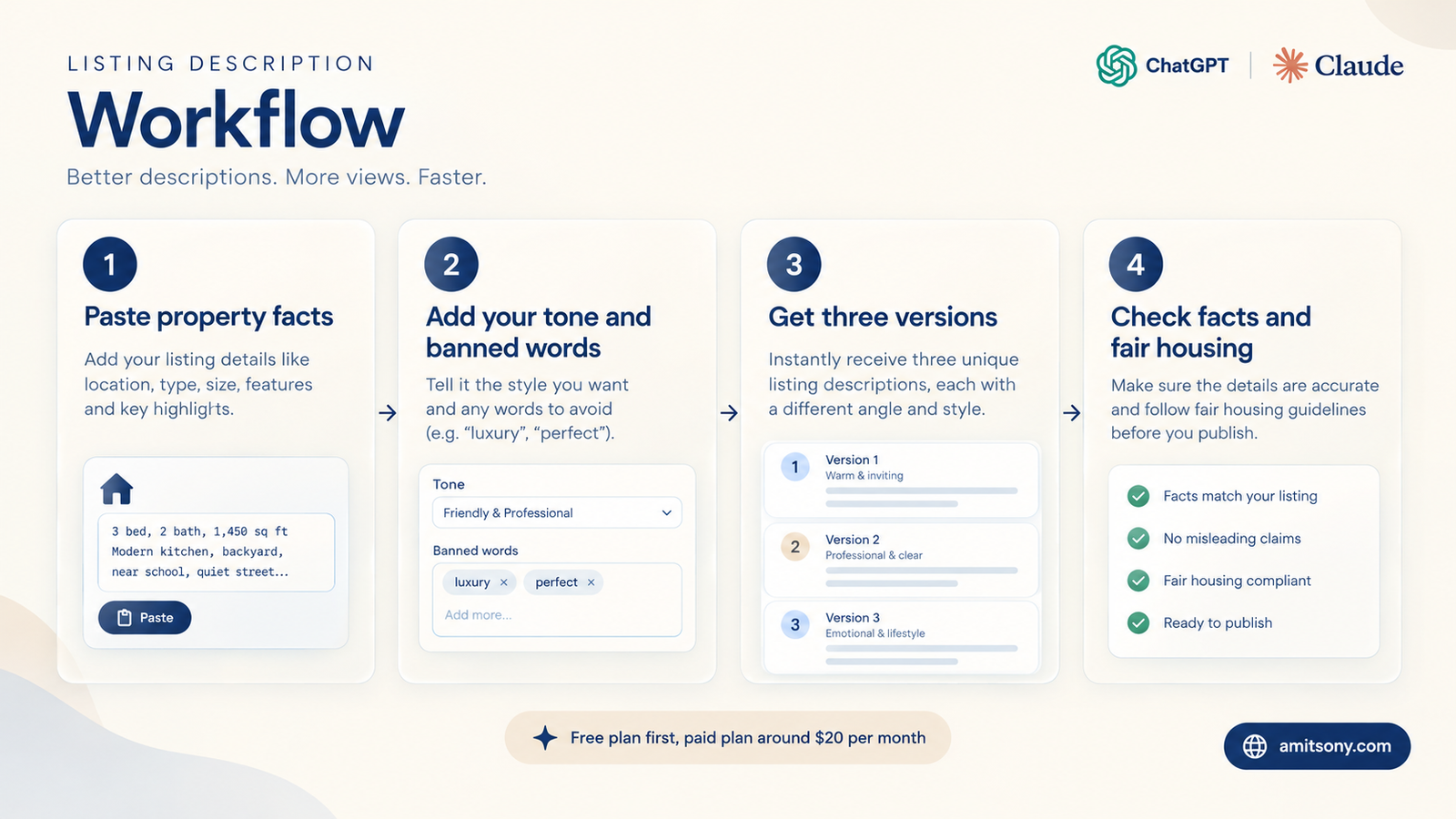
A general assistant is the cheapest place to start. ChatGPT and Claude both have free plans, and each paid plan is around $20 per month, roughly ₹1,750. Either one drafts listing descriptions, follow-up emails, newsletters and social posts from your notes.
Feed it facts, not adjectives. Give the beds, baths, square footage, upgrades, lot details and what you personally noticed during the showing. Add your usual tone and a list of words you never use. Then ask for three versions and mix the best lines.
Two warnings. First, check every claim against the MLS data. AI sometimes invents a feature like a renovated kitchen that does not exist. Second, run each draft through a fair housing filter. Phrases such as "perfect for young families" or "walking distance to church" can be read as steering.
My verdict: do not pay for a dedicated listing-description app until you have squeezed a free assistant for a month. The gap in quality is smaller than the sales pages suggest.
Which virtual staging tool is worth paying for?
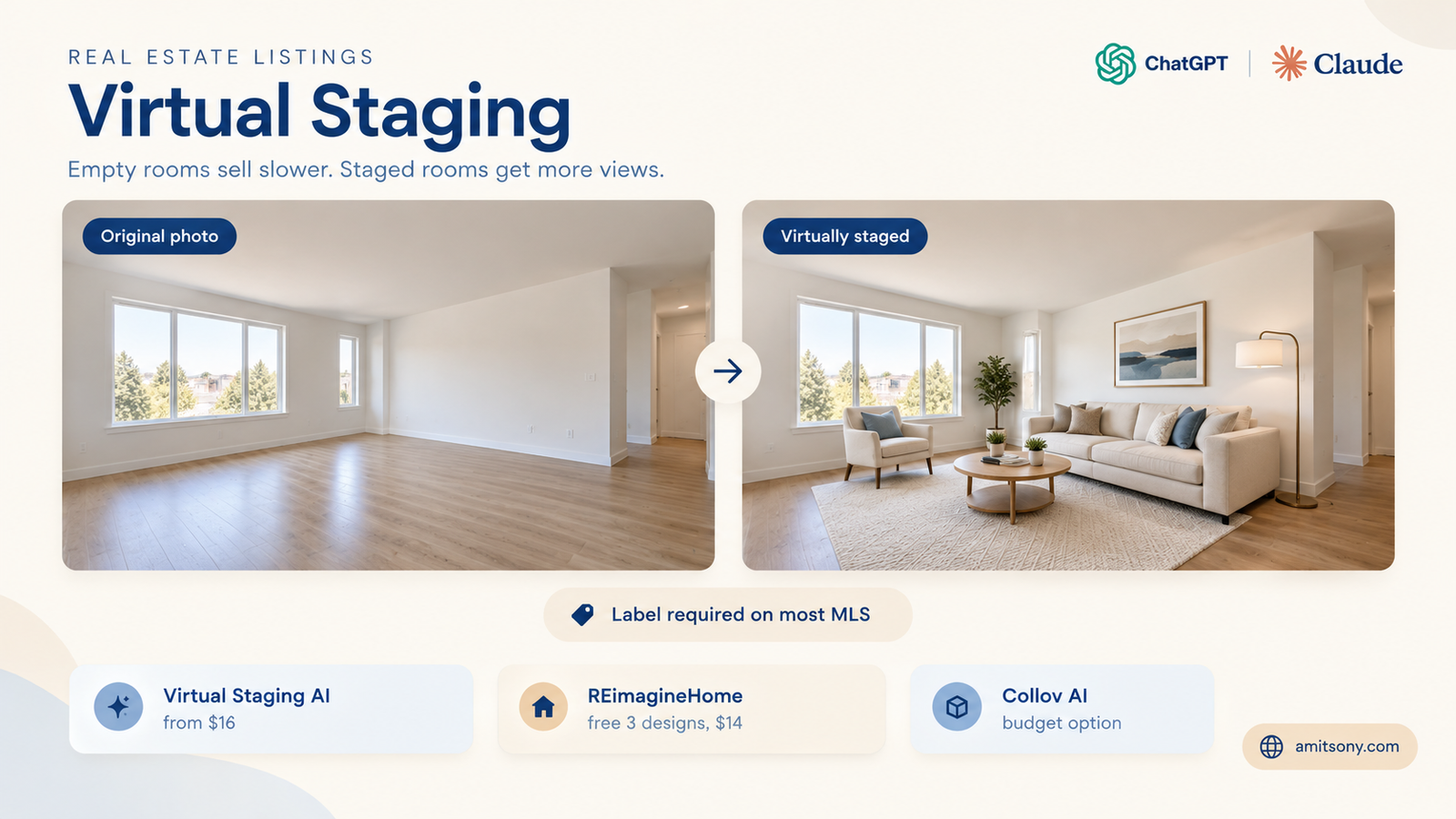
Virtual Staging AI is the one most comparisons recommend. It turns an empty-room photo into a furnished render in about 10 seconds. Entry plans are roughly $16 to $19 per month, or around ₹1,400 to ₹1,700.
REimagineHome gives you 3 free designs, then plans from about $14 per month. It suits agents who want a quick test before paying. Collov AI is another budget option for first-time users.
Results depend on your photo. Dark, tilted or cluttered shots produce odd furniture scale and strange shadows. Take one clean, level, well-lit photo of each room before you stage it.
Verdict: start with the free designs on REimagineHome, then pay for Virtual Staging AI if you stage more than a few listings a month. Never stage a room so heavily that buyers feel misled when they walk in.
Which AI CRM and lead follow-up tools should you consider?
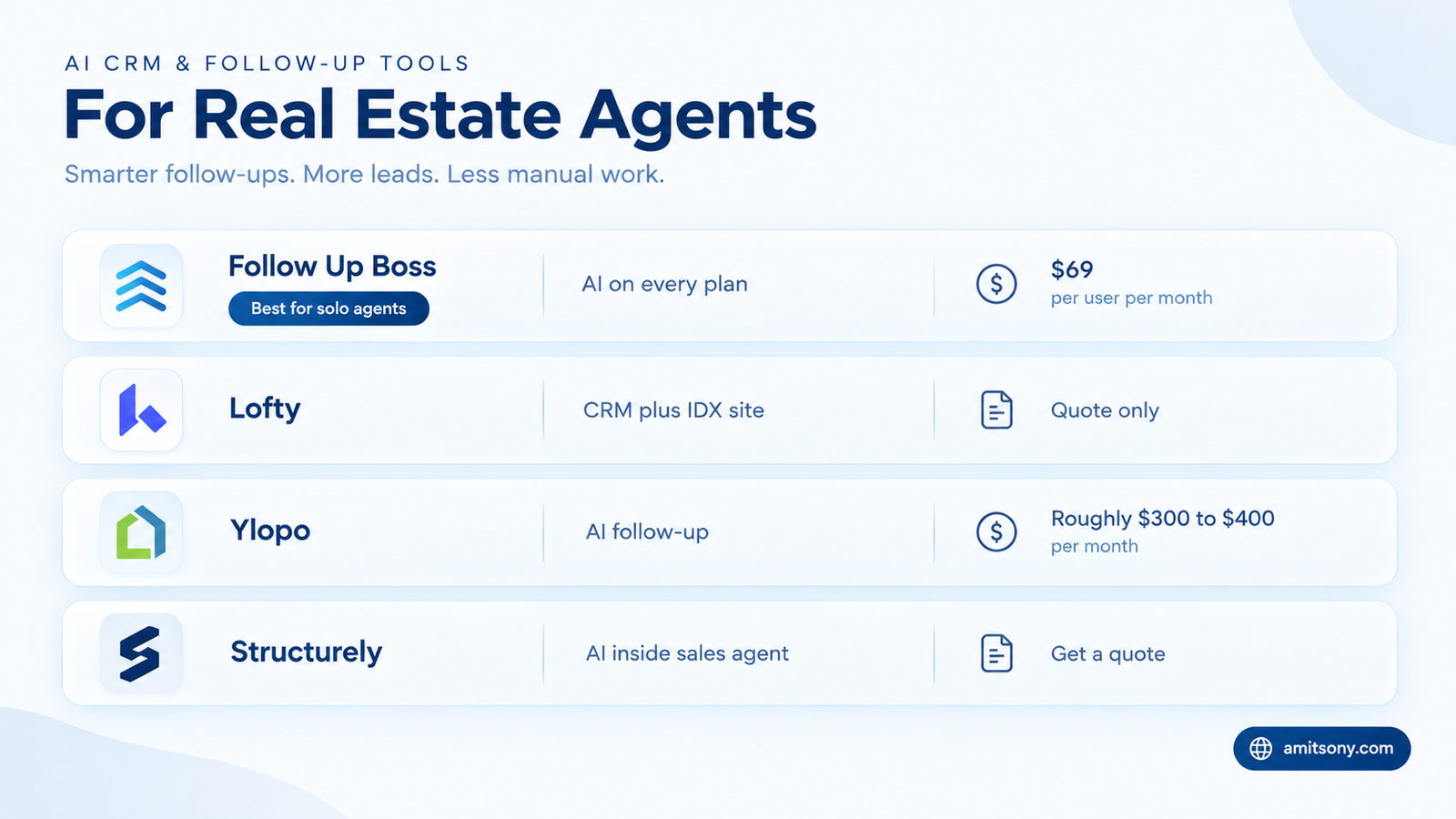
Follow Up Boss is the safest pick for most agents. Its AI is included on every plan, with call and text summaries, suggested replies, suggested tasks and lead prioritisation. The Grow plan is $69 per user per month, or $58 billed annually, around ₹6,050 and ₹5,100. A Pro plan costs $499 per month for 10 users, and there is a 14 day free trial. One quirk: calling is a paid add-on on the Grow plan.
Lofty combines a CRM, an IDX website and AI follow-up, including a virtual assistant that works as an inside sales agent. Prices are quote-only, so budget time for a sales call.
For AI that texts and calls new leads within minutes, look at Ylopo and Structurely. Published figures for Ylopo run from roughly $300 to $400 per month. Structurely numbers vary widely between sources, from $99 to $299 per month, so ask for a written quote.
My verdict: solo agents should use Follow Up Boss and nothing fancier. Add an AI inside sales agent only when paid lead flow is large enough to keep it busy. Paying $300 or more per month to nurture 20 leads is poor value.
Also get consent before you automate texts. Messaging rules can bring fines, so follow your brokerage's policy.
Should you use an AI receptionist for missed calls?
Yes, if you often miss calls during showings and open houses. A lead who gets voicemail usually calls the next agent on Google.
Smith.ai has a free AI plan for 25 calls a month, which makes it an easy test. Dialzara starts at $29 per month with 60 minutes, around ₹2,550, and is the cheapest serious entry.
Set it to take messages, answer basic questions and book showings. Make it transfer buyers who say they are ready to make an offer straight to your mobile.
Skip it if you answer almost every call yourself. A good voicemail greeting plus an automatic missed-call text is enough.
What are the compliance rules for using AI in real estate?
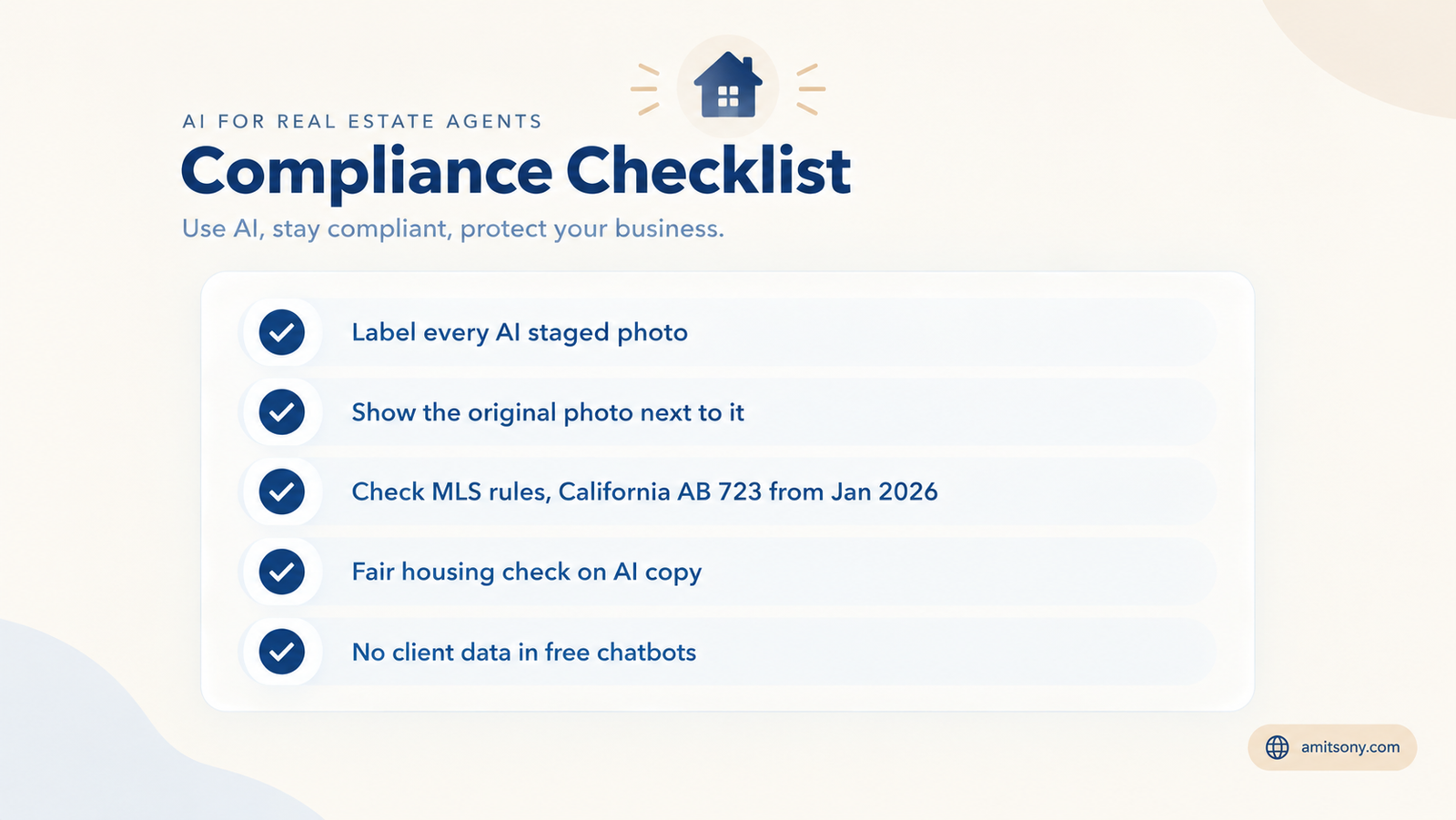
Three areas catch agents out. The rules vary, so check your own MLS and state, and remember that I am not a lawyer.
Virtual staging disclosure. No US state bans virtual staging, but disclosure rules are spreading. California's AB 723 has required disclosure of digitally altered listing images, plus access to the original photo, since January 1, 2026. Wisconsin adds its own rule on January 1, 2027. MLS boards such as CRMLS require a label like "Virtually Staged" and the original photo shown right next to the altered one. NorthstarMLS published similar guidance in May 2026. Some boards ban AI-generated landscaping outright.
NAR ethics. NAR has no AI-specific rule, but its Code of Ethics Articles 2 and 12 on accuracy and truthful advertising cover edited photos. Label every altered image, even where your MLS does not demand it.
Fair housing. Read every AI-written ad for language that hints at a protected class. A fair housing violation is just as real when the words came from a chatbot.
Also protect client data. Do not paste names, phone numbers or financial details into a free chatbot, and check whether your brokerage has an AI policy.
What does a solo agent's AI stack cost, and what should you do first?
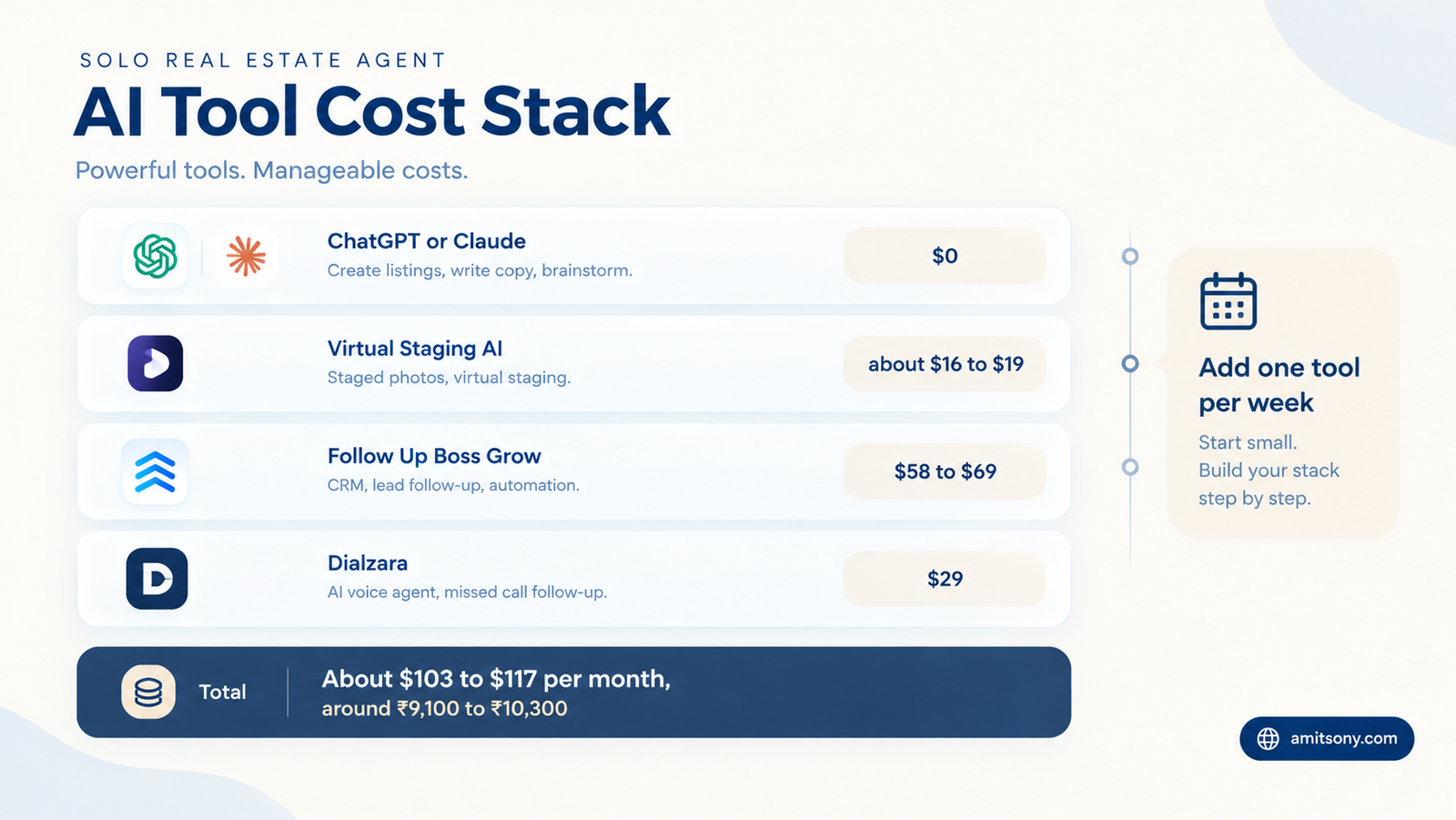
Here is a realistic starter stack. A free ChatGPT or Claude plan costs $0. Virtual Staging AI is about $16 to $19. Follow Up Boss Grow is $58 to $69. Dialzara is $29. The total is roughly $103 to $117 per month, or about ₹9,100 to ₹10,300.
Add the tools in this order. Week one, listing copy and emails. Week two, staging on your next vacant listing. Week three, move your leads into the CRM and turn on follow-up. Week four, add the receptionist.
A simple sum shows why it can pay off. If your average commission is $9,000, one extra closed deal covers more than six years of this stack. That is a hypothetical, so run it with your own number.
Measure two things only. Time from lead to first reply, and number of leads that reach an appointment. If neither improves after 60 days, cancel the tool.
Which AI tools for real estate agents should you skip?
Skip annual contracts before you have used a tool for a full month. Most vendors offer trials, and the ones that do not deserve suspicion.
Skip AI inside sales agents if you have fewer than a few dozen new leads a month. The tool needs volume to justify its price.
Skip heavy AI staging of rooms that buyers will see in person. An overstuffed render creates disappointment at the door, and it can create a complaint.
And skip anything that promises to run your whole business. The tools that earn their cost each do one job well.
Frequently Asked Questions
What are the best AI tools for real estate agents?
ChatGPT or Claude for copy, Virtual Staging AI for empty rooms, Follow Up Boss for follow-up and an AI receptionist for missed calls.
Do you have to disclose AI virtual staging?
Most MLS boards require a label, and California's AB 723 has required disclosure plus the original photo since January 2026. Check your own MLS rules.
Can AI write listing descriptions that follow fair housing rules?
It can, but it can also slip in steering language. Review every draft yourself and check facts against the MLS data.
How much do AI tools for real estate agents cost?
A solo agent can run a full starter stack for roughly $100 to $120 per month.
Is Follow Up Boss worth it for a solo agent?
Yes, for most. AI is included on every plan, starting at $69 per user per month, or $58 billed annually.