
OpenAI fully shut down the Sora API on September 24, 2026, five months after pulling the consumer app, and listed no recommended replacement in its own deprecation notes. Google Veo offers the easiest free entry point through AI Studio, Kling AI leads on camera control and physics, and ByteDance's Seedance 2.5 supports the longest single-pass generations at up to 30 seconds. Export any Sora data you still need now.

The Sora API, including both the sora-2 and sora-2-pro models, went fully offline on September 24, 2026. If your app, pipeline, or product depended on it, it stopped working this week, and OpenAI's own deprecation documentation lists no recommended replacement model, a full product-line exit rather than a standard version upgrade.
This guide covers what actually happened, what you still need to do about existing data, and how to evaluate the three alternatives developers are migrating to right now, with real differences between them that matter more than picking whichever name shows up first in a search.
What Exactly Happened to Sora, and Why?
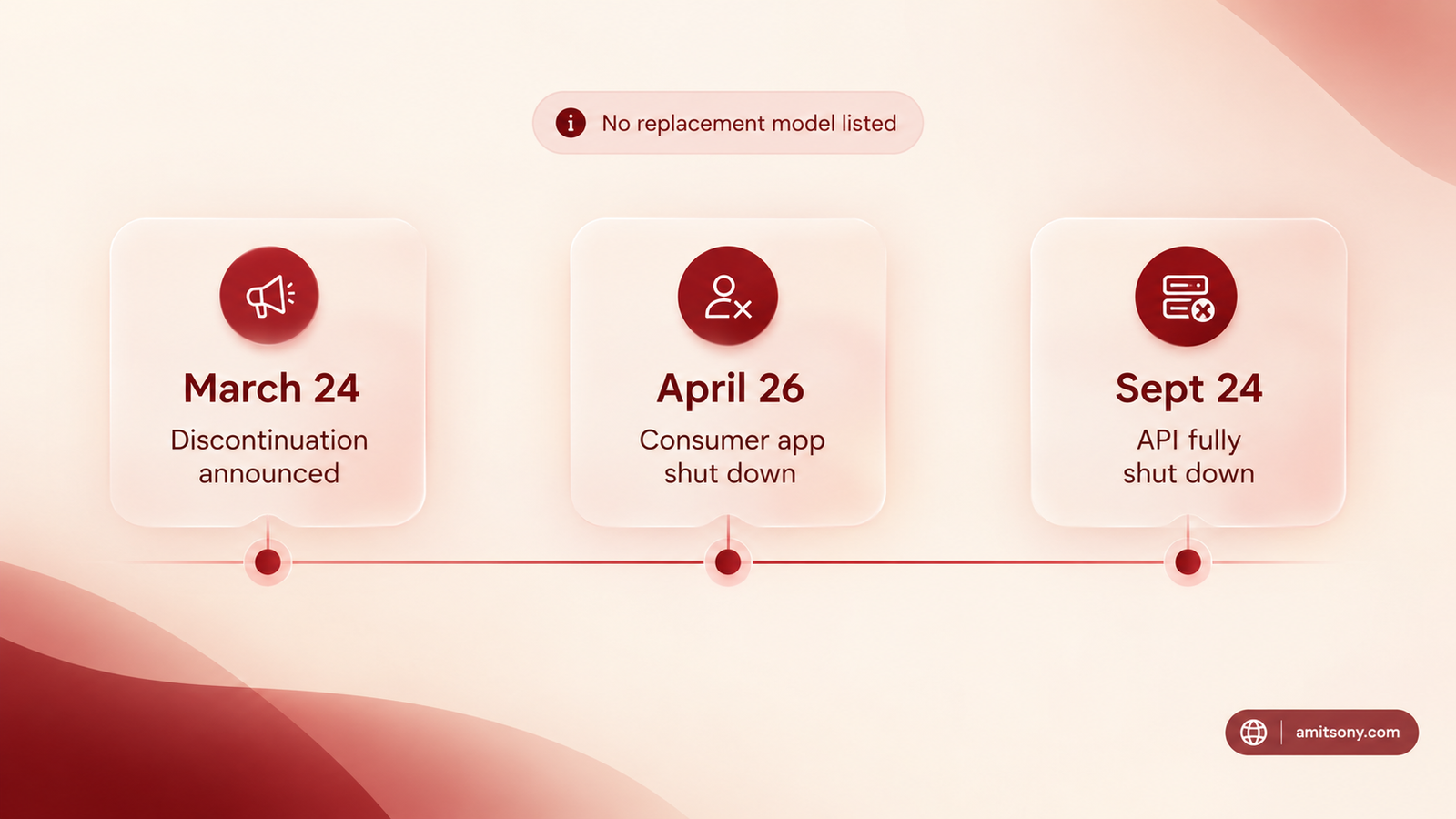
OpenAI announced Sora's discontinuation on March 24, 2026. The consumer web app and mobile app shut down April 26, and the API itself, the piece powering third-party integrations, ran for several more months before shutting down completely on September 24.
Multiple factors reportedly drove the decision. Sora was burning roughly $1 million a day to operate against a reported $2.1 million in total revenue, with active usage falling sharply before the shutdown. A reported $1 billion content partnership with Disney, which would have licensed more than 200 characters for user generation, fell apart before any funds changed hands. The product also drew sustained criticism over deepfake-style misuse involving real public figures, and its heavy compute demands were reportedly pulling infrastructure away from other OpenAI priorities.
OpenAI has publicly signaled a strategic shift toward robotics, world-simulation models, and broader AGI research, suggesting Sora's standalone video-generation product didn't fit where the company is actually allocating resources next.
Is There Data You Need to Export Right Now?
If you or your users have content sitting in Sora, export it now through sora.chatgpt.com/sunset. OpenAI hasn't published one fixed, universal deletion date, the export window has been described as conditional rather than guaranteed indefinitely, which makes "export later" a genuinely risky plan.
No automatic refund has been promised for unused credits. One piece of good news: unused ChatGPT or Sora credit has reportedly been made usable toward Codex, OpenAI's coding product, instead of simply disappearing, worth checking in your own account directly rather than assuming either outcome.
Is OpenAI Building a Replacement?
Unconfirmed, and worth treating as a rumor rather than a plan you should build around. An informal codename, "Spud," has circulated as OpenAI's next-generation video effort, but there's no confirmed API timeline, no official model card, and no public commitment tying it to a specific date.
If your app needs video generation today, waiting on an unannounced, unconfirmed future product isn't a real migration strategy. The three alternatives below are live, documented, and have actual API access right now.
Which Alternative Fits Your App Best?
Before picking one, decide what Sora was actually doing in your product. If your use case was short social clips, a fast, cheap, high-volume model matters more than maximum single-clip length. If you were generating longer narrative sequences, single-pass duration and multi-shot continuity matter more than raw speed. If your app involved music or soundtrack generation alongside video, built-in native audio becomes a real differentiator, not a nice-to-have.
Migrating to Google Veo
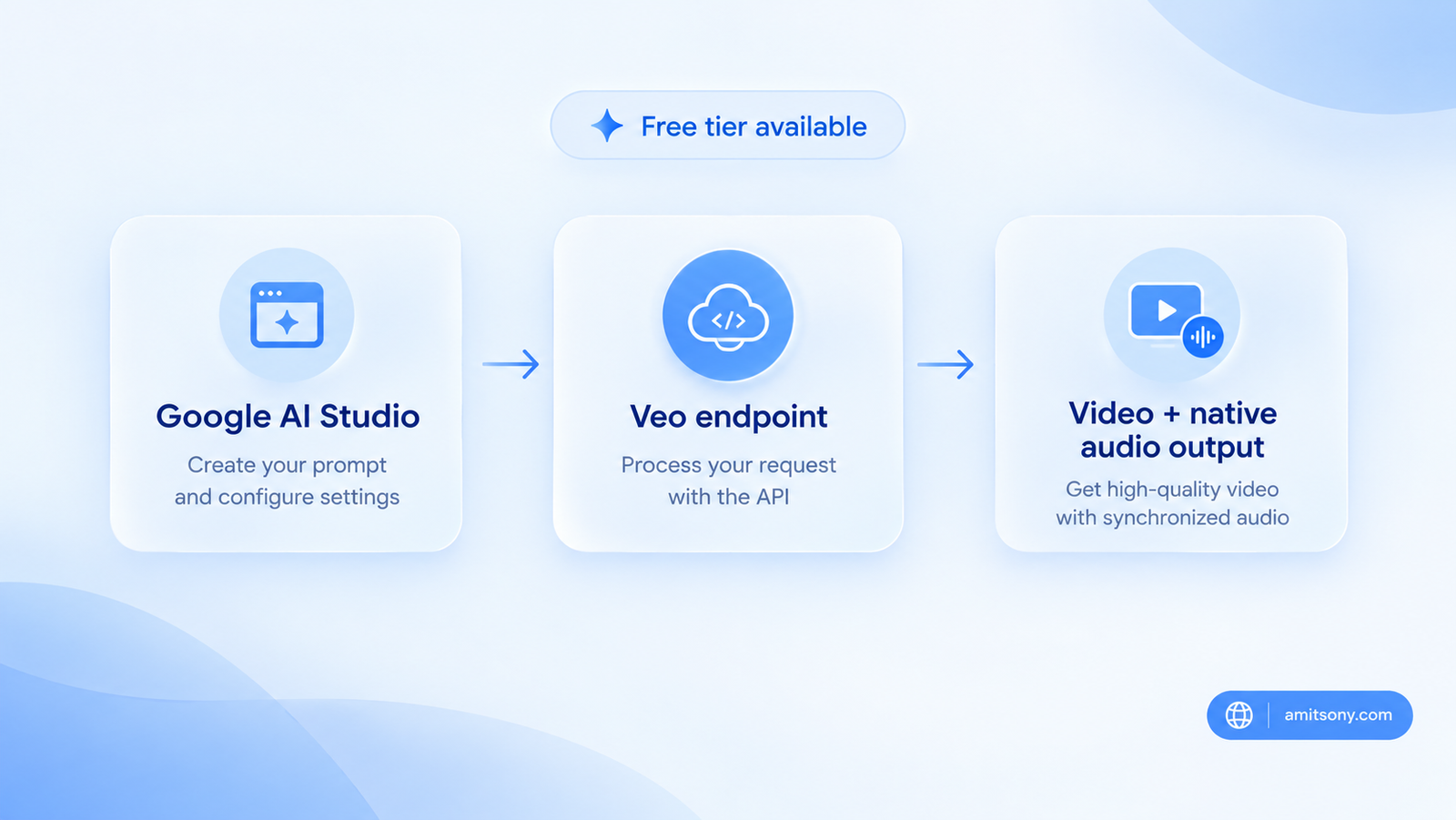
Veo, accessible through Google AI Studio, is the most developer-friendly on-ramp of the three, with a genuinely usable free tier and built-in audio generation, a feature several competing APIs still bolt on separately or skip entirely.
API integration follows Google's standard authentication and request structure, consistent with the rest of the Gemini API family, a real advantage if your team already integrates other Google AI products and wants one consistent auth pattern across tools.
Best fit if your previous Sora usage was moderate volume and you want the lowest-friction technical migration with minimal new infrastructure to stand up.
Migrating to Kling AI
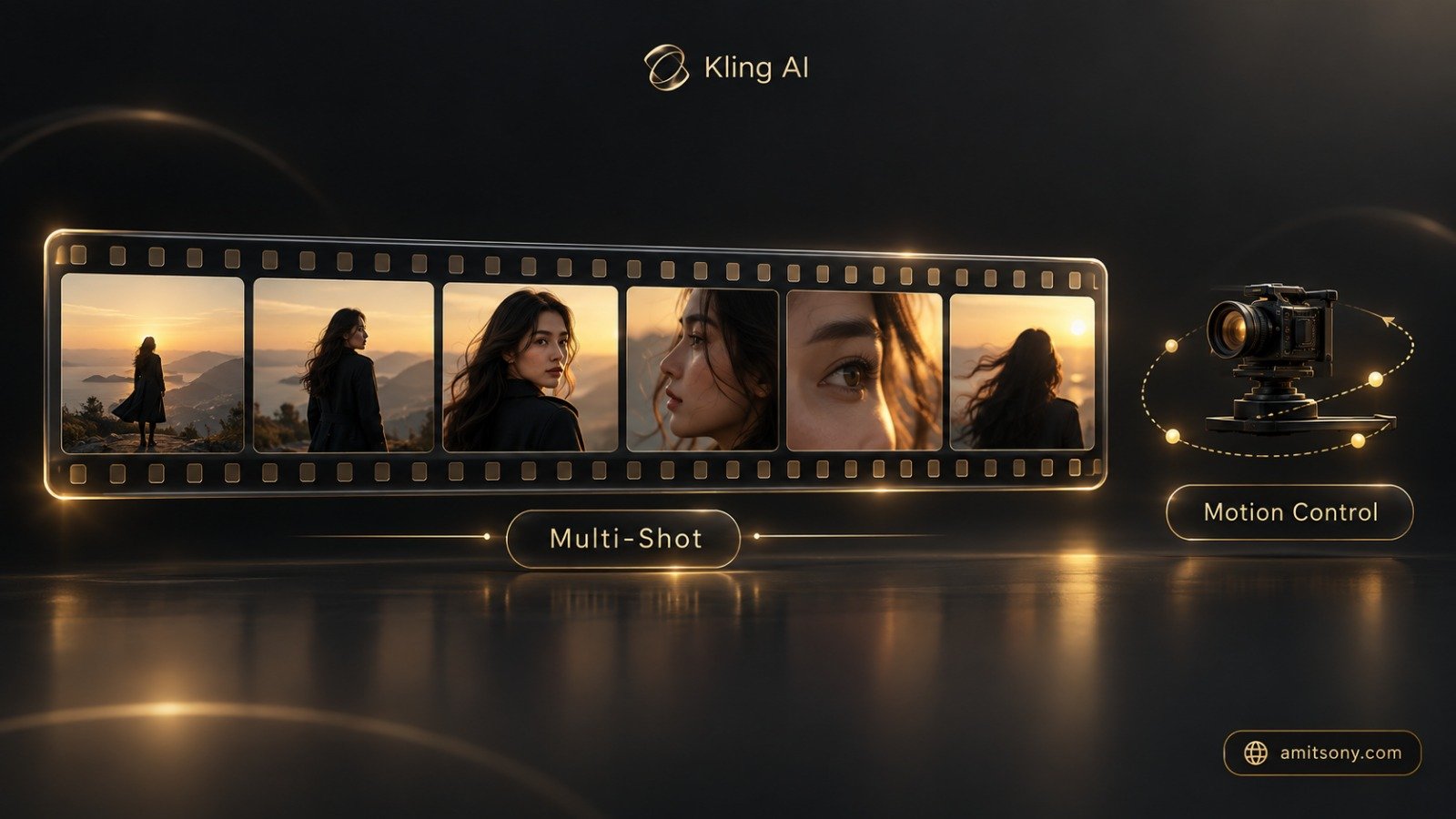
Kling AI is the strongest pick if your app leaned on cinematic control, specific camera movement, multi-angle sequences, physics-accurate motion. Its Multi-Shot feature generates up to six connected camera angles in a single pass, and Motion Control lets you direct pans, zooms, and tracking shots explicitly rather than hoping the model infers the right movement.
A free tier gives 66 daily credits for testing migration compatibility before committing. Paid tiers scale from roughly $25/month up to around $130/month for the highest-volume plan, with API access available both directly and through several third-party platforms.
Best fit if precise directorial control over camera movement was something your Sora-based product actually depended on, not just raw clip generation.
Migrating to ByteDance Seedance 2.5
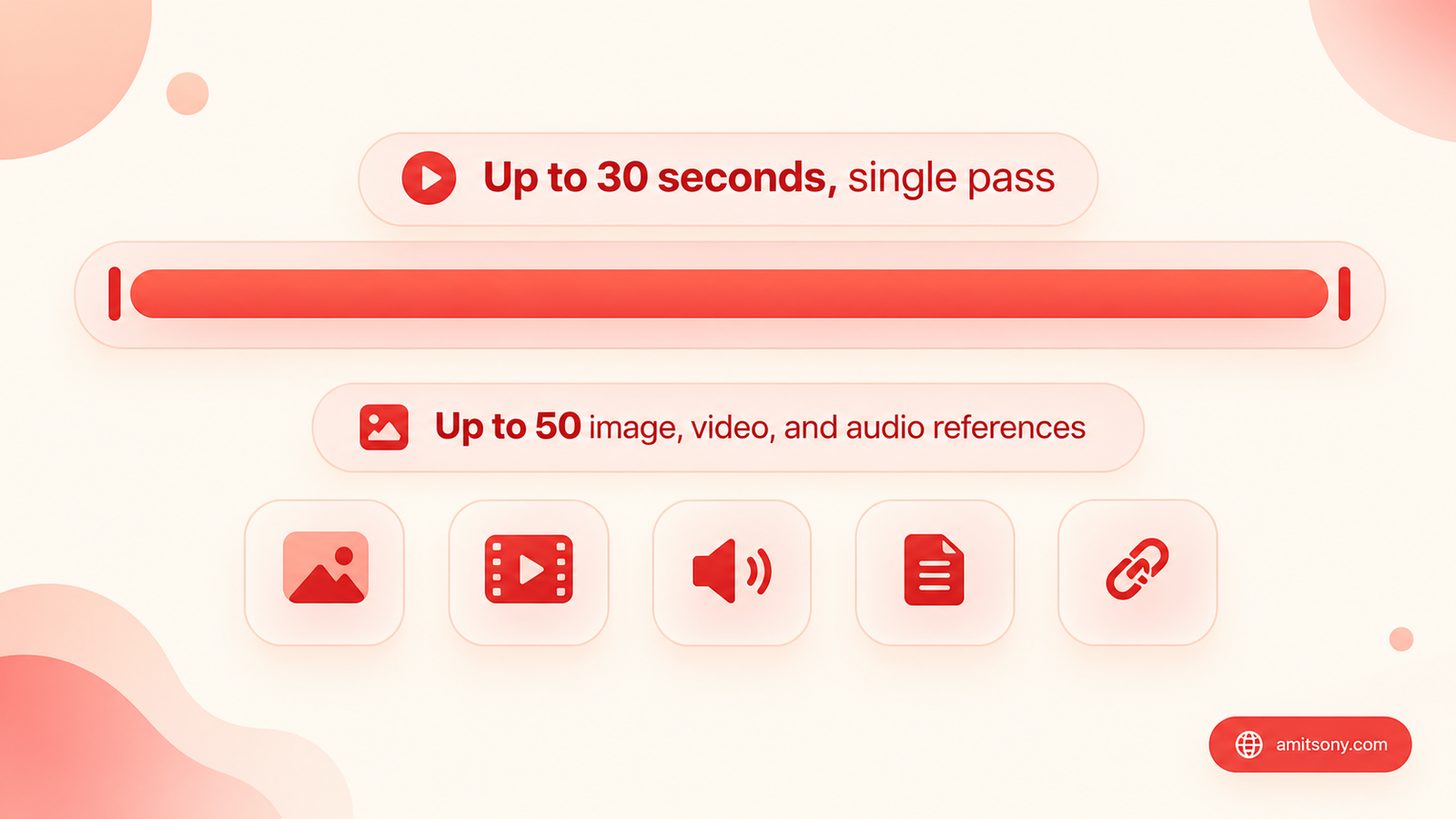
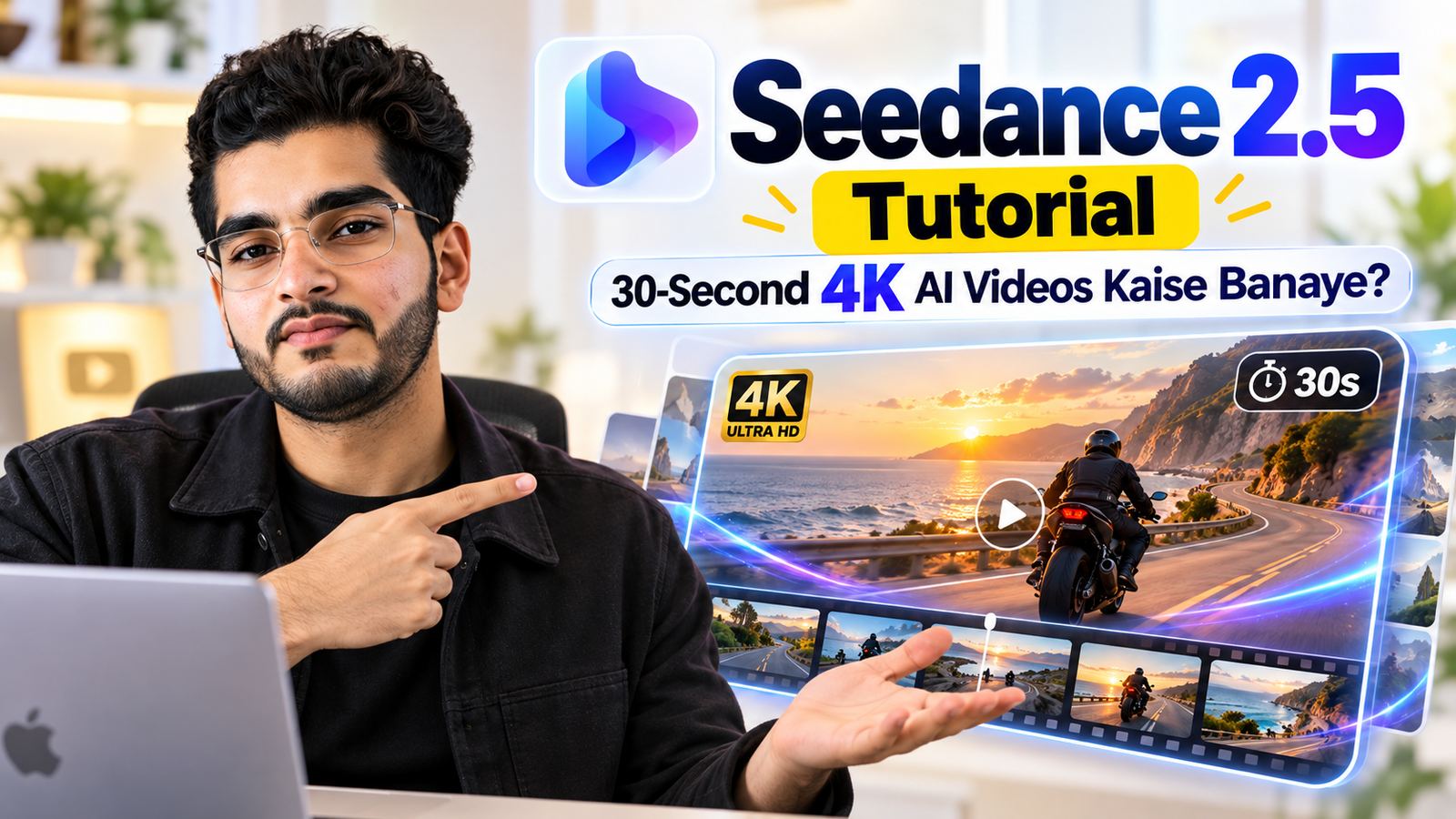
Seedance 2.5, ByteDance's video model released July 31, 2026, supports the longest single-pass generations of the three, up to 30 seconds in one request, plus up to 50 multimodal reference inputs, images, video, and audio combined, and native audio generated alongside the picture rather than layered on afterward.
Pricing is genuinely inconsistent to pin down, ByteDance hasn't published one uniform official rate, and third-party API resellers quote anywhere from roughly $0.06 to $0.17 per second at lower resolutions, climbing considerably higher at 4K. Check current pricing directly with whichever platform you access it through, Volcano Engine, BytePlus, or a third-party reseller, rather than trusting any single cached number, including the ones in this article.
Best fit if your previous workflow generated longer continuous clips or relied on combining multiple reference assets into one generation, the specific area where Seedance's 30-second ceiling and reference limits stand out from the other two.
What Should You Actually Check Before Committing to a New Provider?
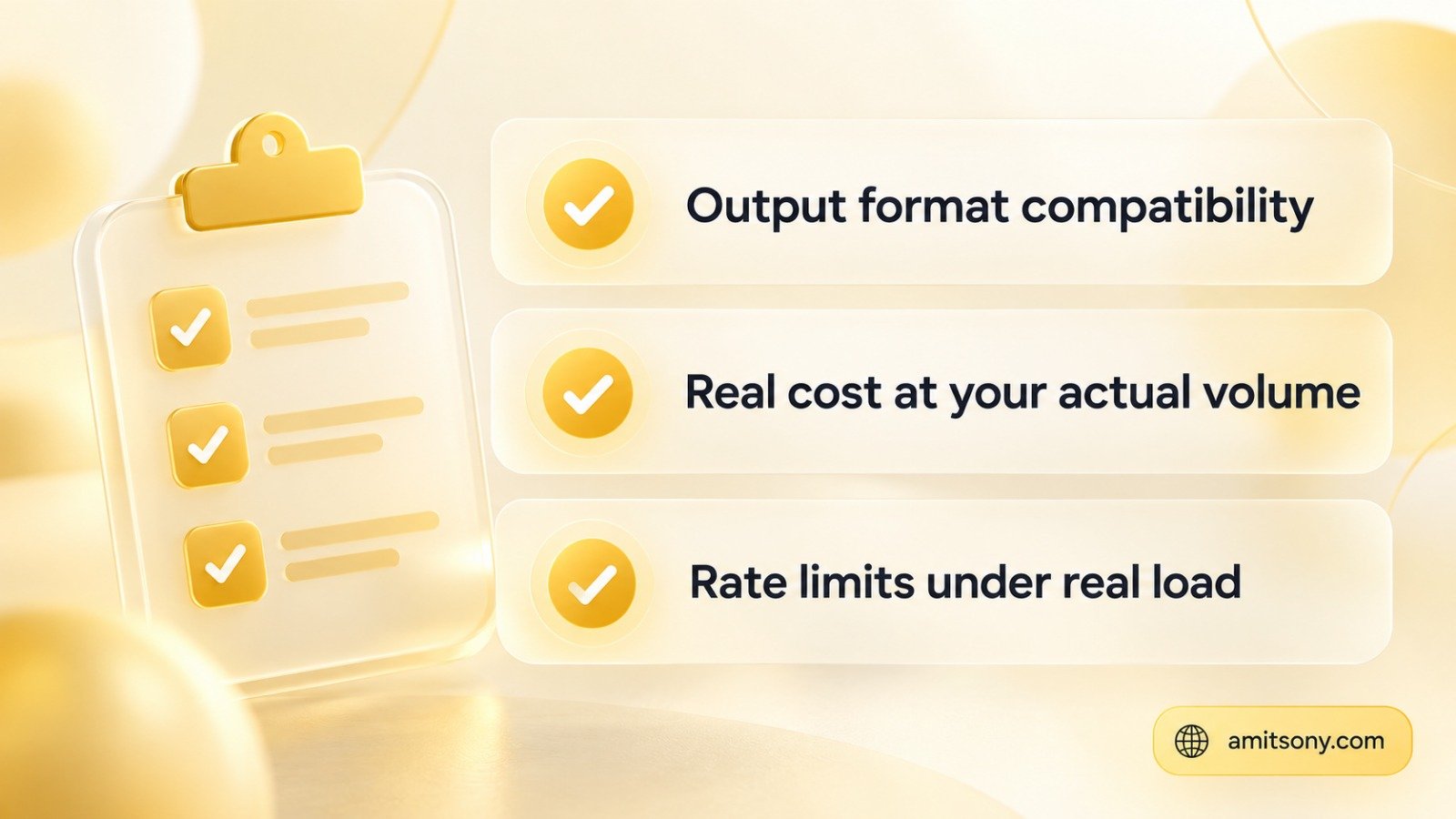
Confirm output format and resolution compatibility with your existing pipeline before writing new integration code, a mismatch here costs more engineering time than the API switch itself.
Compare pricing models carefully, not just headline numbers. Per-second, per-generation, and per-token billing structures produce very different real costs depending on your typical clip length and volume, and a cheaper-looking rate can cost more at your actual usage pattern.
Test rate limits and turnaround time under conditions close to your real production load, not just a single demo request, before fully cutting over.
Quick Verdict
There's no drop-in replacement for Sora, and OpenAI isn't offering one right now. Veo is the fastest, lowest-friction migration for moderate-volume use. Kling wins if camera control and cinematic direction mattered to your product. Seedance fits if you need longer single-pass clips or heavy multimodal referencing. Export your Sora data today regardless of which path you pick, that part isn't optional.
Frequently Asked Questions
When did the Sora API shut down?
September 24, 2026, including both the sora-2 and sora-2-pro models. The consumer app had already shut down on April 26, 2026, following a discontinuation announcement on March 24.
Did OpenAI recommend a replacement for Sora?
No. OpenAI's own deprecation documentation lists no recommended replacement model, unlike most of its prior deprecations which pointed to a direct successor.
Is OpenAI building a new video model to replace Sora?
Unconfirmed. An informal codename, "Spud," has circulated, but there's no official announcement, model card, or API timeline attached to it.
What's the best Sora alternative for cinematic camera control?
Kling AI, through its Multi-Shot and Motion Control features, which let you direct specific camera movements and generate up to six connected angles in one pass.
Can I still access my old Sora content?
Export anything you need now through sora.chatgpt.com/sunset. OpenAI hasn't guaranteed an indefinite window, and no automatic refund has been promised for unused credits.