

DeepSeek V4 Flash at $0.14 and $0.28 per million tokens is the best capable cheap model, while Qwen3.7 Flash and Ling-3.0-flash go even lower for basic tasks. Watch the fine print: GPT-5.6 Luna markets itself as the cheapest flagship at $0.20 input, but its output actually costs $1.20 per million, over the $1 mark most cheap AI lists ignore.

LLM API prices dropped roughly 80% between early 2025 and early 2026, and the floor keeps falling. As of late August 2026, the cheapest listed paid model runs input tokens at $0.02 per million, a price that would have sounded like a rounding error two years ago.
But "cheapest" hides a real catch most roundups skip: input and output are priced separately, and output usually costs five to six times more. A model that looks dirt cheap on the homepage can quietly cost far more per million tokens once it starts actually generating text. This guide sorts out which models are genuinely under $1 on both sides of that equation, not just the number in the headline.
What Actually Counts as "Under $1 Per Million Tokens" in 2026?
Every API prices input and output tokens separately, and the gap between them is the detail most comparison charts bury. At Anthropic, output runs roughly 5x the input price. At OpenAI, it can run 6x, and the spread between the cheapest and most expensive model in OpenAI's own lineup hits 150x.
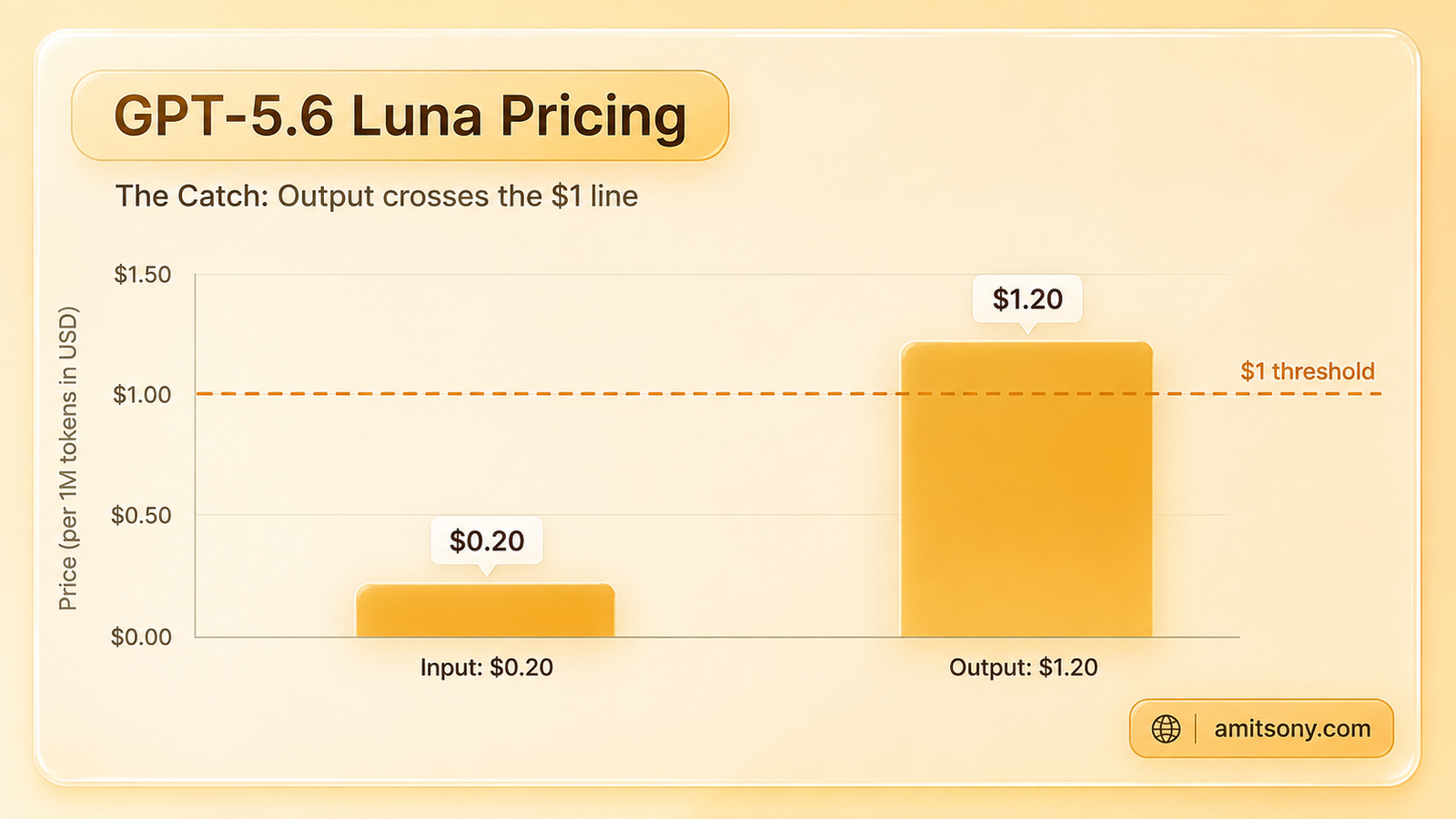
That means a model can be technically accurate when it calls itself "cheap" while only being cheap on one side of the ledger. GPT-5.6 Luna is the clearest example: OpenAI's July 30, 2026 price cut made it the cheapest current flagship-tier model at $0.20 per million input tokens, but its output price sits at $1.20 per million, over the $1 threshold this guide is actually about.
For a model to count as genuinely under $1 per million tokens here, both input and output have to clear that bar. That's a real filter, and it narrows the field more than the marketing headlines suggest.
Which Model Is the Absolute Cheapest Right Now?
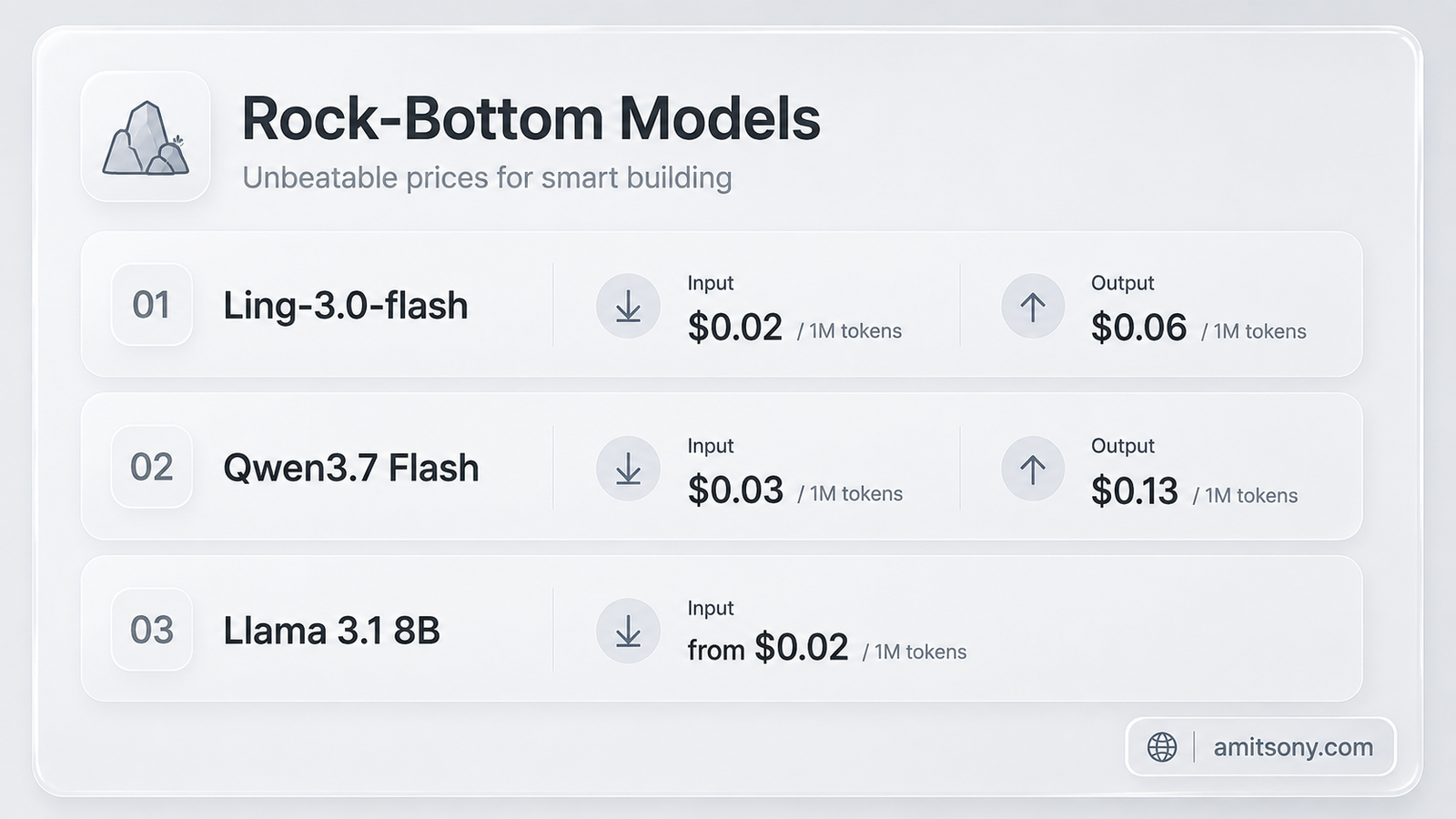
At the very bottom of the market, pricing gets almost symbolic. Ling-3.0-flash runs $0.02 input and $0.06 output per million tokens. Qwen3.7 Flash, from Alibaba, prices at $0.03 and $0.13. Llama 3.1 8B Instruct, widely hosted across providers like Groq and Together AI, starts as low as $0.02 per million input tokens depending on host.
These are small, efficient models, not frontier-class reasoning engines. They're built for high-volume, simple tasks: classification, extraction, basic chat, routing decisions, the kind of work where you're running millions of requests and paying for raw throughput, not depth.
Don't put your hardest problem in front of one of these. Do put your highest-volume, lowest-complexity task here, the savings compound fast at real scale.
Which Cheap Model Actually Has Real-World Capability?
DeepSeek V4 Flash is the model that keeps showing up as the best answer to "cheap but actually good." At $0.14 input and $0.28 output per million tokens, it comes with a 1 million token context window and benchmarks above several models that cost ten times as much.
Cache-hit input drops even further, down near $0.003 per million tokens on repeated context, which matters enormously if your workload reuses the same system prompt or document across many requests.
This is the model most cost comparisons quietly settle on as the actual best value pick, not the absolute cheapest number on the page, but the cheapest model that doesn't feel like a compromise for real work.
Which Major-Lab Flagship Comes Closest to Under $1?
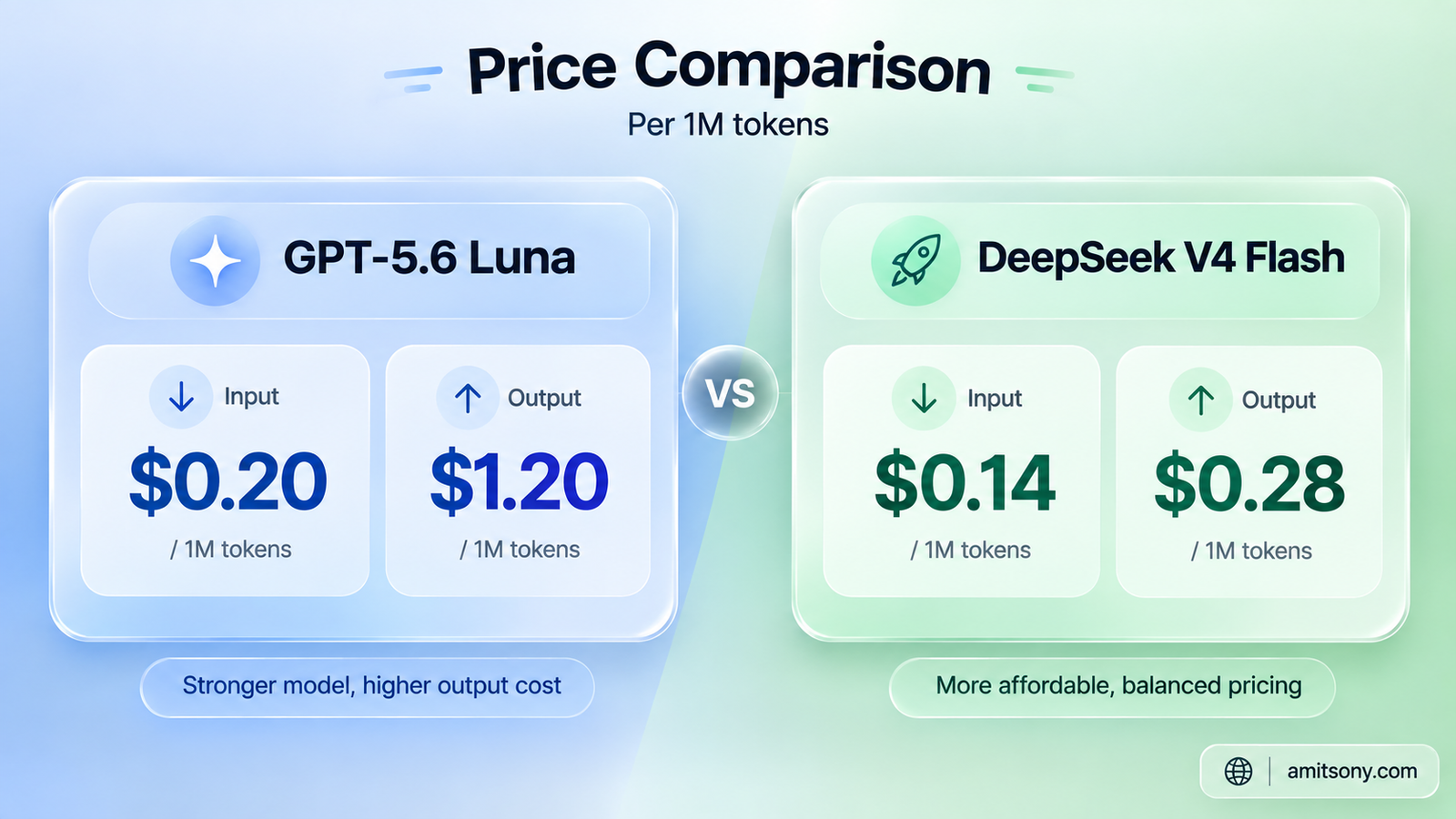
GPT-5.6 Luna, OpenAI's fastest and cheapest current tier, is the model most likely to get called "the cheapest flagship" in 2026 roundups, and the input price backs that up at $0.20 per million tokens after the July 30 cut.
The output side is where the asterisk belongs: $1.20 per million tokens, meaningfully over the $1 mark. For a workload that generates a lot of text, long-form answers, reports, code, that output rate matters more than the attractive input number ever will.
Luna earns its reputation for input-heavy work, summarization, classification, high-volume simple queries. For anything generating substantial output, run the real math before assuming it beats DeepSeek V4 Flash on total cost.
What Are the Other Solid Under-$1 Options?
Gemini's Flash-Lite tier has consistently priced in the same range as DeepSeek, around $0.10 input and $0.40 output per million tokens, genuinely competitive for straightforward tasks where Google's ecosystem integration matters.
Mistral Small runs close behind at roughly $0.15 input and $0.60 output, a solid European alternative if data residency or provider diversity factors into your decision.
All of these clear the under-$1 bar comfortably on both sides, which puts them in a genuinely different category than flagship models that only look cheap from one angle.
How Do You Actually Cut Costs Further Beyond the List Price?
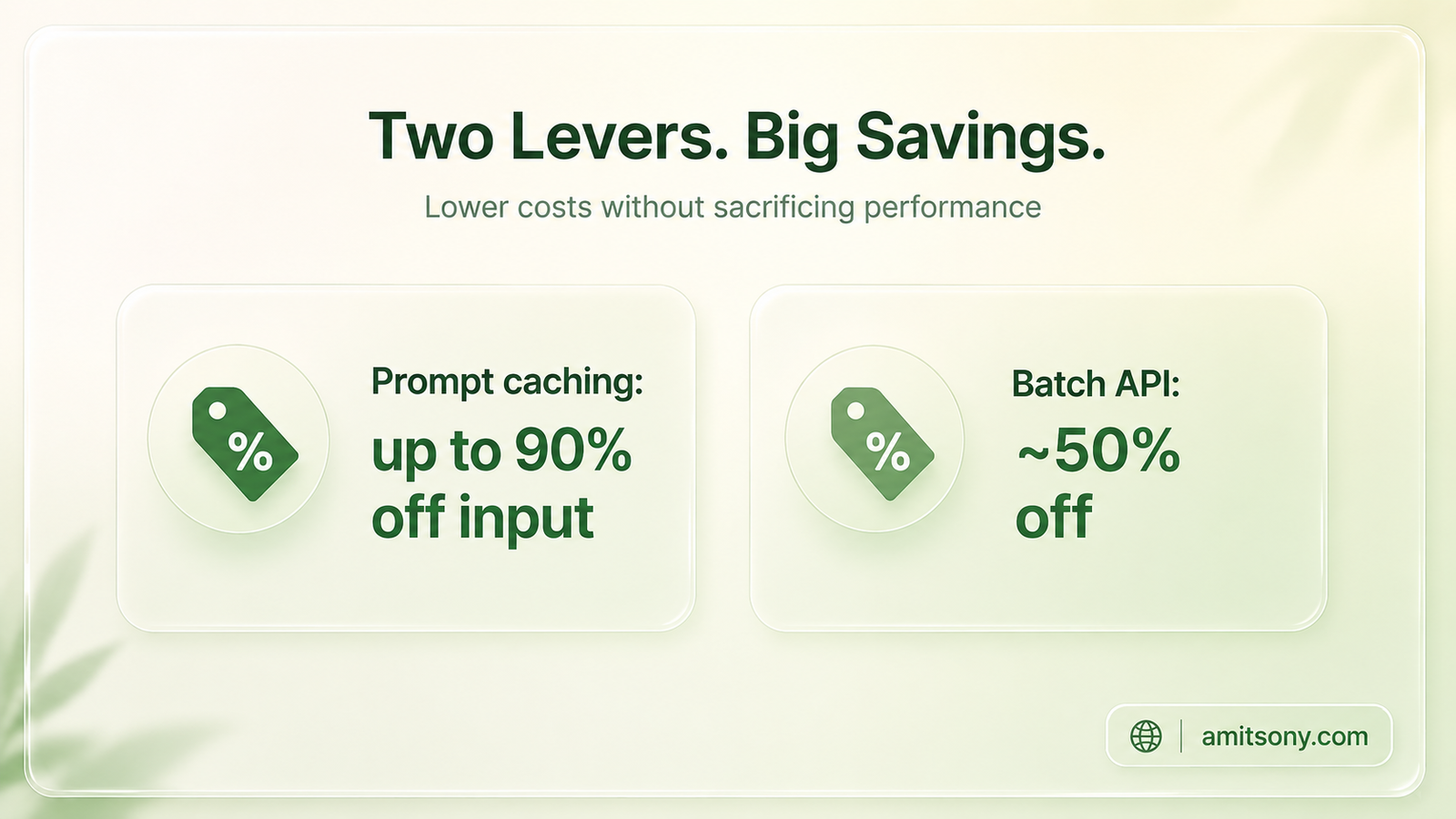
Prompt caching is the single biggest lever available. Anthropic and OpenAI both cut cached input by roughly 90%, so a long, reused system prompt or document context costs a fraction of the standard rate on every request after the first.
Batch APIs offer a flat discount, commonly around 50%, for requests that don't need an instant response, background processing, bulk classification, overnight report generation.
A hybrid routing setup, cheap models handling easy requests, expensive models reserved for genuinely hard ones, cuts total spend further than picking any single cheap model and using it for everything.
Does Cheapest Always Mean Best Value?
Not necessarily, and the industry's own benchmarking sites are increasingly explicit about this. Score-per-dollar rankings sometimes favor mid-tier production models over the absolute cheapest option, because a model that gets an answer right the first time beats a cheaper model that needs three retries to get there.
Production-grade models around $2 input and $6 output, and frontier-tier options closer to $3 input and $15 output, show up repeatedly as the better real-world value once accuracy and retry cost enter the calculation, even though they cost more per token on paper.
List price answers "what's cheapest." Score per dollar answers "what's actually cost-effective." Those are different questions, and conflating them is how teams end up with a cheap API bill and an expensive support queue.
Quick Verdict
For raw volume on simple tasks, the sub-$0.05 tier, Qwen3.7 Flash, Ling-3.0-flash, Llama 3.1 8B, is genuinely hard to beat. For real work that needs to actually be good, DeepSeek V4 Flash remains the model most cost comparisons land on as the honest best value. And whenever a headline calls something the "cheapest flagship," check the output price specifically, that's where the real number usually hides.
Frequently Asked Questions
What's the cheapest AI API right now?
Among tracked paid models, Ling-3.0-flash and Qwen3.7 Flash sit at the very bottom, both under $0.05 per million input tokens, though DeepSeek V4 Flash is the more commonly recommended pick for actual capability at $0.14/$0.28.
Is GPT-5.6 Luna really the cheapest flagship model?
On input, yes, at $0.20 per million tokens. On output, it's $1.20 per million, over $1 and higher than several open-weight alternatives, so the full picture depends on how much output your workload generates.
Why is output more expensive than input for AI APIs?
Each output token requires a full forward pass through the model to generate, while input tokens are processed together in a single pass, making output computationally more expensive, typically 5 to 6 times the input rate at major providers.
How can I reduce AI API costs beyond picking a cheap model?
Use prompt caching, which can cut input costs by up to 90% on repeated context, and batch APIs, which offer roughly 50% off for requests that don't need an instant response.
Is the cheapest AI API always the best value?
Not always. Score-per-dollar rankings sometimes favor slightly pricier production-grade models, since a model that answers correctly the first time can cost less overall than a cheaper model that needs retries.